When gutters start pulling away, dripping at the seams, or spilling water near the foundation, the question gets practical fast. For most property owners, seamless gutters vs sectional gutters comes down to one thing – which system protects the building better without creating more repair headaches later.
That answer depends on your budget, your roofline, and how long you plan to stay in the property. Both options move water away from the roof and foundation, but they do it very differently. If you are replacing aging gutters or installing a new system, it helps to understand where each type performs well and where it falls short.
Seamless gutters vs sectional gutters: what is the difference?
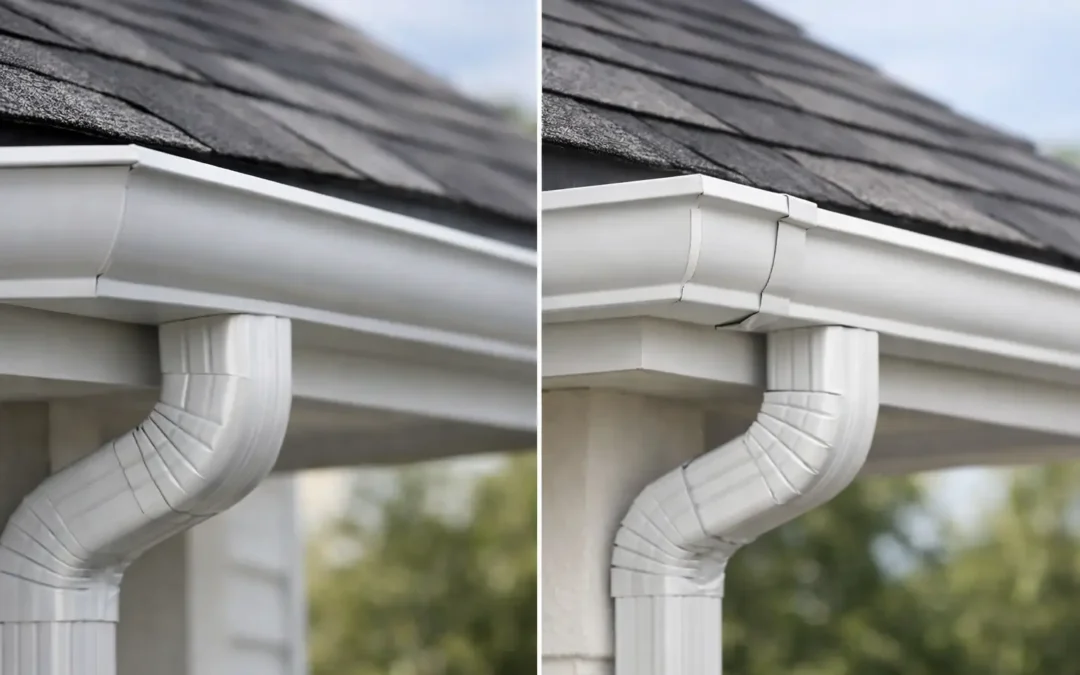
Sectional gutters are built from pre-cut pieces joined together during installation. Those pieces are connected with seams, connectors, and sealant to create the full gutter run. This is the older and more common off-the-shelf option, and it is often used when lower upfront cost is the main priority.
Seamless gutters are formed from a single piece of material for each straight run of the roofline. The only joints are usually at corners and downspout connections. Because there are fewer connection points, there are fewer places for water to escape or debris to catch.
That basic construction difference affects almost everything else – leak risk, appearance, maintenance, repair strategy, and long-term value.
Leak potential is where the gap gets wider
If your main goal is reducing leaks, seamless gutters usually have the edge. Every seam in a sectional system is a possible weak point. Over time, sealant dries out, metal expands and contracts, and joints can separate. Once that happens, water starts dripping behind the gutter, down the fascia, or next to the foundation.
With seamless gutters, there are simply fewer places for failure. That does not make them leak-proof forever, but it does reduce the number of vulnerable spots. In areas that get heavy rain, snow, and freeze-thaw cycles, that matters. Hudson Valley weather can be rough on exterior systems, and gutters that hold up through winter swings tend to save money over time.
Sectional gutters can still perform well when they are installed correctly and maintained consistently. The issue is that they ask more from the system. More joints mean more monitoring, more sealing, and more chances for small problems to grow.
Appearance matters more than many owners expect
Gutters are not usually the first feature people notice on a home or commercial building, but they do affect curb appeal. A sectional system can look fine, especially on a modest structure or utility-focused property. Still, visible joints can make the lines of the roof look busier.
Seamless gutters tend to look cleaner and more custom because each run is formed to fit the structure. That smoother appearance works especially well on updated homes, higher-value properties, and buildings where exterior presentation matters.
This is one reason many owners choose seamless systems even before leak reduction enters the picture. They want the gutter system to do its job without drawing attention to itself.
Cost: sectional usually wins upfront, not always long term
If you are comparing estimates and focusing on immediate budget, sectional gutters are usually the cheaper option. The materials are widely available, and installation is generally less specialized. That can make them attractive for rental properties, budget-driven projects, or short-term ownership plans.
Seamless gutters typically cost more at the start because they are custom-formed on site and require professional equipment and installation. But upfront cost is only part of the picture.
Over several years, sectional gutters may need more resealing, more joint repairs, and more frequent replacement of problem sections. If those maintenance calls add up, the original savings can narrow quickly. For owners who want fewer service issues and a longer-lasting system, seamless gutters often offer better value.
The right choice depends on your timeline. If you need the lowest initial investment, sectional may fit. If you want to reduce maintenance and protect the property with fewer weak points, seamless often makes more financial sense.
Repairs and replacement are not handled the same way
This is one area where sectional gutters have a clear advantage. If one piece gets damaged, that section can often be removed and replaced without rebuilding the whole run. For a property owner looking for a simple spot repair, that flexibility is appealing.
Seamless gutters are different. Because each straight run is one formed piece, damage to part of the run may require replacing a larger section. If a ladder dent, falling branch, or ice load bends the metal, the repair can be less straightforward.
That said, repair frequency matters just as much as repair method. Sectional gutters may be easier to patch, but they also tend to create more patch opportunities. Seamless gutters can be less forgiving in isolated damage scenarios, while often causing fewer routine problems overall.
Maintenance usually favors seamless systems
Debris has a way of finding every rough edge in a gutter system. Leaves, grit, and shingle granules tend to collect around seams and joints, slowing water flow and increasing clog risk. That buildup can also trap moisture, which speeds up deterioration.
Because seamless gutters have fewer joints, they usually stay cleaner and drain more efficiently. They still need cleaning, especially near trees, but they generally present fewer catch points. For busy homeowners and landlords, lower-maintenance exterior systems are often worth paying for.
Sectional gutters are not impossible to maintain. They just require a little more attention, especially as they age. If you already know gutter upkeep tends to slide down the priority list, seamless may be the safer choice.
Material and installation quality still matter
It is easy to treat this as a simple seamless-versus-sectional decision, but quality of material and installation can outweigh the category itself. A poorly pitched seamless gutter will still overflow. A badly fastened sectional system will still sag. Even the best gutter style cannot make up for weak workmanship.
Aluminum is the most common option because it is cost-effective, rust-resistant, and available in many colors. Copper and steel may also be used depending on the property and budget. The best fit depends on local weather, roof size, and the level of appearance you want.
Just as important is making sure the gutters are sized correctly, sloped properly, secured well, and paired with downspouts that can handle runoff. If those basics are missed, the system will struggle no matter what type you choose.
Which option is better for your property?
For many homes, seamless gutters are the stronger all-around choice. They offer cleaner lines, fewer leak points, and less ongoing maintenance. If you want long-term protection, especially on a primary residence or a building you plan to keep, they are often worth the higher upfront cost.
Sectional gutters still have a place. They can work well for tighter budgets, temporary solutions, detached structures, or properties where future modifications are likely. They also make sense when a lower-cost repairable system is the main goal.
The roof design matters too. A simple roofline may work well with either option. A more complex structure with multiple corners, valleys, and drainage demands usually benefits from a custom approach. In those cases, a professionally fabricated seamless system often delivers a better result.
A practical way to decide
Start with three questions. How long do you want this gutter system to last? How much maintenance are you realistically willing to handle? And how costly would water damage be if the system underperforms?
If the property has landscaping near the foundation, a finished basement, fascia trim worth protecting, or recurring drainage problems, it makes sense to lean toward the more durable and lower-leak option. If you are working within a strict project budget and need a functional system now, sectional gutters may be the right short-term decision.
For homeowners and property managers, the smartest move is not choosing the cheapest gutter on paper. It is choosing the system that gives the building dependable drainage with the fewest future surprises. That is where experienced installation really pays off.
A good contractor will look at roof pitch, runoff volume, fascia condition, downspout placement, and the trouble spots around the property before recommending anything. CPG Roofing & Siding approaches gutter work that way because water control is never just about gutters alone – it is about protecting siding, roofing, foundations, and the day-to-day condition of the entire property.
If you are weighing your options, do not think only about what the gutter costs this month. Think about what happens during the next hard storm, the next freeze, and the next year of runoff. The right system is the one that keeps that water moving away from your property with less stress and fewer callbacks.