
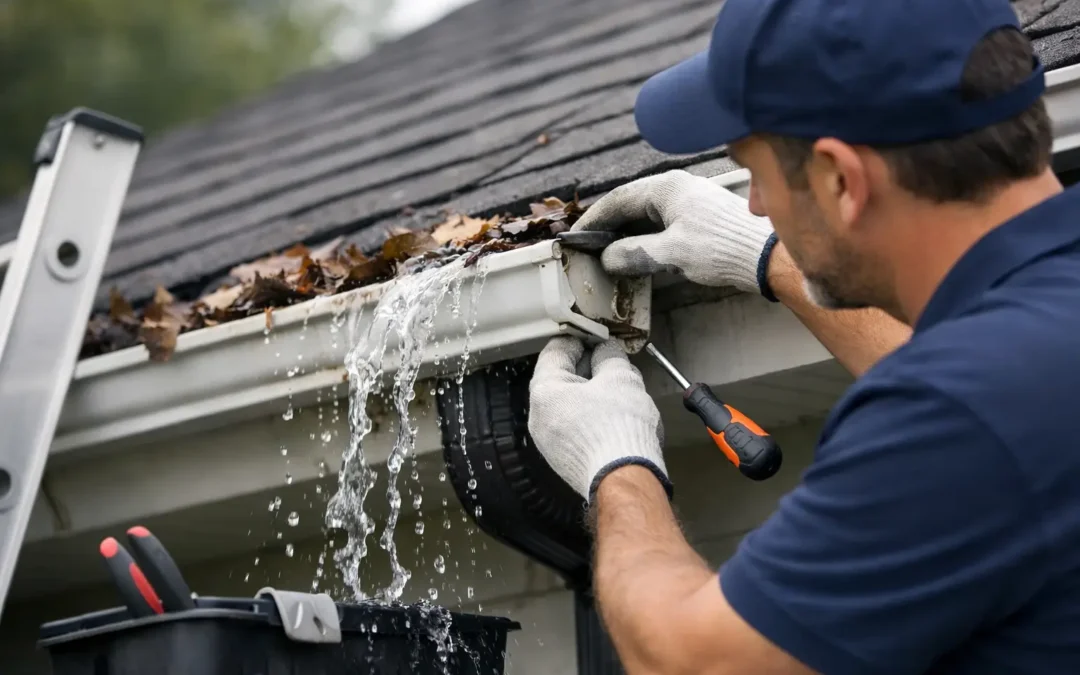
When gutters spill over in the middle of a hard rain, the problem is rarely just the gutter itself. Gutter repair for overflowing gutters often starts with a bigger question: what is forcing water to miss the system that is supposed to protect your roof, siding, foundation, and landscaping? If water is pouring over the edge, running behind the gutter, or pooling near the house, it is time to address it before a small drainage issue turns into rot, staining, leaks, or structural damage.
For homeowners and property managers, this is one of those exterior problems that feels minor until it is not. A gutter system fails at the exact moment your property needs it most – during heavy rain, rapid snowmelt, or freeze-thaw weather. In the Hudson Valley, where storms, falling leaves, and winter ice all put stress on exterior systems, overflowing gutters can become a repeat problem if the root cause is missed.
What causes overflowing gutters?
The most common cause is a clog. Leaves, pine needles, seed pods, shingle grit, and dirt collect inside the trough and block water flow toward the downspout. Once that channel narrows, rainwater backs up and spills over the front edge.
But clogs are only one version of the problem. Sometimes the gutter is clean enough to pass a little water, yet still overflows in a serious storm because it is pitched incorrectly, undersized for the roof area, or pulled away from the fascia. In other cases, the downspout is the actual bottleneck. Water reaches the outlet, cannot move through it fast enough, and starts overflowing at the top.
Improper installation also shows up more often than people expect. A gutter set too high under the roofline can let water shoot over it. A gutter set too low can miss runoff in wind-driven rain. Loose hangers create low spots where water sits, debris settles, and eventual overflow begins.
Then there is the issue behind the gutter. If aprons or drip edge flashing are missing or damaged, water can run behind the gutter rather than into it. That may look like gutter overflow from the ground, but the fix is different. This is why the right repair starts with inspection, not guesswork.
Signs you need gutter repair for overflowing gutters
Overflow during rain is the obvious warning, but it is not the only one. You may notice black streaks on the gutter face, peeling paint near the roofline, mildew on siding, or soil erosion below the eaves. Basement moisture and foundation settling can also begin with poor roof drainage, especially if downspouts dump too close to the home.
Watch for sagging sections, visible separation at joints, rust spots, standing water in the trough, and spikes or hangers pulling loose. If one area overflows more than others, that section may have a pitch problem or a hidden blockage.
Winter can make the evidence even clearer. Ice buildup along the gutter edge, heavy icicles, and recurring ice dams often point to drainage that is already compromised. The gutter may not be the only problem, but it is part of the chain.
Why quick repairs matter
Overflowing gutters put water exactly where it should not go. Along the roof edge, that can mean fascia rot, soffit damage, and hidden moisture entry. Down the wall, it can stain siding, deteriorate trim, and increase the chance of mold around vulnerable seams and openings. At ground level, oversaturation can wash out mulch beds, damage walkways, and put pressure on the foundation.
There is also a cost issue. A basic repair is usually far less disruptive than replacing rotted wood, fixing interior leak damage, or correcting foundation drainage after years of unmanaged runoff. Fast action protects the whole exterior envelope.
Repair options depend on the real failure point
Not every overflowing gutter needs replacement. In many cases, targeted repairs restore full performance.
Cleaning and downspout clearing
If debris is the main issue, professional cleaning may be enough. This includes removing buildup from the troughs, flushing the lines, and clearing compacted downspouts. A proper service also checks whether water is draining at the correct speed instead of assuming the clog was the only problem.
Re-securing loose or sagging sections
When gutters begin to pull away from the house, water can bypass the trough or collect in low spots. Refastening hangers, correcting spacing, and replacing failed hardware can bring the system back into alignment. This is especially common on older systems that have carried heavy ice or debris loads.
Correcting pitch
A gutter does not need a dramatic slope, but it does need enough pitch to move water efficiently. Too flat, and water ponds. Too steep, and flow can be uneven. Re-pitching sections is a precise repair that can solve recurring overflow without a full replacement.
Sealing joints and end caps
If seams or corners leak, the water pattern around the home may look like overflow even when the main channel is functioning. Sealing failed joints and replacing worn components can stop concentrated leaks and restore control.
Adjusting or replacing downspouts
An undersized, clogged, or poorly placed downspout can choke the whole system. Sometimes the best repair is adding another downspout, increasing size, or changing extensions so water is moved farther from the structure.
Fixing roof edge details
If runoff is slipping behind the gutter, the repair may involve drip edge, flashing, or fascia work rather than the gutter body alone. This is where hiring an exterior contractor instead of treating the symptom can make a real difference. Gutters work as part of a system, not in isolation.
When repair is not enough
There are situations where repair becomes temporary at best. If the gutter system is badly rusted, repeatedly separating, cracked at multiple seams, or too small for the roof design, patching it may only delay the next failure. The same is true when water damage has spread to fascia boards or the roof edge.
Frequent overflows after repeated cleanings can also signal a design issue rather than a maintenance issue. Steep roof planes, long runs, and concentrated valleys move a surprising amount of water. In those cases, a larger gutter profile or a reworked drainage layout may be the smarter investment.
A good contractor should tell you when a repair is worthwhile and when it is simply costing you more over time. That honesty matters, especially when water is already affecting other parts of the property.
Can gutter guards solve the problem?
Sometimes, but not always. Gutter guards can reduce the amount of debris entering the system, which helps limit clogs and cuts down on cleaning frequency. They are especially useful in areas with heavy leaf drop.
Still, guards are not a cure-all. Some debris can collect on top of the guard, and not every product performs well under every roofline or tree condition. If the gutter is sagging, pitched wrong, or undersized, guards will not fix overflow. They only address one potential cause.
What homeowners can safely check
From the ground, look at whether the gutters appear level or visibly sagged. Check for water stains, splashing, plant growth in the trough, or downspouts discharging too close to the house. After a storm, note exactly where overflow occurs. That pattern helps narrow down whether the issue is a clog, a pitch problem, or runoff bypassing the gutter.
What you should not do is treat ladder work as a casual weekend job if the roofline is high, the gutters are unstable, or conditions are wet. Gutter inspection and repair are simple only when everything is accessible and structurally sound. Once there is movement, hidden rot, or steep access, the safer call is professional service.
Choosing the right contractor for gutter repairs
Overflowing gutters are easy to underestimate, which makes contractor choice more important than it seems. You want someone who looks beyond the trough and checks how the roof edge, fascia, drainage path, and water discharge work together. You also want clear communication about whether the issue is maintenance, repair, or replacement.
A dependable exterior contractor should explain what failed, show you the affected areas, and recommend a fix that matches the condition of the system. Fast response matters too, especially if active overflow is threatening siding, trim, or the foundation. For property owners in areas like Orange, Dutchess, Ulster, and Sullivan counties, seasonal weather swings can move a manageable issue into urgent territory quickly.
CPG Roofing & Siding approaches gutter problems the same way it approaches roof and siding protection – by focusing on the source of the issue, the condition of the full exterior system, and a clean, professional repair process that protects the property rather than just covering up symptoms.
The best time to act
The best time to repair an overflowing gutter is before the next major storm, not after water has already reached the interior or washed out the perimeter of the home. If you have seen even one section overflow, that is enough reason to get it checked. Drainage problems rarely fix themselves, and they usually get more expensive the longer they are left alone.
A working gutter system is not flashy, but it is one of the most important lines of defense your property has. When it starts overflowing, take it seriously. A timely repair can protect far more than the gutter itself.