
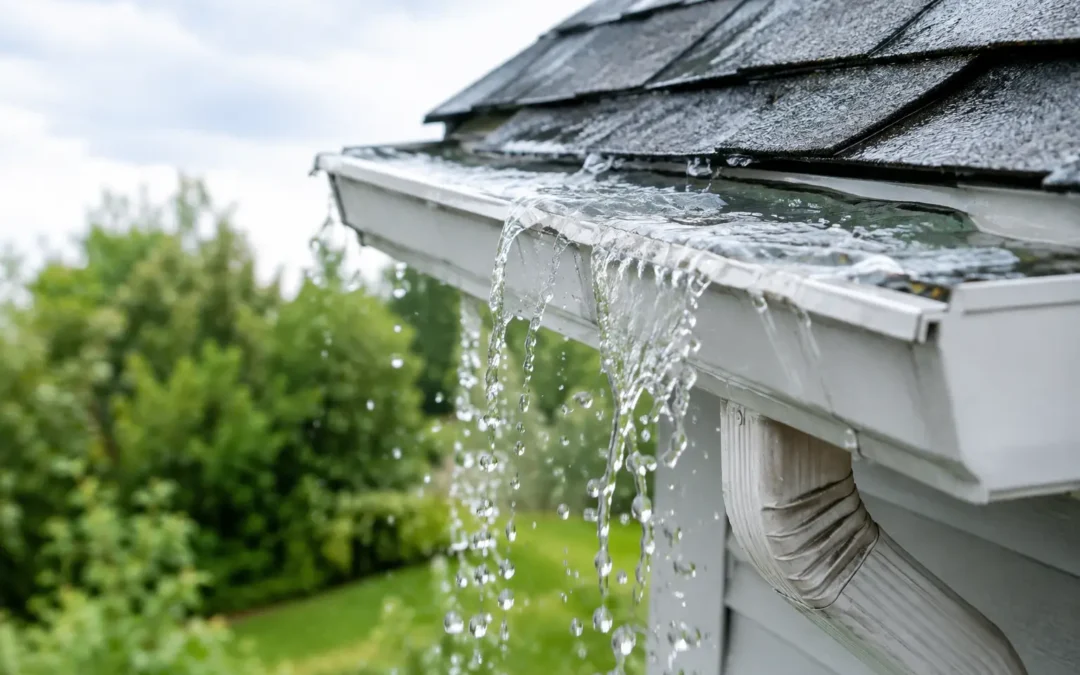
A gutter can be full of water for only a few minutes, yet that is enough time to send runoff behind fascia boards, down siding, and toward your foundation. Understanding gutter overflow causes helps you act before a heavy Hudson Valley rainstorm turns a minor maintenance issue into wood rot, basement moisture, or an expensive exterior repair.
Overflow is not always a sign that gutters simply need cleaning. Leaves and shingle grit are frequent culprits, but gutter slope, undersized downspouts, ice, roof runoff, and damaged sections can all prevent water from moving where it should. The right fix depends on where the water is escaping and why.
The Most Common Gutter Overflow Causes
Clogs in gutters or downspouts
This is the issue most property owners expect, and for good reason. Leaves, twigs, seed pods, roofing granules, and nesting material build up inside the gutter channel. Water reaches the blockage, backs up, and spills over the front edge or behind the gutter.
A downspout can be clogged even when the open gutter looks clear from the ground. If water pools near the downspout outlet during rain or drains slowly after the storm, the blockage may be inside an elbow or lower section. A professional cleaning should include flushing the full system, not just removing visible debris from the top.
Gutters pitched the wrong way
Gutters need a subtle slope toward the downspout. The pitch is slight enough that it may not be obvious from the driveway, but water will reveal the problem quickly. If a section consistently holds standing water or overflows near its center while the downspout remains clear, improper pitch is a strong possibility.
Gutters can lose their slope over time as fasteners loosen, hangers pull away, or the fascia board deteriorates. Repairing the pitch may require rehanging a section, replacing failing hangers, or addressing the wood behind the gutter. Adding another downspout will not solve a slope problem by itself.
Gutters that are too small for the roof
A roof with a large, steep plane can shed an enormous amount of water in a short storm. Standard five-inch gutters work well on many homes, but they may not handle concentrated runoff from a broad roof, a metal roof, or a valley that channels water into one area.
This is why overflow that happens only during hard rain deserves a closer look. The gutter may be clean and properly installed, yet its capacity may still be insufficient. Larger six-inch gutters, wider downspouts, or a revised drainage layout can provide the needed volume. The best option depends on roof size, roof pitch, and where water concentrates.
Roof valleys dumping water into one spot
A roof valley collects runoff from two roof planes and directs it to a single point along the eave. During a downpour, that concentrated stream can shoot over a gutter instead of dropping into it. You may notice a clean washed-out strip of mulch below the area, water stains on siding, or overflow in one location even though the rest of the system performs normally.
A splash guard can sometimes help direct the flow into the gutter. In other cases, the gutter needs to be repositioned, enlarged, or reinforced at the valley. This is a targeted repair, not necessarily a reason to replace every gutter on the property.
Loose, sagging, or damaged gutter sections
Gutters must remain securely attached and properly aligned with the roof edge. When a section sags, water settles in the low point and may overflow before reaching the downspout. When gutters pull away from the fascia, runoff can slip behind them and saturate the wood.
Look for visible gaps, seams that drip long after rain stops, peeling paint, rust, or bent metal. These are not merely cosmetic concerns. A leaking seam or loose gutter can gradually damage fascia, soffit, siding, and trim, making a small gutter repair more involved if it is ignored.
Ice, snow, and frozen downspouts
Winter creates a different kind of overflow. Snowmelt can refreeze in gutters and downspouts, blocking drainage and forcing water over the edges. Ice buildup may also add enough weight to pull gutters loose from the fascia.
In the Hudson Valley, repeated freeze-thaw cycles can expose roof insulation and ventilation concerns as well. If ice dams form regularly along the roof edge, cleaning the gutter alone will not resolve the underlying problem. The home may need an assessment of attic heat loss, ventilation, and roof drainage before next winter.
How to Tell Where the Water Is Going
The location of the overflow often points to the cause. Water spilling over the front of the gutter usually suggests a clog, undersized system, or valley overflow. Water running behind the gutter often points to loose hangers, incorrect placement, or damaged fascia. Water pouring from a gutter joint may mean a failed seam or a section holding water because of poor pitch.
Pay attention after the next steady rainfall. From a safe location on the ground, note whether the problem starts immediately or only after several minutes. Immediate overflow in one concentrated area often relates to valley flow or gutter positioning. Overflow that worsens as rain continues commonly indicates debris buildup or a blocked downspout.
Never climb a wet ladder or attempt to clear a clog during an active storm. Wet roofing, muddy ground, and flowing water create unnecessary risk. A professional inspection is safer, particularly for two-story homes, commercial properties, or systems showing signs of detachment.
Damage Caused by Overflowing Gutters
Overflowing gutters can affect more than the gutter system. Water that repeatedly hits the same area can stain siding, soften trim, and damage landscaping. When it collects near the foundation, it can contribute to basement leaks, soil erosion, and movement around walkways or patios.
On the roofline, backed-up water can enter behind fascia boards and under roof edges. Over time, that moisture may lead to rotted wood and provide an entry point for pests. For landlords and commercial property owners, neglected overflow can also create slippery entrances and drainage problems that affect tenants and customers.
When Cleaning Is Enough and When It Is Not
Cleaning is often the right first step when debris is clearly visible and the gutters are otherwise straight, secure, and draining properly. For many properties, seasonal cleaning in late fall and again after spring pollen, seed pods, and storms helps prevent repeat blockages.
However, cleaning will not correct a poor gutter layout, recurring ice dams, a crushed downspout, rotted fascia, or capacity that is too small for the roof. If overflow returns shortly after cleaning, treat that as a sign that the system needs more than routine maintenance.
Gutter guards can reduce the amount of leaves and large debris entering a system, but they are not maintenance-free. Fine debris and roof granules can still collect, and certain guard styles may not perform equally well on every roof. The value depends on the tree cover around the property, the roof design, and whether the existing gutters are correctly pitched and securely installed first.
Practical Steps to Protect Your Property
Start by keeping the area below downspouts clear so water can discharge away from the foundation. Check that extensions remain connected, point away from the home, and do not empty onto a walkway where water can freeze. After major storms, inspect the ground for erosion and look up for visible sagging or separated gutter sections.
If you see water behind the gutters, standing water inside them, or overflowing at roof valleys, schedule an inspection before the next season of heavy rain or snow. CPG Roofing & Siding can evaluate the gutter system along with the fascia, roof edge, and drainage pattern, then explain whether cleaning, repair, resizing, or replacement is the most sensible path.
A properly functioning gutter system should move water quietly and predictably away from your building. Addressing the first signs of overflow now protects the parts of your property that are much harder and more costly to repair later.