
You usually do not think about your gutters until water starts pouring over the edge in a storm, mulch gets washed out, or you spot staining along the siding. That is why so many homeowners ask the same practical question: are gutter guards worth it? The honest answer is yes for some homes, no for others, and the difference comes down to tree coverage, gutter design, maintenance habits, and what kind of protection you expect.
Are gutter guards worth it in real life?
Gutter guards are not a magic fix. They do not make gutters maintenance-free, and any contractor who says otherwise is overselling them. What they can do is reduce how much debris gets into the gutter channel, cut down on clogs, and help water move more consistently through the system.
For the right home, that matters. When gutters clog, water can spill near the foundation, back up under roofing edges, rot fascia boards, and contribute to ice issues in winter. In parts of New York where falling leaves, pine needles, heavy rain, and snow all show up in the same year, gutters do real protection work. Anything that helps them perform better deserves a close look.
Still, gutter guards are only worth the investment when they match the property. If your home has very few trees nearby and your gutters are easy to access, paying for guards may not change much. If your house sits under mature maples or pines and your gutters clog every season, the value becomes much easier to see.
What gutter guards actually help with
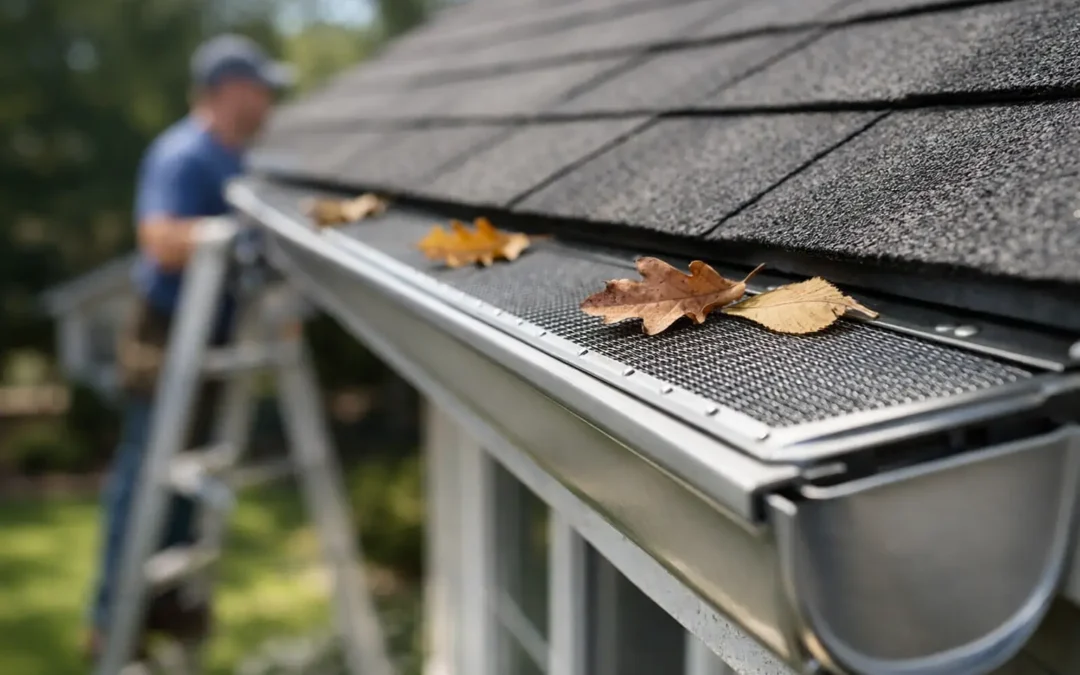
The biggest advantage is fewer blockages. Guards are designed to keep larger debris like leaves, twigs, and seed pods from settling inside the gutter trough. That means downspouts are less likely to choke up during a storm.
They also reduce the frequency of gutter cleanings. That does not mean zero cleanings. Fine debris, roofing grit, and small organic matter can still collect over time, especially with lower-quality systems. But instead of cleaning several times a year, some homeowners can get by with occasional inspections and lighter maintenance.
Another benefit is safety. If gutter guards reduce how often you or someone else has to climb a ladder, that has value on its own. For older homeowners, busy families, landlords managing multiple properties, or anyone with a steep roofline, reducing ladder work is more than a convenience.
In some cases, guards can also help with winter performance. They do not prevent ice dams by themselves, because ice dams are usually caused by heat loss and roof ventilation problems. But cleaner gutters are generally better able to drain before freezing weather sets in, which can reduce some cold-weather gutter trouble.
Where gutter guards fall short
This is the part many homeowners do not hear until after installation. Gutter guards still need maintenance. Debris can collect on top of the guard, especially with mesh systems under heavy leaf drop. Pine needles and small seeds can be particularly stubborn. If that top layer is ignored, water may sheet over the edge instead of flowing through.
Performance also varies by product. Brush inserts, foam inserts, reverse-curve covers, and micro-mesh systems all behave differently. Some are more affordable up front but clog faster or break down sooner. Others cost more but perform better over time. Asking whether gutter guards are worth it without asking which type is worth it can lead to the wrong decision.
Installation quality matters too. Poorly fitted guards can interfere with water flow, loosen over time, or create problems at the roof edge. If the gutter itself is pitched wrong, undersized, or already damaged, adding a guard will not fix the underlying issue. It is like putting a screen over a system that already struggles to drain.
There is also the cost question. If you spend a significant amount on gutter guards but your home only needs one easy cleaning per year, the payback may be weak. On the other hand, if you pay for repeated cleanings, deal with overflow, or have hard-to-reach second-story gutters, the math shifts quickly.
When gutter guards are usually worth it
Homes surrounded by trees are the clearest example. If leaves and twigs constantly load up your gutter system, guards can reduce a repetitive and expensive problem. This is especially true where gutters overflow near entryways, patios, flower beds, or foundation lines.
They also make sense when gutter access is difficult. Tall homes, steep roofs, detached garages, and sections above porches are all harder and riskier to clean. In those situations, reducing maintenance frequency can be worth the upfront cost.
Landlords and commercial property owners may also benefit because fewer gutter blockages can mean fewer emergency calls during storms. That does not replace inspections, but it can reduce routine trouble.
If you have experienced fascia rot, basement moisture near heavy runoff zones, or recurring downspout clogs, guards may be a smart defensive upgrade. They are not the only solution, but they can become part of a better water-management system.
When they may not be worth it
If your property has minimal tree coverage and your gutters stay mostly clear, guards may offer little return. The same goes for single-story homes where gutters are easy to inspect and clean.
They may also be a poor investment if your existing gutters are old, loose, undersized, or improperly sloped. In that case, the better first step is correcting the gutter system itself. Protection only works when the base system is sound.
Budget matters too. If you are choosing between repairing damaged gutters and adding guards, repair comes first. Water has to move correctly before accessories enter the conversation.
The biggest factor most people miss
The right question is not simply are gutter guards worth it. It is whether they are worth it on your specific home. Roof pitch, shingle type, tree type, gutter size, and local weather all affect performance.
For example, homes under pine trees often need a different level of protection than homes under broadleaf trees. Pine needles can slip through lower-grade screens and create dense blockages. In the Hudson Valley, where properties often have mature trees and weather swings from summer storms to winter freeze-thaw cycles, those details matter.
That is why a real inspection is more useful than a sales pitch. A contractor should look at how your gutters currently perform, whether the downspouts drain properly, and whether the roof edge and fascia are in good condition. If they jump straight to a product without checking the system, that is a red flag.
What to look for before you buy
Start with the condition of the existing gutters. If they sag, leak at seams, pull away from the fascia, or overflow because of poor pitch, address that first. Guards should be installed on a system that is structurally sound.
Then look at the type of debris your home gets. Large leaves, pine needles, seed pods, and roof granules each behave differently. The best guard for one home may be the wrong one for another.
Ask about maintenance expectations. A trustworthy contractor will tell you what the guard can and cannot do, how often it should be checked, and what kind of warranty applies to both product and workmanship.
Finally, think long term. The cheapest option is not always the most affordable if it fails early or creates cleanup headaches. On the other hand, the most expensive option is not automatically the best fit either. Good recommendations should match the property, not just the price point.
So, are gutter guards worth it for most homeowners?
For many homeowners, yes, especially when clogged gutters are a recurring problem and the system is otherwise in good shape. They can reduce maintenance, help gutters drain more reliably, and lower the odds of water ending up where it should not. That said, they are not maintenance-free, and they are not a substitute for proper gutter design or timely repairs.
The safest approach is to treat gutter guards as a performance upgrade, not a cure-all. If your home deals with frequent debris, hard-to-reach gutters, or repeated overflow issues, they are often worth serious consideration. If your gutters rarely clog and are easy to service, you may be better off saving that money for other exterior maintenance.
A good contractor should be able to tell you not just whether gutter guards can be installed, but whether they should be. That kind of straight answer protects your budget as much as it protects your home.