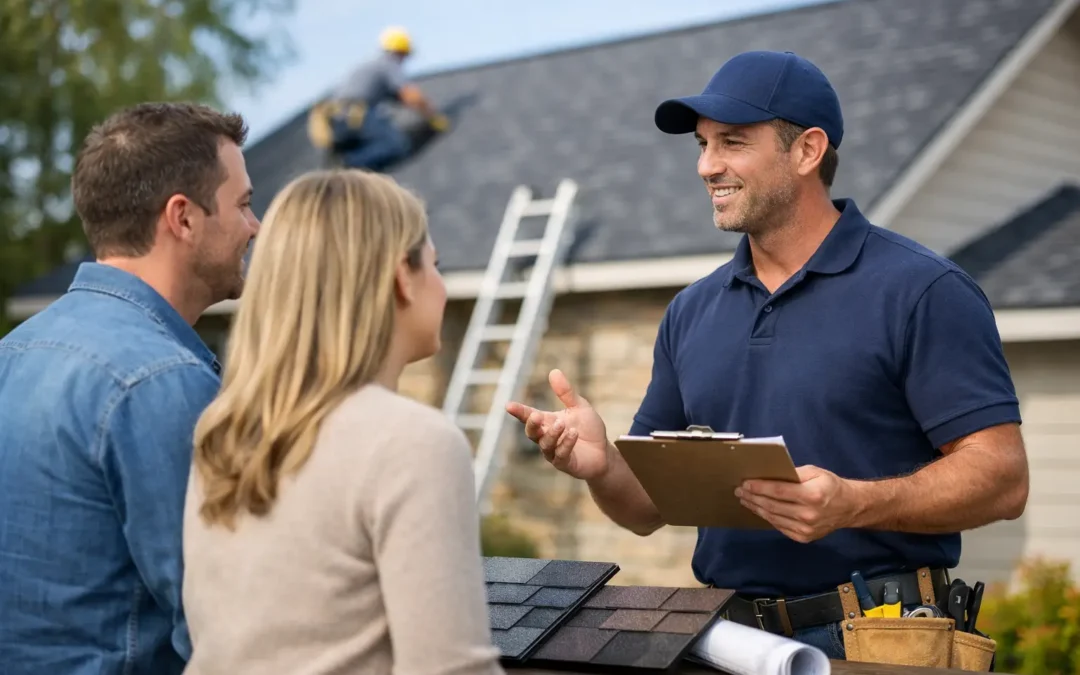
When a roofer shows up for an estimate, most property owners ask one thing first – how much? That matters, of course. But if you only focus on price, you can miss the bigger issues that decide whether the job goes smoothly or turns into months of stress. If you’re wondering what to ask a roofing contractor, the right questions can protect your budget, your property, and your peace of mind.
Roofing is one of those jobs where the difference between a professional crew and a careless one is obvious later, not always on day one. A roof can look fine from the driveway and still be installed wrong, ventilated poorly, or left vulnerable around flashing, valleys, and penetrations. That is why a good estimate should feel less like a sales pitch and more like a clear conversation.
What to ask a roofing contractor before you sign
The first question is simple: are you licensed and insured for this work? A contractor should be able to answer that clearly and provide proof without hesitation. General liability and workers’ compensation matter more than many homeowners realize. If someone is injured on your property or your home is damaged during the project, you do not want gray areas.
Next, ask how long they have been handling roofing projects like yours. That last part matters. A contractor who mainly handles small repairs may not be the best fit for a full replacement, and a company built around residential asphalt shingles may not be the right choice for a commercial flat roof. Experience is not just about years in business. It is about relevant experience with your roof type, your building style, and the conditions common in this area.
You should also ask whether the crew is trained, certified, or backed by a major manufacturer. Certifications do not guarantee perfection, but they do show that the contractor has met outside standards and follows specific installation practices. That can affect both workmanship quality and the warranty options available to you.
Ask how they inspect and diagnose the problem
A reliable contractor should explain what they found and how they found it. If you are dealing with a leak, for example, the source is not always directly above the stain on your ceiling. Water travels. A rushed inspection can lead to a patch that misses the real problem.
Ask whether they will inspect the shingles or membrane, flashing, ventilation, underlayment, decking, gutters, and attic conditions if needed. The more complete the inspection, the more accurate the recommendation. If they jump straight to replacement without explaining why repair is not enough, slow the conversation down. Sometimes a full replacement is the right call. Sometimes it is not.
This is also the point where you ask for photos. Good contractors often document problem areas so you can actually see what they are talking about. That level of transparency helps you compare bids based on facts, not pressure.
Ask whether repair or replacement makes more sense
A trustworthy roofer should be willing to talk through both options if both are on the table. If your roof has localized storm damage but the rest of the system is in decent shape, a repair may buy you more useful life. If the roof is older, leaking in multiple areas, or has underlying deck issues, replacement may be the smarter long-term investment.
The honest answer is not always the cheaper answer up front. But it should be the one that makes the most financial sense over time. Ask what they would recommend if it were their own property. Then ask why.
Get specific about materials and installation
Not all roofing proposals are equal, even when the price difference looks small. One contractor may be quoting better shingles, upgraded underlayment, improved ventilation, and proper ice and water protection. Another may be pricing the bare minimum.
Ask exactly what materials are included in the proposal. That means brand, product line, color options, underlayment type, flashing details, ventilation components, ridge cap, starter shingles, and cleanup procedures. If you have a low-slope or commercial roof, ask about membrane thickness, attachment method, insulation, and drainage details.
You should also ask who is making material decisions if hidden damage is discovered after tear-off. Roof decking is a common example. If plywood or boards underneath are rotted, how will that be priced and approved? A professional company will explain the process before work starts, not after your roof is open.
What to ask a roofing contractor about warranties
Many owners hear the word warranty and assume they are fully covered. That is not always the case. There is usually a manufacturer warranty on materials and a separate workmanship warranty from the contractor. They cover different things.
Ask what the manufacturer warranty includes, what can void it, and whether the contractor is authorized to offer any enhanced coverage. Then ask how long the workmanship warranty lasts and what it actually covers. If a leak appears around flashing a year later, who handles it? If shingles fail because they were installed incorrectly, is labor included?
A strong warranty is only valuable if the company stands behind it. That is why local reputation matters. A contractor with established reviews, a real office presence, and a history of service is easier to reach if you need help later.
Ask how the project will be managed
One of the biggest complaints in roofing is poor communication. The work may eventually get done, but the customer is left guessing about the schedule, delivery, noise, weather delays, and next steps. You can avoid a lot of that frustration by asking management questions early.
Ask who your main point of contact will be. Ask when the job can start, how long it is expected to take, and what happens if weather interrupts the schedule. Ask whether the crew will protect landscaping, siding, driveways, and outdoor equipment. Ask how cleanup is handled at the end of each day and after final completion.
This is especially important for families, landlords, and business owners who cannot afford a disorganized project. A good roofing company should sound organized before the first shingle comes off.
Ask about permits, code compliance, and insurance claims
Depending on the scope of work, permits may be required. Ask who is responsible for obtaining them and making sure the job meets local code. If the contractor seems vague here, take that seriously. Permits and inspections are part of protecting your investment.
If the roof damage is storm-related, ask whether they have experience working with insurance claims. That does not mean a contractor should make promises about coverage decisions. It does mean they should know how to document damage, provide scope details, and communicate professionally during the process.
For property owners in areas like Orange County or Dutchess County, weather can be hard on roofs. Wind, heavy rain, snow load, and ice dam conditions all change what a contractor should be looking for. Local experience is not just a nice extra. It affects how well a roofer understands the problems your roof is likely to face.
Ask for references and recent project examples
A reputable contractor should be comfortable backing up their claims. Ask for recent local jobs, reviews, or references. You do not need a long list. You just need enough proof to see patterns in how they work.
Look for comments about responsiveness, cleanup, professionalism, and whether the final result matched the proposal. A roof is a major purchase, and the experience matters almost as much as the material. If customers consistently mention missed calls, surprise charges, or messy job sites, pay attention.
Ask about payment terms and financing
You should always understand the payment structure before work begins. Ask how much is due upfront, when progress payments are required, and when final payment is expected. Be cautious if a contractor asks for a large payment before materials are delivered or work is scheduled.
Financing can also be worth discussing, especially for full replacements or unexpected storm damage. For many property owners, the best contractor is not just the one with the lowest bid. It is the one that offers a clear scope, dependable workmanship, and a payment plan that makes the project manageable.
Red flags that matter more than a low price
If a contractor avoids written details, pressures you to sign immediately, refuses to show insurance, or cannot explain the scope in plain language, move on. The same goes for vague warranties, door-to-door storm chasers, and bids that are dramatically lower than everyone else without a clear reason.
A strong roofing contractor should make you feel more informed as the conversation goes on, not more confused. That is the standard worth holding.
Hiring a roofer is not about asking the perfect question list word for word. It is about making sure the company in front of you is qualified, transparent, and ready to protect your property the right way. If the answers are clear, specific, and backed by proof, you are probably talking to the right team.