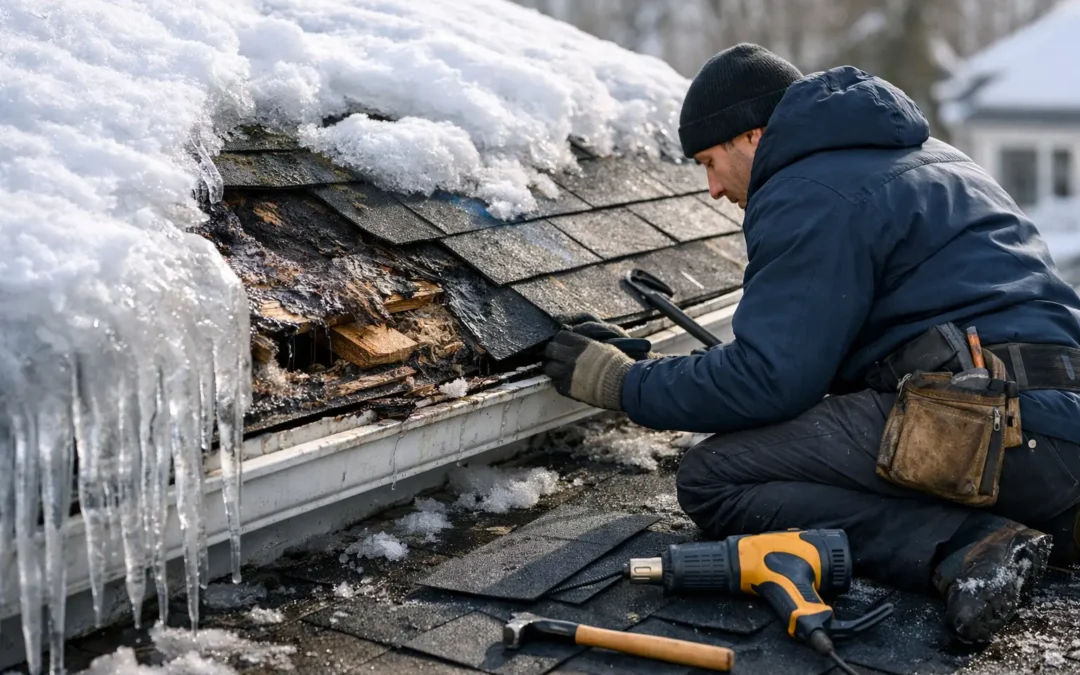
When water starts dripping from a ceiling in the middle of a freeze, the real problem is often sitting at the roof edge. Ice dam roof damage repair usually becomes urgent because the damage spreads quietly first – under shingles, into insulation, along rafters, and down interior walls. By the time you see a stain, the roof system may already be compromised.
In the Hudson Valley, this is not a rare winter headache. Snow buildup, uneven attic temperatures, and repeated freeze-thaw cycles create the exact conditions that let ice dams form. Homeowners often assume the issue is just snow on the roof. It is not. The real trouble starts when melting water gets trapped behind a ridge of ice and has nowhere to go except back into the home.
What causes ice dams in the first place?
An ice dam forms when heat from the house escapes into the attic and warms the roof deck unevenly. Snow higher up on the roof starts to melt, even though outdoor temperatures are still below freezing. That meltwater runs down toward the colder eaves, where it refreezes and builds a thick band of ice.
Once that barrier forms, new meltwater cannot drain properly. It pools behind the dam and can work its way beneath shingles, flashing, and underlayment. Roofs are designed to shed water downward, not hold standing water under winter pressure. That is why even a roof that looks fine from the ground can start leaking during an ice dam event.
The homes most at risk usually have one or more underlying issues: poor attic insulation, weak ventilation, clogged gutters, air leaks from the living space, or an older roofing system with vulnerable details around valleys, chimneys, and roof edges. The ice is the symptom. The roof and attic conditions are the cause.
Signs you may need ice dam roof damage repair
Some warning signs are obvious, and some are easy to miss until the repair gets larger and more expensive. Interior leaks during or just after snow accumulation are one of the clearest red flags. So are water stains on ceilings, peeling paint near exterior walls, damp insulation in the attic, and visible frost on roof sheathing.
Outside, you may notice large icicles hanging from gutters, a thick ridge of ice at the eaves, bent gutters, loose shingles, or sections of roofing that look lifted or distorted. Icicles alone do not always mean major damage, but they do tell you heat and moisture are not behaving the way they should.
It also matters where the water shows up. A stain far from the roof edge can still be caused by an ice dam because water often travels along framing before it appears inside. That is one reason quick inspection matters. The source and the visible symptom are not always in the same place.
Why fast action matters
Ice dam damage tends to multiply. A small leak can soak insulation, reduce energy efficiency, stain drywall, feed mold growth, and weaken wood decking. If water reaches electrical fixtures or concealed wall cavities, the repair scope can expand quickly.
There is also the issue of repeated exposure. One leak event is bad enough, but many homes go through several thaw-refreeze cycles in a single winter. If the first problem is ignored, the next storm can drive water deeper into the structure.
That is why the right response is not just removing visible ice and hoping for the best. Ice dam roof damage repair should address both the immediate roof breach and the building conditions that allowed the dam to form.
What professional ice dam roof damage repair usually includes
The repair process depends on how far the water got and what part of the roofing system failed. In a minor case, the work may focus on replacing damaged shingles, sealing vulnerable penetrations, and correcting a small section of underlayment or flashing. In a more serious case, the contractor may need to remove roofing materials at the eaves, replace rotted decking, inspect fascia and soffits, and repair interior water damage after the roof is secured.
A proper inspection should also include the attic. This is where the long-term fix starts. If warm air is leaking upward from recessed lights, attic hatches, plumbing penetrations, or duct chases, the roof will keep facing the same melt pattern. Insulation depth and attic ventilation also need to be evaluated together. More insulation is not always the full answer if airflow is poor, and ventilation alone will not solve major heat loss from below.
In some homes, gutter damage is part of the repair as well. Ice dams can pull gutters loose or twist them out of alignment, which creates drainage problems even after winter ends. If the roof edge has been under stress for several storms, that area needs a close look.
What not to do when you see an ice dam
Panic leads to expensive mistakes. Chipping at ice with a shovel, axe, or hammer can tear shingles, puncture underlayment, and damage gutters. Climbing onto an icy roof without proper safety equipment is even riskier. The combination of snow, steep pitch, and hidden ice makes falls a real danger.
Hot water, salt, and improvised melting methods can also cause problems. Rock salt can harm shingles, metal components, landscaping, and masonry. Pouring hot water may briefly open a drainage path, but it often refreezes fast and creates a worse hazard.
If water is entering the house, protecting the interior is smart. Catch drips, move valuables, and reduce exposure where you can. But the roof itself needs a professional response, especially if the leak is active or the ice buildup is heavy.
Temporary relief versus real repair
There is a difference between emergency mitigation and full correction. In the middle of winter, a contractor may create drainage channels in the ice, remove snow from critical roof sections, or perform targeted temporary repairs to stop active intrusion. That can protect the home right away.
Still, emergency work is not always the end of the job. Once weather allows, the roof should be checked for hidden damage and the attic conditions should be reviewed. Otherwise, the same home often ends up dealing with the same emergency next winter.
This is where experienced local contractors tend to spot patterns faster. In areas like Orange, Dutchess, Ulster, and Sullivan counties, freeze-thaw cycling is part of the job. The right repair plan accounts for regional winter conditions, not just the stain on the ceiling.
How much ice dam roof damage repair can cost
Costs vary because the damage can range from a small edge repair to major roof and interior restoration. A limited repair may involve replacing a section of shingles, correcting flashing, and sealing moisture entry points. A larger project might include decking replacement, insulation correction, ventilation upgrades, gutter repair, drywall work, and repainting.
The biggest cost factor is usually how long the problem has been active. Water that stays trapped in the roof system causes more structural and material damage than a leak caught early. Roof age matters too. On an older roof near the end of its service life, a focused repair may not be the best investment if widespread vulnerability is already present.
A trustworthy contractor should explain that trade-off clearly. Sometimes a targeted repair is the right move. Sometimes a larger roof section, or even a full replacement, makes better financial sense because it solves multiple failure points at once.
How to prevent it from happening again
Prevention is usually a combination of roofing work and attic improvements. Air sealing is one of the most effective steps because it reduces the heat escaping into the attic. Upgrading insulation helps maintain a more consistent roof temperature. Improving intake and exhaust ventilation supports balanced airflow, though the exact setup depends on the home.
At the roof level, ice and water shield in vulnerable areas adds an important layer of protection. It does not stop ice dams from forming, but it helps reduce water intrusion when they do. Keeping gutters clean and drainage paths open also helps, especially before winter storms start stacking up.
Snow removal can be useful in heavy accumulation periods, but timing matters. Removing roof snow before thick ice develops is more effective than trying to fight a fully formed dam. That work should be handled carefully to avoid damaging the roofing surface.
If your home has had repeat winter leaks, this is one of those issues worth solving fully. A quick patch may stop the current drip, but a real fix protects the roof, the attic, and the rooms below it. Companies like CPG Roofing & Siding see this firsthand every winter: the homes that get inspected early and repaired correctly usually avoid the biggest interior damage later.
The best next step is simple. If you see signs of an ice dam, treat it like an active roof problem, not a seasonal nuisance. The faster you address it, the more of your home you protect.