
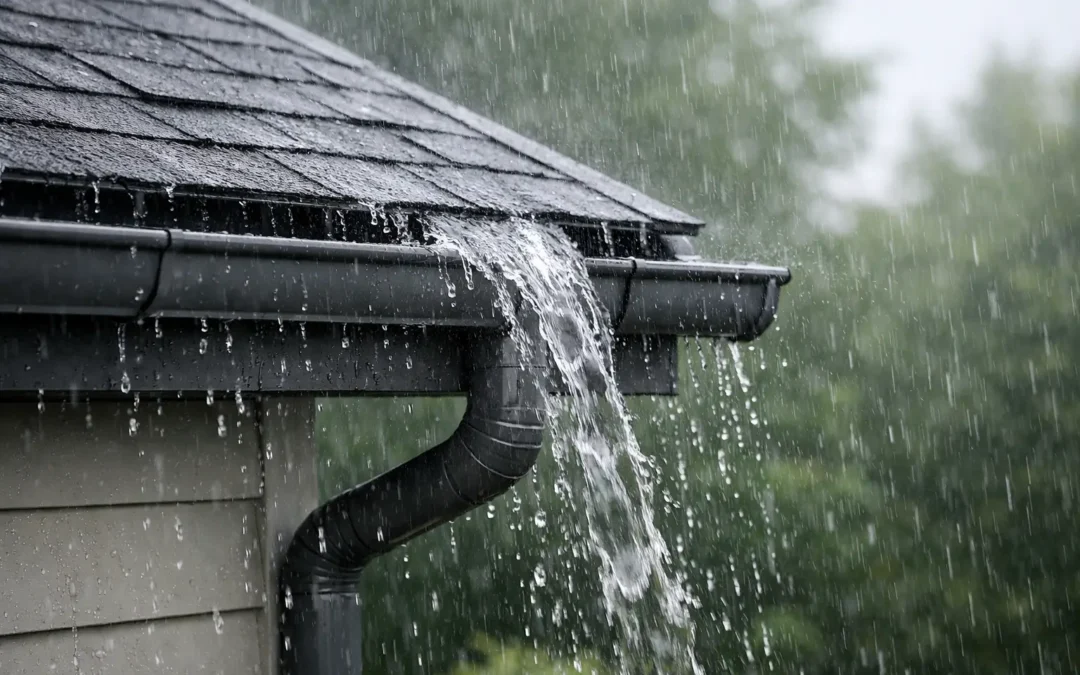
A hard Hudson Valley downpour can expose a weak gutter system in minutes. Water spills over the front edge, pools beside the foundation, soaks siding, and may find its way behind fascia boards or into a basement. The best gutters for heavy rain are not simply the largest gutters available. They are a correctly sized, securely installed system with clear downspouts and a drainage plan that moves water well away from the building.
For homeowners, landlords, and commercial property owners, this decision protects more than the roofline. It protects landscaping, foundations, walkways, siding, and the interior spaces below them. Here is what actually matters when choosing gutters that can handle serious rainfall.
Best Gutters for Heavy Rain Start With Proper Sizing
Standard 5-inch K-style gutters work well on many homes, but they are not always enough for large or steep roofs. During a fast-moving storm, a broad roof sheds an enormous amount of water toward the eaves. If the gutter channel is too small, it can overflow even when it is clean and in good condition.
For many properties with heavy water flow, 6-inch K-style gutters are the better choice. The extra inch may sound minor, but it provides substantially more capacity. Six-inch gutters are especially worth considering when a roof has long runs, steep pitches, large valleys, metal roofing, or upper roof sections that drain onto a lower roof.
Commercial buildings and certain larger homes may need box gutters or custom-fabricated systems. These are designed for higher volume, but their performance depends heavily on professional layout, slope, outlet placement, and maintenance access. Bigger is not automatically better if the system is poorly designed.
Downspouts Are Half the System
A large gutter cannot perform properly if its downspouts are undersized or too few. Water has to leave the gutter channel quickly. For a 6-inch gutter system, oversized 3-by-4-inch rectangular downspouts are often a smart match because they move more water than standard smaller downspouts.
Downspout placement matters just as much as size. Long gutter runs need enough outlets to prevent water from backing up during intense rain. Roof valleys often need dedicated attention because they concentrate runoff in one location. A contractor should look at the roof layout rather than placing downspouts only where they are least visible.
Choose a Material That Can Handle the Conditions
The right gutter material balances durability, appearance, budget, and the condition of the property. In New York, gutters must deal with heavy rain, wet leaves, snow loads, freeze-thaw cycles, and occasional ice buildup.
Seamless Aluminum Is the Reliable All-Around Choice
For most residential properties, seamless aluminum gutters offer the strongest combination of value and performance. Aluminum does not rust, handles normal weather exposure well, and is available in many colors. When formed on-site to fit the home, seamless gutters have fewer joints than sectional systems, which means fewer potential leak points.
Heavier-gauge aluminum is preferable for areas that regularly see snow and ice. Thin material can dent more easily from ladders, branches, or ice. Quality hangers installed at proper intervals also make a major difference. Even excellent gutters can pull away from the fascia if they are not fastened correctly.
Copper and Steel Have Specific Uses
Copper gutters are long-lasting and visually distinctive, making them a popular choice for historic homes and high-end projects. They come with a higher upfront cost and require experienced installation, particularly at soldered joints. Their natural patina is part of the appeal, but it is not the right look for every property.
Galvanized steel is strong, but it can eventually rust if its coating is damaged or wears down. It is less common for standard residential replacement projects today. Stainless steel offers greater corrosion resistance, though the cost is significantly higher. For most homeowners focused on rain management and long-term value, heavy-gauge seamless aluminum remains the practical answer.
Gutter Shape Matters, But Capacity Matters More
K-style gutters are the most common option on homes because they hold a good volume of water and have a finished appearance that complements many rooflines. Their flat back also allows secure attachment to fascia boards.
Half-round gutters have a classic profile and can be a good fit for older homes or specific architectural styles. They shed debris well when installed with adequate slope, but they generally offer less water capacity than comparable K-style gutters. On a roof with heavy runoff, a larger half-round system may be necessary to keep up.
For heavy rain, avoid choosing a profile based only on curb appeal. A gutter system should first match the roof’s drainage demands. Appearance can then be tailored through color, material, and trim details.
Installation Details That Prevent Overflow and Damage
Many gutter problems are installation problems in disguise. A system can be the proper size and still fail if it has the wrong pitch, weak attachment points, or poor drainage at ground level.
Gutters need a slight, consistent slope toward each downspout. Too little slope can allow standing water and debris buildup. Too much slope can look uneven and reduce capacity near the high end. The goal is controlled flow, not a noticeable tilt.
The gutter should also sit at the correct position below the roof edge. If it is mounted too low or too far from the drip line, fast-moving water can shoot past the gutter during a storm. If it is too high, it may interfere with shingles or collect snow and ice. Proper drip edge flashing helps direct roof runoff into the gutter rather than behind it, where rot can develop along the fascia.
Strong hidden hangers, properly secured into sound framing, are essential. Loose or sagging gutters create low spots where water collects. Before replacement, damaged fascia boards should be repaired instead of covered up. New gutters need a solid surface to hold their line through years of rain, snow, and seasonal movement.
Do Gutter Guards Help in Heavy Rain?
Gutter guards can reduce maintenance, but they are not a cure for undersized gutters, poor slope, or clogged underground drains. Their usefulness depends on the type of debris around the property and the quality of the guard system.
A well-designed guard can keep large leaves, twigs, and shingle grit from filling the gutter channel. That helps preserve water flow during storms. However, some guard styles can allow fine debris to accumulate on top, and all guards still need periodic inspection. If the roof sheds a large volume of water, the guard must also allow that water to enter the gutter without skimming over the edge.
For wooded properties in Orange, Dutchess, Ulster, and Sullivan counties, gutter guards can be especially helpful after leaf season. Still, the best approach is to pair a quality guard with an appropriately sized gutter and scheduled cleaning or inspection. Never assume a guarded gutter is maintenance-free.
Send Water Away From the Foundation
Rain management does not stop at the downspout. If discharge empties directly beside the foundation, the property can still face saturated soil, erosion, basement moisture, and damaged landscaping.
Downspout extensions should carry water away from the building and release it where the grade slopes safely away. On some properties, underground drainage lines, pop-up emitters, or catch basins may be appropriate. These solutions must be planned carefully. A buried line that clogs or freezes can create a hidden backup problem, so it should remain accessible for cleaning.
Pay close attention to low areas, patios, walkways, and neighboring properties. The goal is to control runoff without creating a new drainage issue somewhere else on the lot.
When It Is Time to Replace Gutters
Frequent overflow does not always mean replacement is necessary. A professional cleaning, repaired hanger, resealed end cap, or added downspout may solve the problem. But replacement is usually the wiser investment when gutters are repeatedly pulling away, visibly sagging, rusting, leaking at multiple seams, or causing fascia damage.
If you are replacing a roof, it is also the right time to assess the gutter system. Roof edges, flashing, fascia condition, and drainage routes are easier to evaluate together. Waiting until the next major storm can turn a manageable exterior project into an emergency repair.
Before the next stretch of heavy rain, have the roofline inspected with capacity in mind, not just appearance. CPG Roofing & Siding can help identify whether your property needs a repair, larger seamless gutters, additional downspouts, or a complete drainage solution built to protect it for the long haul.