A gutter system usually gets attention only after it fails – when water starts pouring over the edge, landscaping washes out, or a basement wall starts showing moisture. That is why choosing the best gutter systems for homes is less about picking whatever looks clean on install day and more about protecting the roofline, siding, foundation, and yard for years.
For most homeowners, the right answer is not the most expensive system on the market. It is the one that fits the home’s roof design, handles local rainfall, stands up to winter conditions, and does not create a maintenance problem every season. In places where heavy rain, wet leaves, snow, and ice all show up in the same year, those details matter.
What makes the best gutter systems for homes?
A good gutter system does three jobs well. It has to capture water efficiently, move it quickly to the downspouts, and discharge it far enough from the home to prevent damage. If one part of that chain breaks down, the whole system underperforms.
Capacity matters first. A gutter that is too small for the roof area will overflow during heavier storms even if it is brand new. Pitch matters too. Gutters need the right slope so water moves toward the downspouts instead of sitting in the trough. Then there is durability. A system that dents easily, separates at the seams, or clogs every few weeks is not a good value, even if the upfront price looks attractive.
That is why the best choice often comes down to balancing material, profile, size, and maintenance needs rather than chasing one universal “best” product.
Seamless aluminum is the top choice for most homes
If a homeowner asks for the most practical option, seamless aluminum usually rises to the top. It is widely considered one of the best gutter systems for homes because it offers the strongest balance of cost, performance, and longevity.
Seamless gutters are made to fit the house on site, which reduces the number of joints along the run. Fewer joints mean fewer places for leaks, separation, and debris buildup. Aluminum also resists rust, keeps weight manageable, and comes in a wide range of colors so it can blend with trim and fascia.
For many homes, especially standard single-family properties, 5-inch seamless aluminum gutters handle normal water flow well. On larger roofs or steeper rooflines, 6-inch gutters may be the smarter move because they can manage more runoff during intense storms.
The trade-off is that aluminum can dent if struck by ladders or heavy branches. It is durable, but not indestructible. Even so, for the majority of homeowners, it is the strongest all-around value.
Copper gutters offer premium performance and curb appeal
Copper gutters are a high-end option, and for the right home, they are excellent. They last a long time, resist corrosion, and develop a natural patina that many homeowners love, especially on historic, custom, or upscale properties.
Performance is not the issue with copper. Cost is. Copper is significantly more expensive than aluminum, both in materials and installation. That makes it a smart fit when appearance, long-term value, and architectural style justify the investment.
If the home has a distinctive exterior and the owner plans to stay long term, copper can make sense. If the goal is reliable water management on a tighter budget, aluminum usually wins.
Vinyl gutters are affordable, but they have limits
Vinyl gutters appeal to budget-conscious homeowners because they are inexpensive and resistant to rust. They are also lighter and easy to replace in sections.
The problem is that lower cost often comes with shorter service life, especially in climates that swing between hot summers and freezing winters. Vinyl can become brittle, crack, warp, or separate over time. That makes it less dependable where snow loads, ice, and cold-weather stress are common.
For a mild climate or a short-term budget fix, vinyl may be acceptable. For homeowners looking for durable protection with fewer future headaches, it is usually not the first recommendation.
Steel gutters are strong, but rust is a concern
Steel gutters bring strength. They can handle impact better than aluminum and may be useful on homes exposed to harsher conditions. Galvanized steel is the more common residential choice.
Still, steel comes with maintenance concerns. Over time, protective coatings can wear down and rust can develop, especially if the system holds standing water or debris. Steel also weighs more, which means installation quality matters even more.
For some properties, steel is a reasonable specialty choice. For most homes, seamless aluminum delivers similar practical benefits with less maintenance risk.
Gutter shape matters more than many homeowners realize
Not all gutters move water the same way. K-style gutters are the most common on modern homes because they hold more water than rounded systems of similar width and match many residential exteriors well. Their shape also helps with strength.
Half-round gutters are often chosen for older homes, historic designs, or homeowners who prefer a cleaner architectural look. They can work very well, but they typically carry less water than K-style systems and may cost more depending on material and bracket style.
If function is the priority, K-style usually makes the most sense. If appearance and historical fit matter just as much, half-round may be worth the added cost.
Gutter guards can help, but they are not magic
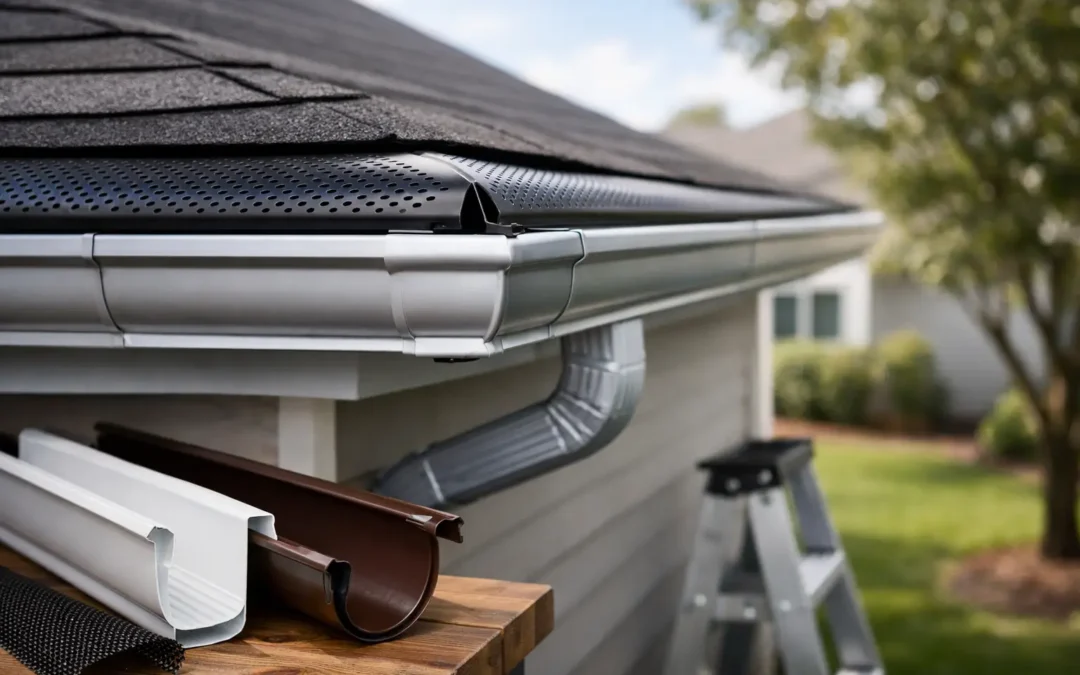
Homeowners often ask whether the best gutter systems for homes should include guards. In many cases, yes – especially if trees drop leaves, needles, or seed pods onto the roof. Guards can reduce clogging, cut down on cleaning frequency, and help water keep flowing where it should.
But gutter guards are not a maintenance-free promise. Some systems perform better than others, and even good guards still need occasional inspection. Fine debris can collect on top, and improper installation can create flow problems at the roof edge.
The better way to think about guards is this: they reduce maintenance, not eliminate it. On homes surrounded by mature trees, they can be a very smart upgrade. On homes with little debris exposure, they may be optional rather than essential.
Size and drainage layout are just as important as material
A homeowner can choose a premium gutter material and still end up with a weak system if the sizing is wrong. Bigger roofs shed more water. Steeper roofs send it faster. Valleys concentrate runoff in specific areas. That means downspout placement and gutter width need to be planned around the house, not guessed.
This is one reason cookie-cutter recommendations can go wrong. A simple ranch home may perform perfectly with a standard 5-inch system and well-placed downspouts. A larger colonial with multiple valleys may need 6-inch gutters, oversized downspouts, and extensions that move water farther from the foundation.
In the Hudson Valley, snow and ice also deserve attention. Gutters that are undersized or poorly pitched can hold water longer, which increases the risk of freezing problems in winter.
Installation quality often decides whether a gutter system succeeds
The material matters, but workmanship matters just as much. Poor fastening, weak pitch, sloppy seams, and bad downspout placement can ruin the performance of an otherwise good product.
A properly installed system should feel secure, align cleanly along the roofline, and direct water away from the home without overflow at normal rainfall levels. It should also account for drainage at the bottom, whether that means splash blocks, extensions, or a more intentional water management plan.
This is where professional installation pays off. A contractor who understands roofing, fascia condition, water flow, and exterior protection is less likely to treat gutters like an afterthought. That matters because gutter issues often connect to bigger problems with soffits, fascia, siding, and roof edges.
So what should most homeowners choose?
For most homes, the best answer is 5-inch or 6-inch seamless aluminum K-style gutters, professionally installed and sized to the roof’s water load. If the property has heavy tree coverage, adding a quality gutter guard system is usually worth serious consideration.
Copper is the premium upgrade for homeowners who want long-term durability and a distinctive look. Steel can make sense in select conditions. Vinyl is usually best reserved for lower-budget situations where lifespan is a secondary concern.
The key is to choose a system based on how the house handles water, not just what the neighbor installed or what looks cheapest at first glance. A gutter system is there to protect the expensive parts of the home. When it is sized correctly, installed correctly, and matched to the property, it quietly does that job every time it rains.
If you are evaluating options for your home, start by looking at the trouble spots you already have – overflow near corners, pooling water, icy buildup, loose sections, or staining on siding. Those signs usually tell you what the next system needs to do better. The best gutter choice is the one that solves those problems before the next storm tests it.