
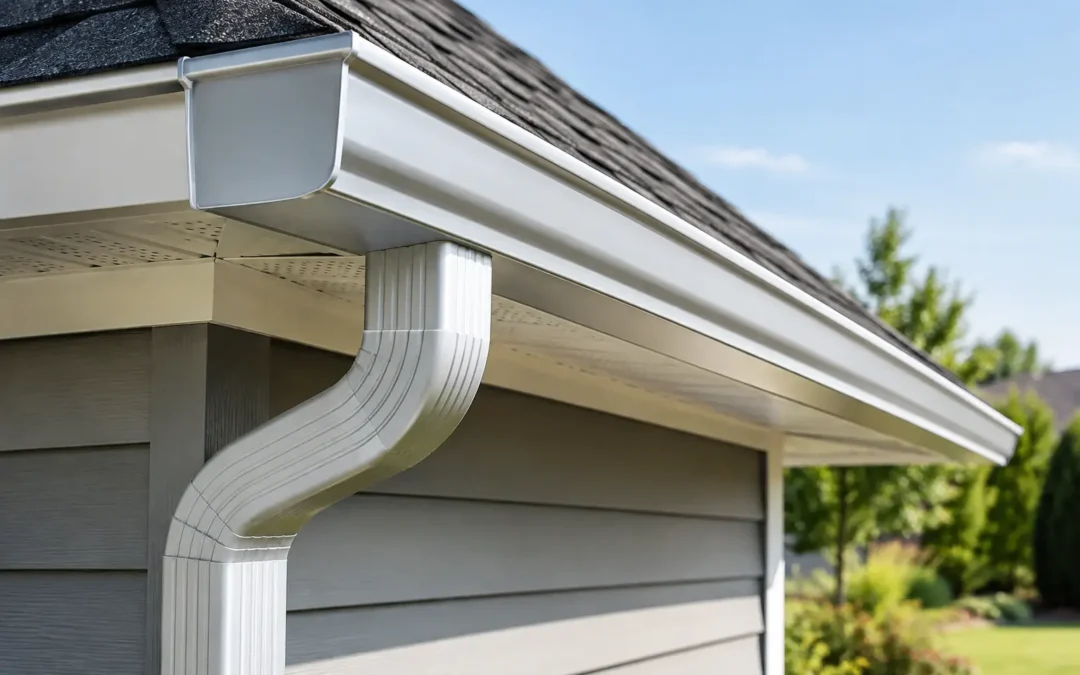
A gutter problem rarely stays a gutter problem for long. When water spills over the edge, runs behind the siding, or pools beside the foundation, it can lead to stained trim, rotted fascia, basement moisture, and expensive repairs. Aluminum gutter systems give homeowners a practical, durable way to move rain and snowmelt away from the home – especially in the Hudson Valley, where heavy rain, freeze-thaw cycles, and winter ice put exterior systems to work.
The right system is not simply a matter of picking a gutter color. Capacity, installation quality, downspout placement, roof shape, and maintenance all affect whether gutters protect your property when the weather turns.
Why Aluminum Gutter Systems Are a Smart Choice
Aluminum is the most common gutter material for good reason. It is lightweight, rust-resistant, paintable, and available in many colors to complement siding, trim, and roofing. Unlike steel, aluminum will not develop rust when its finish is scratched. Unlike vinyl, it is less likely to become brittle during a cold New York winter.
For most residential properties, aluminum offers the right balance of performance and cost. It handles ordinary rainfall well, holds up for years with proper care, and can be formed to fit the exact dimensions of your roofline. That custom fit matters. Fewer seams mean fewer places for water to escape over time.
There are trade-offs. Aluminum can dent if struck by a ladder, branch, or heavy impact. Thinner material is also more likely to flex or sag under the weight of trapped debris and ice. That is why material thickness, hanger spacing, and secure attachment to sound fascia are just as important as the material itself.
Seamless Aluminum Gutter Systems Reduce Leak Risks
Sectional gutters come in pre-cut lengths joined together with connectors and sealant. They can be appropriate for smaller repairs or simple installations, but every connection is a future maintenance point. Sealant ages, joints shift, and leaves often collect where sections meet.
Seamless aluminum gutter systems are formed on-site in continuous lengths for each run of your roofline. They still have seams at corners and downspout outlets, but they eliminate most of the joints along the straight sections. That reduces opportunities for leaks and creates a cleaner finished appearance.
For a home with long roof edges, mature trees, or a history of overflowing gutters, seamless gutters are often the stronger long-term choice. They are custom-made for the property rather than pieced together from standard lengths. Professional measurement is essential, however. A seamless gutter will only perform as well as its pitch, attachment, and drainage plan allow.
Choosing Between 5-Inch and 6-Inch Gutters
Five-inch K-style gutters remain a common choice for many homes. They can work well on modest roof areas with standard pitches and properly sized downspouts. But a gutter that technically fits the house is not always a gutter that offers the best protection.
Six-inch gutters carry substantially more water and are often worth considering for larger roofs, steep pitches, valleys, metal roofs, or areas that receive intense runoff during summer storms. They can also be a smart choice when homeowners are tired of water spilling over near entryways, patios, or foundation plantings.
The decision depends on more than square footage. A small section of roof that receives water from multiple valleys may need greater capacity than a larger, uncomplicated roof plane. An experienced contractor should look at how water moves across the roof before recommending a size.
Downspouts Matter as Much as the Gutters
A gutter can collect water perfectly and still fail to protect your property if the downspouts are undersized, poorly placed, or blocked. Downspouts move collected water from the gutter to a safe discharge point away from the foundation.
A proper layout accounts for roof drainage, walkway locations, landscaping, driveway grades, and low spots in the yard. Water should not empty directly beside the house or onto a surface where it can freeze into a hazard. Extensions, underground drain connections, or splash blocks may help direct runoff farther from the foundation, depending on the property.
Too few downspouts are a common cause of overflow. So are undersized downspouts, especially on larger gutter runs. When water rushes toward a single outlet during a downpour, the gutter can fill faster than it can drain. Adding capacity in the right locations is often more effective than repeatedly cleaning a system that was undersized from the start.
Gutter Guards Help, But They Are Not Maintenance-Free
Gutter guards can be useful for properties surrounded by maples, oaks, pines, or other heavy-shedding trees. By limiting the amount of leaves and debris entering the trough, they can reduce clogs and make seasonal maintenance easier.
They are not a cure-all. Fine debris, seed pods, and roof grit can still accumulate over time. Some guard styles may also cause water to overshoot in very heavy rainfall if they are not matched and installed correctly. Homeowners should be cautious of any product marketed as completely maintenance-free.
The best approach is to choose guards based on the trees around your property, the pitch and material of the roof, and the local weather conditions. Even with quality guards, periodic visual checks are wise. If water is flowing over the gutter during a storm, the system needs attention before the next storm causes damage.
Signs Your Gutters Need Repair or Replacement
Gutters do not have to be visibly falling off the house to be failing. Small warning signs often appear first, and acting early can prevent moisture damage to the roof edge, siding, and foundation.
Watch for these four issues:
- Water spilling over the gutter during ordinary rain, not just extreme storms.
- Sagging sections, loose fasteners, visible gaps, or peeling paint around the fascia.
- Water marks on siding, damp areas near the foundation, or soil erosion below roof edges.
- Repeated ice buildup, leaking seams, or gutters that need frequent patching.
Repairs make sense when the problem is isolated, such as a loose hanger, a damaged downspout, or a small seam leak. Replacement becomes the better value when multiple runs are sagging, the fascia needs repair, drainage design is inadequate, or old sectional gutters keep developing new leaks.
Installation Quality Protects the Roofline
A gutter system must be installed with a controlled slope toward the downspouts. Too little pitch can leave standing water and debris. Too much pitch can look uneven and reduce capacity at the higher end. The gutter also needs secure hangers placed at appropriate intervals to support water, leaves, and winter conditions.
Just as important, the installer should inspect the fascia before attaching new gutters. Covering rotted or soft wood with new aluminum does not solve the underlying issue. It can leave the system without the solid backing required to stay secure through wind, rain, and snow.
At CPG Roofing & Siding, gutter work is approached as part of the property’s full exterior protection system. The goal is not to install metal along the roof edge and leave. It is to create a drainage plan that supports the roof, siding, foundation, and the people using the property every day.
Plan Before the Next Storm
If your gutters overflow, pull away from the house, or send water toward the foundation, waiting can turn a manageable correction into a larger exterior repair. A professional inspection can identify whether cleaning, targeted repair, larger gutters, additional downspouts, or a complete replacement is the right next step.
Strong drainage starts with a system designed for your roof and installed with care. Address it before the next hard rain, spring thaw, or winter freeze gives water a path where it does not belong.