A water stain that appears after a hard Hudson Valley rain is rarely just a ceiling problem. It can point to a lifted shingle, worn flashing, a compromised vent boot, or moisture that has been moving through the roof system for weeks. An Ulster County roof inspection gives property owners a clear picture of what is happening overhead before a manageable repair turns into damaged insulation, stained drywall, or mold concerns.
Roof problems do not always announce themselves with a dramatic leak. Many begin at small vulnerable points and worsen through freeze-thaw cycles, wind, heavy rain, snow load, and clogged gutters. A professional inspection replaces guesswork with an honest assessment of the roof’s condition, the urgency of any repairs, and the practical options available.
When Should You Schedule an Ulster County Roof Inspection?
The best time to inspect a roof is before you are dealing with water inside the building. For most homes, an annual inspection is a sensible maintenance step, particularly if the roof is older, surrounded by mature trees, or has been repaired in the past. Commercial property owners may need more frequent checks because flat and low-slope roofing systems can hold water and hide developing issues.
There are also moments when an inspection should move to the top of the list. Schedule one after a major windstorm, hail event, prolonged rain, or heavy snow and ice. Wind can loosen shingles without blowing them completely off, leaving the roof exposed at edges, ridges, and penetrations. A storm inspection can document visible damage and help you make informed decisions about repairs and insurance next steps.
It is also wise to call when you notice granules collecting in gutters, shingles that curl or crack, dark streaks, sagging rooflines, peeling paint near the eaves, or a musty smell in the attic. These signs do not automatically mean you need a full replacement. They do mean the roof deserves a close look.
If you are buying, selling, or refinancing a property, an inspection can prevent surprises during the transaction. A general home inspection is useful, but it is not always a detailed roofing evaluation. A dedicated roof inspection focuses on the materials, drainage, flashing, ventilation, and areas most likely to create future expenses.
What a Professional Roof Inspection Looks For
A roof is a system, not just a layer of shingles. The visible surface matters, but so do the components that move water away from the building and control moisture below the deck. A thorough inspection considers the whole system rather than simply looking for missing shingles from the ground.
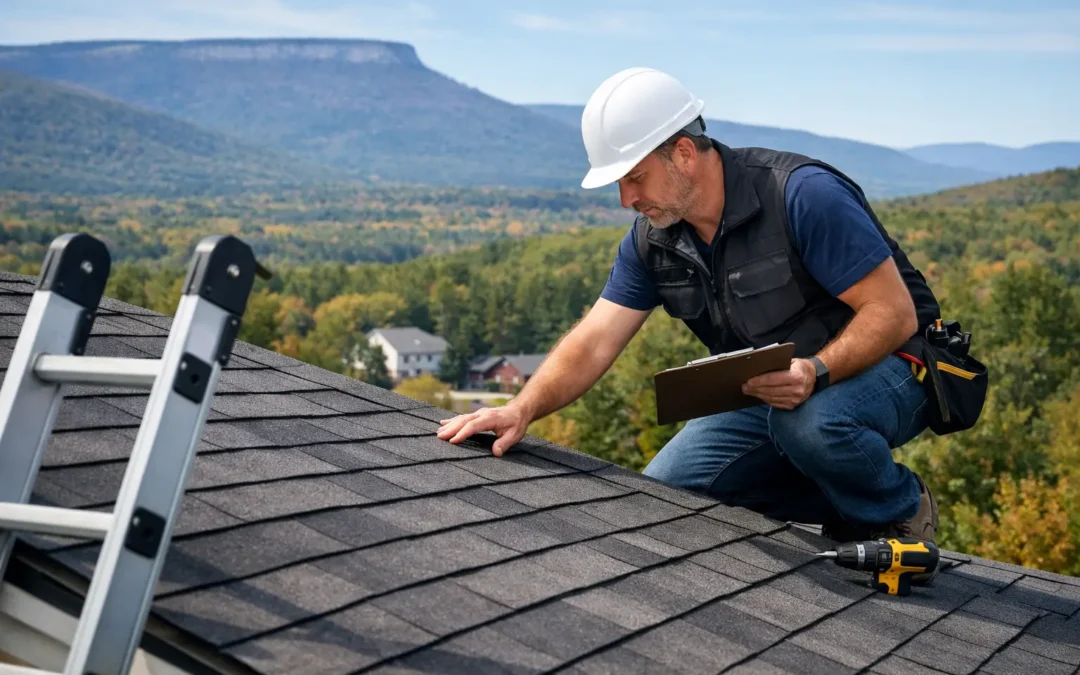
The inspection typically begins with the roof covering. An experienced professional checks for cracked, loose, blistered, cupped, or missing materials; exposed fasteners; worn ridge caps; deteriorated sealant; and signs that shingles are nearing the end of their service life. On low-slope or commercial roofs, the focus may include ponding water, open seams, membrane damage, flashing separation, and drainage performance.
Flashing receives close attention because many leaks begin where the roof meets a wall, chimney, skylight, valley, vent, or pipe. Flashing can fail even when the surrounding shingles appear sound. Small gaps at these transition points allow water to travel beneath the roofing material, where it may remain hidden until interior damage becomes visible.
Gutters and downspouts are part of the inspection as well. Overflowing gutters can push water behind fascia boards, soak the roof edge, and contribute to ice dams during winter. The right gutter solution depends on the roof design, nearby trees, and how water currently drains around the property. Cleaning may solve the problem in some cases; damaged or undersized gutters may require a more complete fix.
Inside the attic, signs such as wet insulation, rusted nails, wood staining, poor airflow, or daylight at roof penetrations can reveal conditions that are not visible outside. Ventilation matters because trapped heat and moisture can shorten shingle life, encourage condensation, and contribute to ice dam formation. An inspection should explain whether the issue is a repair need, a ventilation issue, a drainage issue, or a combination of factors.
Repair, Replacement, or Monitoring: The Right Answer Depends
A trustworthy inspection should not treat every roof issue as a replacement project. If damage is isolated and the rest of the roof remains in good condition, a targeted repair may be the smart choice. Replacing a few wind-damaged shingles, resealing flashing, repairing a vent boot, or correcting a gutter problem can protect the structure without unnecessary cost.
Replacement becomes more reasonable when the roof has widespread material failure, repeated leaks, significant storm damage, or has reached the end of its expected service life. Age alone does not decide the outcome. A well-maintained roof may have useful life left, while a younger roof with poor installation or chronic ventilation problems may need more extensive work.
Sometimes the right recommendation is monitoring. Cosmetic staining, minor granule loss, or a small condition that is not actively leaking may not require immediate construction. However, monitoring only works when you know what to watch for and when to reinspect. Clear documentation and straightforward communication help homeowners avoid both panic spending and costly delays.
Why Local Conditions Matter for Your Roof
Ulster County roofs face a demanding mix of weather. Summer heat can stress roofing materials, while winter brings snow, ice, and repeated freeze-thaw cycles. Water that enters a small crack can freeze, expand, and make the opening larger. By spring, a small issue may become an active leak during heavy rain.
Ice dams deserve special attention. They form when melting snow refreezes near the colder roof edge, creating a barrier that can force water beneath shingles. The cause may involve insulation, attic ventilation, roof geometry, gutter conditions, or all of the above. Simply removing visible ice may provide short-term relief, but an inspection can identify the conditions that make ice dams likely to return.
Tree cover is another local factor. Branches can scrape roofing materials, while leaves and needles block gutters and valleys. After a storm, fallen limbs may cause obvious impact damage, but smaller branches can also loosen shingles or damage flashing. Properties with heavy tree cover benefit from regular exterior maintenance and timely roof checks.
How to Prepare for an Inspection
You do not need to climb on the roof or diagnose the problem before making the call. In fact, walking on a roof without the right training and safety equipment can cause injuries or damage the materials. Your role is to share useful observations: when the problem started, whether it follows certain weather, where you see stains or drips, and whether repairs have been done before.
If possible, clear access to the attic, garage, electrical panel area, and exterior sides of the property. Move vehicles away from the work area if requested. Keep pets indoors, and let the inspector know about any locked gates, fragile landscaping, solar equipment, or areas of concern. These small steps help the visit stay efficient and thorough.
After the inspection, ask for the findings in plain language. You should understand what was found, what should be addressed first, what can wait, and why the recommended work is appropriate. A professional contractor should be able to explain the difference between urgent water-entry risks, preventive maintenance, and optional upgrades without pressure.
Protect the Property Before the Next Storm
A roof inspection is one of the simplest ways to take control of a problem before it controls your schedule and budget. Whether you have noticed a leak, suspect storm damage, or simply want to know where your roof stands, prompt action creates more options. CPG Roofing & Siding provides organized inspections, clear recommendations, and responsive support for property owners who want strong protection without the runaround.
Do not wait for a stain to spread across the ceiling or for the next winter storm to test an aging roof. A careful inspection today can give you the confidence to repair what is needed, plan ahead when replacement makes sense, and keep your home or business protected through every season.