
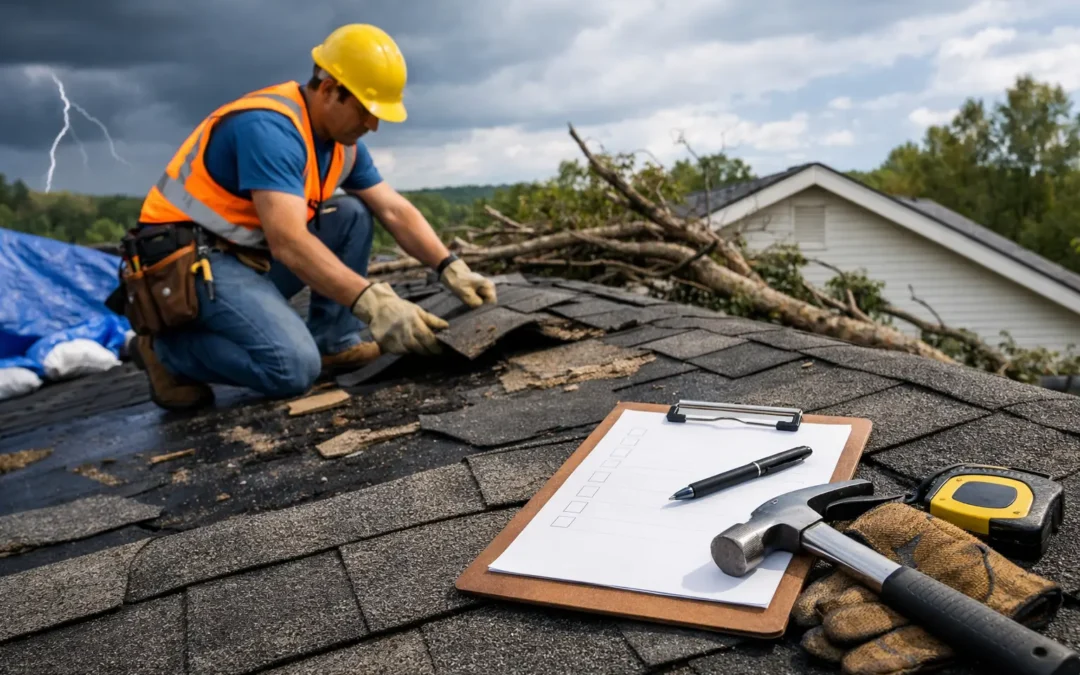
A storm can leave a roof looking perfectly normal from the driveway while water is already moving beneath the shingles. For Sullivan County storm roof repair, the first priority is not guessing how serious the damage may be. It is protecting the property, documenting what happened, and getting a qualified roofing professional involved before a small opening becomes stained ceilings, damaged insulation, mold, or structural rot.
High winds, wind-driven rain, hail, falling branches, and winter weather can all compromise a roof in different ways. The right response depends on the type of damage, the age and condition of the roof, and whether water has entered the building. Acting quickly gives homeowners, landlords, and business owners more options – and can prevent a much larger repair bill.
Start Safe: Check for Urgent Problems From the Ground
After a storm, resist the urge to climb a ladder or walk on the roof. Wet shingles, loose debris, hidden soft spots, and downed electrical lines create real hazards. A visual inspection from the ground, followed by an attic and interior check, can reveal enough to determine whether emergency service is needed.
Look for missing, lifted, curled, or cracked shingles; exposed underlayment; damaged flashing around chimneys and vents; bent or detached gutters; and branches resting on the roofline. If you see a tarp already in place, do not assume the roof is protected. Wind can loosen temporary coverings, and water can travel far from the visible opening before it appears inside.
Inside, check upper-floor ceilings, attic insulation, walls near exterior corners, and around skylights or chimneys. Fresh water rings, dripping, peeling paint, damp insulation, and a musty odor all deserve attention. If a ceiling is bulging with water, keep people away from the area and call for help immediately. Do not puncture the ceiling unless a professional has advised you to do so and the area is safe.
For commercial properties, inspect entryways, top-floor offices, storage areas, and mechanical spaces. A minor leak over inventory, electrical equipment, or tenant space can become a business interruption issue quickly.
What Storm Damage Can Look Like on a Roof
Not every storm problem is obvious. Wind damage may show up as shingles that are slightly lifted or creased at the edges. Those shingles can still be attached, but their seal may be broken, leaving the roof more vulnerable during the next hard rain or freeze-thaw cycle.
Hail can create bruising or granule loss that shortens shingle life. The marks are not always easy for an untrained eye to identify, especially on older roofing materials that already show normal wear. Heavy rain often exposes weak flashing, aging pipe boots, worn valleys, and clogged gutters rather than causing the original failure.
Fallen limbs are more straightforward but can vary widely in severity. A small branch may only scuff shingles or block gutters. A larger limb can puncture the roof deck, crack framing, damage siding, or pull gutters away from the fascia. In that situation, immediate stabilization and a professional inspection are more important than waiting to see if the leak gets worse.
Ice and snow can also create delayed issues. Ice dams force melting water beneath shingles, while repeated freeze-thaw cycles can widen small openings around flashing and roof penetrations. A roof that appears dry immediately after a winter storm may leak days later when temperatures rise.
Sullivan County Storm Roof Repair: What to Do First
When damage is suspected, take clear photos and short videos from safe locations. Capture the roofline, visible debris, damaged gutters, affected siding, and any interior water staining. Include wide shots that show the area in relation to the house or building, along with close-ups where possible. Keep a simple record of the storm date, the time you noticed the issue, and any steps taken to prevent further damage.
Then arrange a professional roof inspection. A thorough inspection should look beyond the most visible problem. The contractor should assess shingles or other roof coverings, flashing, vents, valleys, ridge caps, gutters, roof decking, attic ventilation, and areas where water may have entered the structure.
If there is active leaking or an opening in the roof, ask about emergency protection. A properly installed temporary tarp can limit additional water intrusion while repair decisions, materials, or an insurance review are pending. Temporary protection is not the final repair, but it can be one of the most valuable steps after a severe storm.
Avoid making permanent repairs before documenting the damage and speaking with your insurer if you plan to file a claim. However, do not delay reasonable steps to prevent further loss. Most policies expect property owners to mitigate damage, which can include moving belongings away from leaks, placing containers under drips, and arranging emergency tarping.
Repair or Replacement? The Answer Depends on the Roof
A storm does not automatically mean a full roof replacement. Targeted repair can be the practical choice when damage is limited, the roof is otherwise in good condition, and matching materials are available. Replacing damaged shingles, repairing flashing, restoring a small section of decking, or rehanging gutters may return the roof to proper performance without replacing the entire system.
Replacement becomes more reasonable when damage is widespread, the roof is nearing the end of its service life, or repairs would leave multiple vulnerable areas behind. For example, repairing a few wind-damaged shingles on a relatively new roof is very different from patching repeated leaks on an aging roof with brittle shingles and deteriorated flashing.
Material matching is another factor. Shingle color can fade over time, and discontinued products may not blend perfectly with the existing roof. A skilled contractor should explain this trade-off clearly. The cheapest repair is not always the best value if it leaves a roof with inconsistent protection or creates a visible patchwork appearance.
For flat or low-slope commercial roofs, the inspection needs to focus on membrane seams, drains, penetrations, ponding water, edge metal, and insulation below the surface. A small membrane opening can allow water to travel underneath before it becomes visible indoors, so timely evaluation matters.
Be Careful With Storm Chasers and Quick Promises
Severe weather often brings unsolicited contractors into affected neighborhoods. Some may be legitimate, but property owners should be cautious with anyone who pressures them to sign immediately, demands a large cash payment, offers to waive an insurance deductible, or cannot provide clear proof of insurance and local business information.
Choose a contractor who will inspect the property carefully, explain the scope of work in plain language, provide a written estimate, and communicate about timing and cleanup. Roofing work is disruptive enough without uncertainty. You should know who is doing the work, what materials are being used, how the property will be protected, and what warranty applies when the job is complete.
A reliable local roofing company also understands that storm repair is about more than shingles. Gutters, siding, fascia, soffits, attic ventilation, and flashing all work together to keep water out. Addressing the roof while ignoring a torn gutter or damaged flashing detail can leave the property exposed.
How to Prepare for the Repair Visit
Before the roofing crew arrives, move vehicles away from the driveway and garage area if possible. Clear patio furniture, grills, planters, and other items away from the work zone. Inside, remove fragile wall decorations from rooms directly below the repair area, since roofing work can create vibration.
Let the contractor know about pets, access restrictions, landscaping concerns, solar equipment, satellite dishes, or any known previous leaks. Clear information at the start helps the crew protect the property and avoid delays. A professional team should also discuss debris control, magnetic nail cleanup, and a final walkthrough so you know what was repaired and why.
CPG Roofing & Siding provides responsive inspections, emergency support, and organized repair service for property owners who need clear answers after storm damage. Certified workmanship, straightforward communication, and careful cleanup matter most when your home or building has already been through a stressful event.
A storm-damaged roof rarely gets better by waiting. If you notice a leak, missing materials, damaged gutters, or signs of water inside, arrange an inspection while the damage is still manageable. Fast, informed action protects the roof over your head and the property beneath it.