A ceiling stain in a retail space or warehouse rarely stays a small problem for long. Once water gets through a commercial roof, it can disrupt tenants, damage inventory, stain interiors, and create a much more expensive repair than the one you could have handled earlier. That is why choosing the right commercial flat roof repair contractor matters so much. You are not just hiring someone to patch a leak. You are hiring a partner to protect your building, your operations, and your budget.
Commercial flat roofs are different from residential roofing in both design and failure patterns. Water does not shed the same way it does on a steep-slope roof, and that changes everything about diagnosis and repair. A leak may show up in one corner of the building while the actual membrane failure sits 20 feet away. Ponding water, flashing separation, punctures, open seams, clogged drains, and neglected edge details can all contribute to trouble, and the right contractor knows how to trace the real source before recommending a fix.
What a commercial flat roof repair contractor actually does
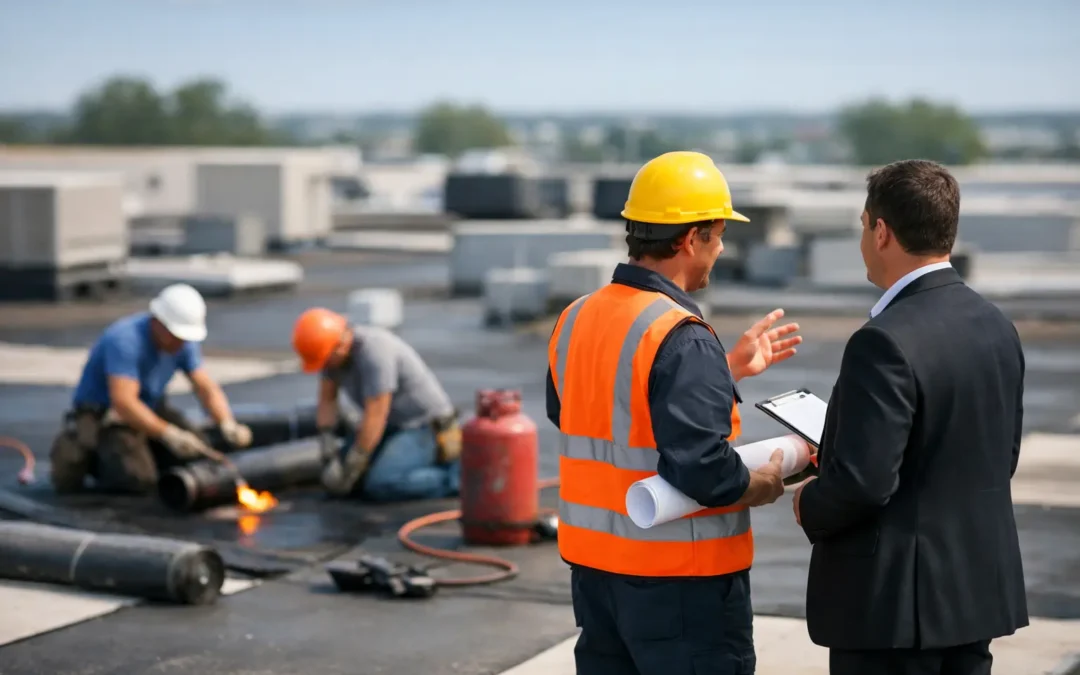
A qualified commercial flat roof repair contractor starts with investigation, not guesswork. That means inspecting the roof surface, penetrations, seams, flashing, drainage points, rooftop equipment areas, and any visible signs of structural or substrate issues. Good contractors also ask practical questions. When did the leak start? Did it appear after wind, heavy rain, or snow? Has the roof been repaired before? Those details help narrow down whether the issue is isolated damage or a sign of broader roof failure.
Repair work itself can vary quite a bit. In some cases, the right answer is a localized repair to a membrane puncture or failed seam. In others, the contractor may need to remove wet insulation, rebuild flashing, correct drainage issues, or address damage around HVAC curbs and roof penetrations. There is no honest one-size-fits-all answer, and that is one of the clearest signs of professionalism. A contractor who treats every flat roof leak the same way is usually missing part of the picture.
Signs your flat roof needs professional repair
Some warning signs are obvious, like active leaks or interior staining. Others are easier to ignore until they become expensive. If you manage or own a commercial property, pay attention to bubbling membrane sections, persistent ponding water, cracked sealants, loose flashing, clogged drains, and repeated leak complaints in the same part of the building.
Energy bills can also tell part of the story. When insulation becomes saturated, the roof system loses efficiency, and your building may cost more to heat or cool. That does not automatically mean full replacement is needed, but it does mean the roof deserves a careful inspection from a contractor who understands commercial systems.
How to evaluate a commercial flat roof repair contractor
The best contractor is not always the one with the lowest estimate. On a commercial roof, cheap work often turns into repeat leaks, tenant complaints, and avoidable disruption. What you want is a contractor who communicates clearly, documents findings, and can explain why a repair method fits your specific roof system.
Look for experience with your roof type
Flat roofing is a broad category. Your building may have EPDM, TPO, modified bitumen, BUR, or another system entirely. Repair methods differ depending on the membrane, the age of the roof, and the condition of the layers underneath. A contractor should be able to identify your roof system quickly and explain the repair process in plain language.
Ask how they diagnose leaks
Leak detection is where real experience shows. Water migration on low-slope roofs can be misleading, so the contractor should not rely on surface assumptions alone. A thoughtful inspection process, photo documentation, and a willingness to check adjacent details are all good signs.
Pay attention to responsiveness
Commercial leaks do not wait for a convenient time. If a contractor is hard to reach before the job, that usually does not improve once the work starts. Fast response matters, especially when weather is involved or the leak is affecting business operations. In the Hudson Valley, where storms, snow, and freeze-thaw cycles put added stress on roofing systems, prompt service can prevent a manageable problem from turning into interior damage.
Verify professionalism, not just promises
A serious contractor should be properly insured, familiar with commercial jobsite safety, and organized from estimate through cleanup. Certifications, strong reviews, and a documented process all help reduce risk. So does a contractor who gives a clear scope of work instead of vague language like repair as needed.
Repair or replacement? It depends on the roof
One of the biggest questions building owners face is whether a repair will truly solve the problem or just delay a larger expense. The honest answer is that it depends on the roof’s age, how widespread the damage is, and whether moisture has already compromised insulation or decking.
If the roof is relatively young and the issue is isolated, repair is often the smart financial move. If leaks are recurring in multiple areas, if the membrane is failing across large sections, or if wet materials are trapped below the surface, replacement may be the better long-term decision. A trustworthy commercial flat roof repair contractor will walk you through that trade-off instead of pushing the biggest job by default.
This is where building use matters too. A small office with a localized leak has a different risk profile than a medical facility, restaurant, apartment building, or property storing sensitive inventory. Sometimes the cost of downtime or damage makes a stronger case for a broader solution.
What to expect during the repair process
The repair process should feel organized, not chaotic. After inspection, you should receive a clear explanation of the issue, the proposed repair, expected timeline, and any limitations. If temporary measures are needed to stop active water intrusion before permanent work begins, that should be explained up front.
On the day of repair, a professional crew should work with attention to safety, roof access, and building operations. For occupied commercial properties, minimizing disruption matters. That includes protecting surrounding areas, coordinating around business hours when possible, and leaving the site clean when the job is done.
Communication is often what separates a dependable contractor from a frustrating one. If conditions change after the repair area is opened, you should hear about it right away, with photos and options. Surprises can happen on commercial roofs, but silence should not.
Why preventive maintenance saves money
Many commercial roof repairs start with a problem that could have been caught earlier. Drains clog. Sealants dry out. Minor punctures get ignored. Flashing loosens after weather exposure. None of these issues seem urgent until water gets inside.
Routine inspections and maintenance do not eliminate every repair, but they usually reduce the scale and cost of them. That matters for owners trying to protect operating budgets and avoid emergency service during the worst possible weather. A contractor who offers practical maintenance guidance is often thinking beyond the immediate invoice and focusing on the life of the roof.
For multi-tenant buildings and commercial properties with steady foot traffic, preventive care also helps avoid disruptions that affect customers, staff, and residents. A planned repair is almost always easier than an emergency response during a storm.
Choosing a contractor you can call again
A flat roof repair should solve a problem, but it should also build confidence. You want to know who to call when the next storm rolls through or when an inspection turns up something concerning. That means choosing a contractor with the capacity to respond, the experience to work on commercial systems correctly, and the professionalism to make the process straightforward.
For property owners in Orange, Dutchess, Ulster, and Sullivan counties, that local reliability matters. Weather patterns, snow loads, and seasonal temperature swings put real pressure on commercial roofing systems in this part of New York. A contractor who understands those conditions is better equipped to recommend repairs that hold up.
CPG Roofing & Siding approaches commercial roof repair with that mindset – fast response, clear communication, certified workmanship, and respect for your property from start to finish. If your flat roof is showing signs of trouble, the best next step is not to wait for a bigger leak. It is to get a qualified set of eyes on the roof, understand your options, and make the repair while the problem is still manageable.
A good roof repair does more than stop water. It gives you back control over your building.