A roof rarely fails all at once. More often, it gives you a series of warnings – a small leak after heavy rain, shingles in the yard, dark streaks, higher energy bills, or stains spreading across a ceiling. If you are wondering how to know if roof needs replacement, the answer usually comes from looking at the full pattern, not just one isolated problem.
That matters because waiting too long can turn a manageable project into interior water damage, mold, ruined insulation, and emergency repairs at the worst possible time. For homeowners and property managers, the goal is not to panic at every missing shingle. It is to recognize when repairs still make sense and when the roof is telling you it has reached the end of the line.
How to know if roof needs replacement instead of repair
The biggest question is not whether your roof has damage. Most roofs do, eventually. The real question is whether that damage is local and repairable or widespread enough that replacement is the smarter investment.
A repair usually makes sense when the problem is limited to one area, the roof is still relatively young, and the rest of the system is in solid condition. A replacement is often the better move when issues show up in multiple places, the roof is nearing the end of its expected lifespan, or past repairs keep stacking up without solving the bigger problem.
If a roofer fixes one leak, then another appears a few months later on a different slope, that is often a sign the roof system is wearing out overall. The same is true when shingles are brittle, flashing is failing, and ventilation problems are contributing to moisture buildup. At that point, another repair may only buy a little time.
Start with the roof’s age
Age is one of the strongest indicators. Even a roof that looks acceptable from the ground may be near replacement if it is old enough.
Standard asphalt shingle roofs often last around 20 to 30 years, but that range depends on shingle quality, attic ventilation, installation quality, storm exposure, and maintenance history. Architectural shingles can last longer than basic 3-tab shingles. A roof installed correctly and ventilated well may age more gracefully than one that traps heat and moisture.
In the Hudson Valley, roofs also deal with snow loads, freeze-thaw cycles, wind, and heavy rain. Those conditions can shorten lifespan. So if your roof is pushing 20 years or more and signs of wear are showing up, replacement deserves serious consideration.
If you do not know the roof’s age, look through home purchase records, insurance documents, or past contractor invoices. If those are unavailable, a professional inspection can often estimate the roof’s stage of wear.
Visible signs your roof may be failing
Some of the clearest warning signs are visible from the ground or during a careful inspection. The key is to look for patterns, not just one flaw.
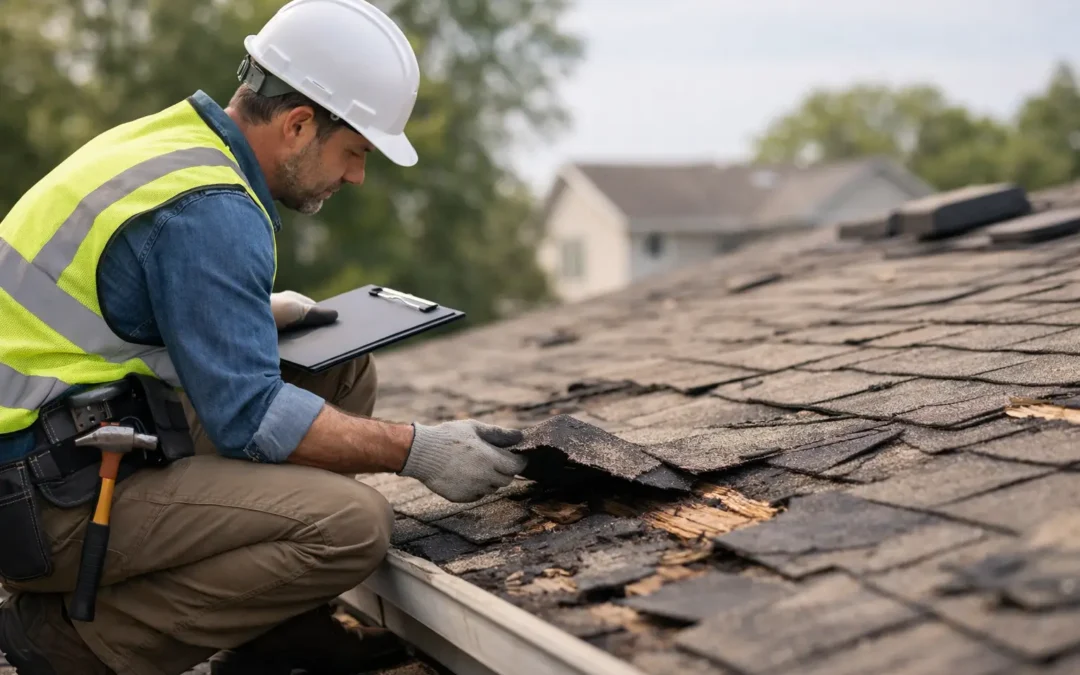
Curling or buckling shingles are a common red flag. When shingles start to curl at the edges or lift in the middle, they are no longer shedding water the way they should. Cracked shingles tell a similar story. They may survive one more season, or they may not.
Granule loss is another major clue. If you notice a heavy buildup of granules in gutters or downspouts, your shingles are losing their protective surface. You may also see bald spots on the roof where asphalt is more exposed. Once granules wear away, shingles age faster under UV exposure and weather.
Widespread discoloration can matter too. Some staining is cosmetic, especially from algae, but dark patches can also point to trapped moisture or uneven wear. Moss growth may not seem urgent, yet it can hold moisture against the roof surface and contribute to deterioration over time.
Sagging is more serious. If the roofline dips or appears uneven, that can mean structural decking or framing has been compromised by moisture. That is not a cosmetic issue. It needs attention quickly.
Signs inside the house that point to replacement
Sometimes the strongest evidence is inside, not outside. Water stains on ceilings or walls are an obvious warning, especially if they keep returning after repairs. Peeling paint near the roofline, damp attic insulation, or a musty smell in the attic can all point to ongoing moisture intrusion.
Check the attic on a bright day. If sunlight is coming through the roof boards, water can get in too. Also look for dark staining on wood, signs of mold, or rust on nails and fasteners. These are often signs that moisture and ventilation problems have been affecting the roof system for a while.
Higher heating and cooling costs can also connect back to the roof. A failing roof does not always cause that by itself, but poor ventilation, moisture-damaged insulation, and air leaks around the attic can all make your home less efficient.
Storm damage changes the timeline
A roof that might have lasted a few more years can move into replacement territory after a major storm. Wind can lift or tear shingles. Hail can bruise roofing materials in ways that are not obvious from the ground. Heavy snow and ice can stress flashing, gutters, and vulnerable roof edges.
After a storm, the question is not just whether you see damage. It is whether the roof’s waterproofing ability has been compromised across a broad area. A few missing shingles may be repairable. But if wind has broken seals over large sections, or if hail damage is widespread, replacement may be more cost-effective and more reliable than patching scattered damage.
This is where a prompt inspection matters. Hidden storm damage has a way of turning into a leak weeks later, after the immediate weather event is already forgotten.
When repeated repairs stop making financial sense
One of the clearest signs that replacement is due is simple math. If you have paid for several repairs in the past few years and the roof still feels unreliable, it may be time to stop spending money on short-term fixes.
This does not mean every repair is wasted. Good repairs can add useful life to a roof that still has solid years left. But once repairs become frequent, the cost starts to stack up without delivering peace of mind. You are still left with an aging roof, still vulnerable to the next leak.
A replacement often feels like the bigger expense because it is upfront. But in many cases, it is the more controlled and cost-efficient decision compared with emergency leak mitigation, drywall repair, insulation replacement, and repeated service calls.
How to know if roof needs replacement with an inspection
A professional inspection helps separate surface wear from real system failure. That is important because roofing decisions should be based on condition, not guesswork.
A thorough inspection typically looks at shingles, flashing, pipe boots, valleys, chimney areas, attic ventilation, decking condition, and signs of moisture intrusion. It should also consider workmanship issues from the original installation, because a newer roof installed poorly can fail earlier than an older roof installed well.
For homeowners, the value of an inspection is clarity. You want to know whether you need immediate replacement, targeted repairs, or simply monitoring for the next season. A trustworthy contractor should be able to explain what they found, show you the problem areas, and tell you why replacement is or is not justified.
If you are seeing multiple warning signs, especially on an older roof, it is smart to have that inspection done before the next major storm cycle. Companies like CPG Roofing & Siding often see the same pattern: homeowners wait, a small issue turns into interior damage, and the project becomes more urgent and more expensive than it needed to be.
Replacement is not just about leaks
Many people assume a roof only needs replacement once it starts leaking. That is too late. By the time water reaches your ceiling, the roof system may have been failing for months.
Replacement is also about protecting the structure, preserving energy performance, improving curb appeal, and avoiding the stress of emergency work. If you plan to sell, an aging roof can also affect buyer confidence and inspection results.
There are trade-offs, of course. If your roof has a small isolated issue and plenty of life left, replacement may be unnecessary. But if age, visible wear, storm exposure, and recurring leaks are all lining up, waiting usually does not improve the outcome.
The best time to deal with a failing roof is before it forces the decision for you. When the signs are there, acting early gives you more options, better scheduling, and a better chance to protect everything under it.