
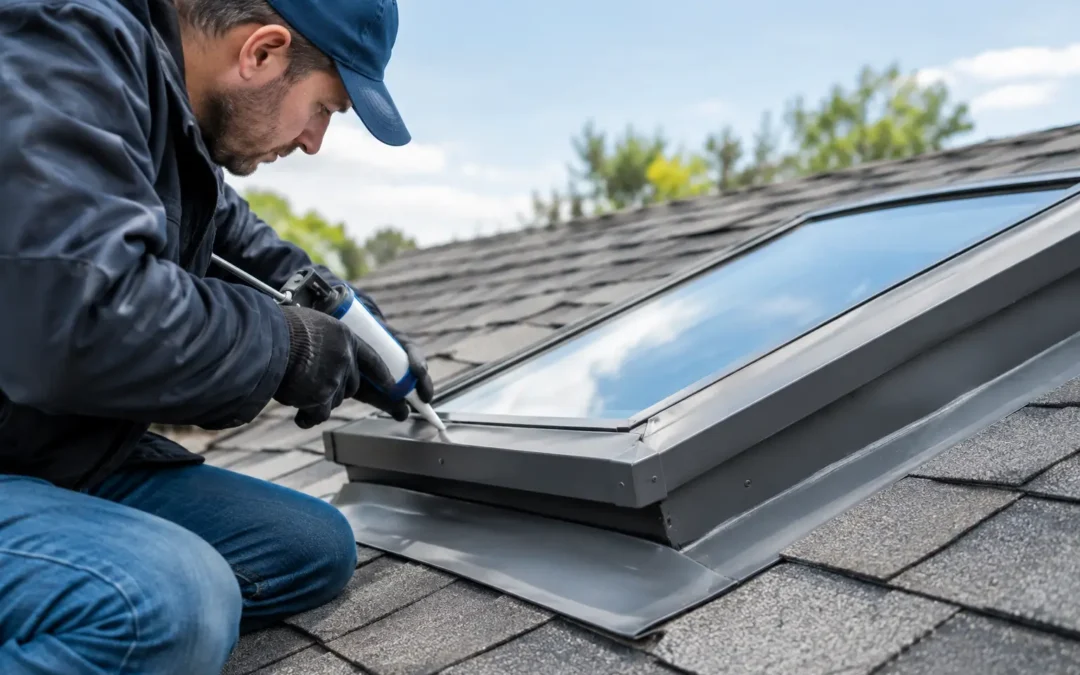
A water stain near a skylight does not always mean the glass is leaking. In many cases, water is entering through failed flashing, worn roofing materials, or a drainage problem above the unit, then showing up at the ceiling beside it. Understanding your skylight leak repair options starts with finding the true entry point. That is how you avoid paying for a surface-level patch while hidden moisture continues damaging the roof deck, insulation, drywall, and framing.
For Hudson Valley property owners, timing matters. Rain, wind-driven storms, snow buildup, and freeze-thaw cycles can turn a small skylight leak into a larger roofing repair quickly. A professional inspection gives you a clear answer on whether the skylight can be repaired, needs to be re-flashed, or is better replaced during broader roof work.
Start With the Source of the Leak
Water follows the path of least resistance, which means the visible drip is often not directly below the failure. A leak at the top edge of a skylight may travel along a rafter before reaching your ceiling. Condensation can also mimic a roof leak, especially in bathrooms, kitchens, and rooms with poor ventilation.
A qualified roofing contractor should inspect the skylight glass or acrylic, frame, seals, curb, flashing system, surrounding shingles, and the roof deck beneath the affected area. They should also check for cracked caulk, backed-up gutters, ice dam damage, and missing or lifted shingles above the skylight.
Do not rely on a tube of sealant as a diagnosis. Caulk may temporarily slow water intrusion around a minor exterior gap, but it cannot correct failed step flashing, rotten decking, a cracked skylight frame, or an aging roof system. If the leak returns after a quick patch, the underlying issue was never addressed.
Skylight Leak Repair Options for Common Problems
The right repair depends on the skylight’s age, condition, roof type, and the condition of the roofing around it. These are the most common solutions property owners may be offered.
Re-sealing Minor Gaps and Failed Weatherstripping
If the skylight itself is in good condition and the issue is limited to deteriorated sealant or weatherstripping, re-sealing may be appropriate. This is generally the least invasive repair option. A contractor removes loose or failed material, prepares the surface correctly, and applies roofing-compatible sealant where it belongs.
This approach works best for small, isolated defects. It is not a long-term answer for a skylight with cracked glazing, warped framing, failing flashing, or widespread roof wear. Properly applied sealant supports a sound installation. It should not be used to cover up a flawed one.
Repairing or Replacing Skylight Flashing
Flashing is the metal or manufacturer-designed water-management system that directs rain away from the skylight opening. It is one of the most frequent causes of leaks, particularly on older installations or skylights that were installed without a complete flashing kit.
A flashing repair may involve replacing damaged sections, integrating new underlayment, and reinstalling shingles around the unit. If the flashing system is extensively corroded, improperly layered, or surrounded by brittle shingles, a full re-flash is usually the smarter option.
This repair requires more than sealing the edges. The flashing has to be installed in the correct sequence so water sheds onto each layer rather than behind it. That detail is what separates a dependable repair from a recurring ceiling stain.
Replacing Damaged Roofing Around the Skylight
Sometimes the skylight is not the problem. Shingles above or beside it may be cracked, missing, improperly nailed, or nearing the end of their service life. Water can get beneath those materials and enter where the roof meets the skylight curb.
When localized roof damage is the cause, replacing the affected shingles and underlayment may stop the leak without replacing the skylight itself. The trade-off is appearance and material matching. On an older roof, new shingles may not match the existing color exactly, and a local repair may only make sense if the surrounding roof is still structurally sound.
Replacing the Skylight Unit
Replacement is often the best choice when a skylight is old, cracked, fogged between panes, difficult to operate, or leaking from multiple points. It can also be the better investment when the roof will need replacement soon. Installing a new skylight into an aging roof, then tearing around it again a few years later, creates unnecessary cost and disruption.
Modern skylights can offer better glazing, improved energy performance, more reliable flashing systems, and options for fixed, venting, or solar-powered operation. Replacement is a bigger upfront expense than resealing or re-flashing, but it may eliminate repeated repairs and improve comfort in the room below.
If the skylight is nearing the end of its expected lifespan and the roof is also worn, replacing both at the same time is usually the most durable path. The roof, underlayment, flashing, and skylight can then be installed as one coordinated system.
When a Skylight Leak Requires Urgent Attention
Not every drip calls for an emergency roof replacement, but active water intrusion should never wait for a convenient season. Place a container under the drip, move furniture and valuables away from the area, and document visible damage. If the ceiling is sagging, bulging, or heavily saturated, stay clear of it. Wet drywall can lose strength and may collapse.
You should arrange prompt professional service when water is actively entering during rain, the ceiling stain is expanding, shingles are missing after a storm, or you see mold-like spotting around the skylight shaft. A musty odor, peeling paint, and soft drywall can also point to moisture that has been present longer than expected.
Avoid climbing onto a wet or snow-covered roof to investigate. Skylights create an additional fall hazard, and stepping near them can damage roofing materials or the unit itself. A trained roofing team can inspect the area safely and determine whether temporary protection is needed before permanent repairs are completed.
Why Ice Dams Can Make Skylights Leak
Winter leaks deserve special attention in Orange, Dutchess, Ulster, and Sullivan counties. An ice dam forms when snow melts on a warm upper roof, then refreezes at the colder eaves. Water trapped behind that ice can work beneath shingles and under flashing, including the flashing around a skylight.
The visible leak may occur around the skylight even though the larger problem begins with attic heat loss, insufficient ventilation, or uneven roof temperatures. In that situation, repairing the skylight flashing may be necessary, but it may not prevent another winter leak unless the ice-dam conditions are also addressed.
A thorough assessment considers the full system: roof materials, underlayment, attic insulation, ventilation, and drainage. That is especially valuable when the leak only appears after heavy snow or during a rapid thaw.
How to Choose Between Repair and Replacement
The decision usually comes down to age, extent of damage, and the condition of the surrounding roof. A newer skylight with a single flashing defect may be an excellent repair candidate. An older unit with repeated leaks, failed seals, and a roof near replacement age often makes more financial sense to replace.
Ask for a clear explanation of the cause, the proposed scope of work, and what the repair is expected to solve. A trustworthy contractor should be able to tell you whether the issue is isolated or part of a larger roofing concern. They should also explain how the repaired area will be protected with proper underlayment and flashing, not simply covered with sealant.
At CPG Roofing & Siding, the goal is to give property owners a straightforward recommendation based on the condition of the skylight and the roof around it. A clean work area, clear communication, and workmanship that protects the building are not extras when water is entering your home or business.
Protect the Area Before the Next Storm
A skylight should bring natural light into your property, not anxiety every time rain is in the forecast. If you notice a stain, drip, draft, or moisture around the skylight, schedule an inspection before the damage spreads beyond the roof. Early action can preserve the surrounding materials and give you more repair options than waiting for the next storm to force the decision.