
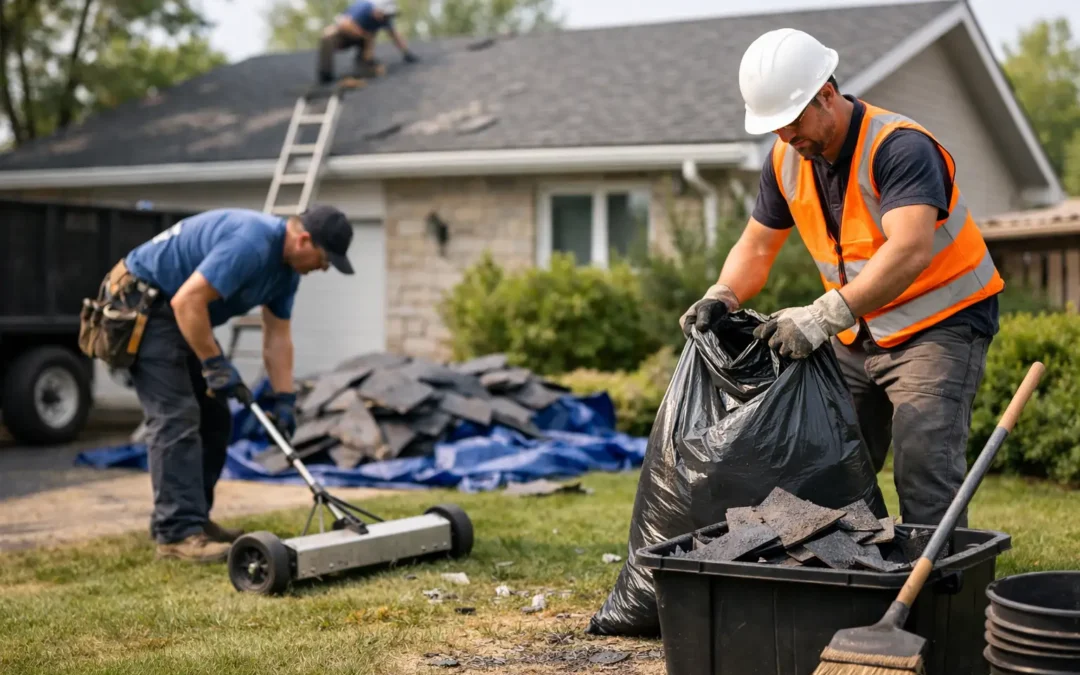
A roof replacement can leave behind thousands of loose nails, shingle granules, packaging scraps, and old roofing material if the crew does not have a disciplined plan. A professional roofing contractor cleanup process is not an afterthought. It is part of protecting your property, preventing injuries, and making sure the final impression of the job matches the quality of the roof overhead.
For Hudson Valley homeowners and property managers, cleanup matters even more when driveways, gardens, children, pets, tenant parking, and neighboring properties are close to the work area. Here is what a responsible cleanup should look like before, during, and after roofing work.
What a Professional Roofing Cleanup Includes
Cleanup starts before the first shingle comes off. An organized crew looks at access points, driveways, landscaping, decks, air-conditioning units, and areas where debris could fall or travel in the wind. The goal is to protect what can be protected, contain what can be contained, and remove debris quickly rather than letting it build up around the property.
Ground protection is often the first visible step. Contractors may use tarps, plywood, magnetic protection, or other barriers depending on the layout of the home and the type of work being performed. These materials help reduce the risk of roofing debris damaging plants, outdoor furniture, siding, walkways, or vehicles.
Protection does not mean every leaf or piece of dust can be prevented. Roofing is active construction work, and tear-offs create debris. What matters is that the crew takes reasonable precautions, keeps the work area controlled, and returns the property to a clean, safe condition when the job is finished.
Containing Old Roofing Materials
During a full roof replacement, old shingles, underlayment, flashing, and damaged wood may need to be removed. A capable contractor directs this material into a designated disposal area or dumpster instead of allowing it to scatter across the yard.
The right disposal setup depends on the property. A home with a narrow driveway may require a different approach than a commercial building with a large paved lot. Contractors should discuss where a dumpster or debris trailer will go, how long it will remain on-site, and whether access will be temporarily limited. Clear communication avoids surprises and helps protect driveways from unnecessary damage.
Managing Nails and Sharp Debris
Nails are the biggest cleanup concern for most homeowners, and for good reason. A single missed roofing nail can puncture a tire, injure a child or pet, or create a hazard in a walkway. Professional crews use magnetic sweepers around the home throughout the job, not only at the end of the day.
A final magnetic sweep should cover the roof perimeter, driveway, sidewalks, lawn edges, flower beds, decks, and any area where materials were carried or tossed. The crew should also inspect gutters, lower roofs, and flat surfaces where small pieces of debris can settle.
No contractor can promise that a magnet will find every nail hidden deep in thick grass or gravel. Still, repeated sweeps and a careful final walk-through dramatically reduce that risk. If you find a stray nail after work is complete, a reliable contractor should address the concern promptly.
The Roofing Contractor Cleanup Process During the Job
A clean project is easier to manage, safer for workers, and less disruptive for the people living or working on the property. That is why cleanup should happen in stages rather than as one rushed task after installation.
At the end of each workday, the crew should collect loose materials, secure tools, remove obvious debris, and make the site reasonably safe overnight. This is especially important when a replacement takes more than one day because of roof size, weather, structural repairs, or material availability.
Homeowners should expect some noise, vibration, and limited access while roofing is underway. Parking arrangements may need to change, gates may need to stay open, and outdoor activities may need to be postponed. A contractor that communicates these details ahead of time makes the process far less stressful.
Protecting Landscaping, Siding, and Outdoor Features
Landscaping protection requires judgment. Shrubs near the home may be covered or gently tied back, while fragile plants may need extra shielding. Outdoor furniture, grills, potted plants, and decorative items should be moved away from the work zone whenever possible.
Some items are best handled by the homeowner before the crew arrives. Moving vehicles out of the driveway, clearing patio furniture, securing pets indoors, and removing wall decorations that could shake loose inside the home can prevent avoidable issues. Your contractor should provide a clear preparation list, but asking questions before work begins is always a smart move.
Roofing debris can also affect gutters and siding if it is not managed carefully. A final inspection should include checking that gutters are clear, downspouts remain connected, and siding has not been left with dust or loose material. This attention to detail is one sign that a contractor respects the entire property, not just the roofline.
Final Inspection: What Should Happen Before the Crew Leaves?
The job is not finished when the last shingle is installed. The final inspection connects workmanship and cleanup. A crew leader or project manager should review the completed roof, inspect the grounds, and confirm that debris has been removed from accessible areas.
Look for a property that appears orderly: no piles of old shingles, no exposed sharp materials, no discarded packaging, and no equipment left behind. Walkways and driveways should be clear. Your gutters, landscaping, deck, and outdoor equipment should be checked for visible debris.
This is also the right time to review the completed work with your contractor. Ask where the crew performed nail sweeps, whether any decking repairs were found, and what materials were installed. If a dumpster remains briefly after the roof is done, confirm the planned removal date.
For commercial properties, the final check may need to include employee entrances, customer parking areas, loading zones, and emergency exits. These spaces must be clear and safe before normal operations resume. A clean site is not simply about appearance. It is part of managing liability and protecting everyone who uses the property.
Questions to Ask Before You Hire a Roofer
Cleanup standards vary, so it is worth asking direct questions during the estimate process. Find out how the contractor protects landscaping, handles debris disposal, performs nail sweeps, and responds if you notice a cleanup issue after the project. Ask whether daily cleanup is included and who is responsible for the final site inspection.
Be cautious if a contractor gives vague answers or treats cleanup as a minor detail. Low bids sometimes leave little room for proper labor, protection, disposal, and follow-up. Saving money upfront may not feel worthwhile if you are left collecting debris, repairing tire damage, or dealing with an unsafe yard.
At CPG Roofing & Siding, organized cleanup is part of the customer experience because a strong roof should come with stronger protection for the property below it. Certified workmanship, clear communication, and respect for your home all show up in the details.
After the Roofers Leave: A Simple Homeowner Check
Once the crew has completed its final walk-through, take a few minutes to look around your property in daylight. Check the driveway, lawn, garden beds, decks, patios, and areas near entry doors. If you have children or pets, inspect the spaces they use most closely before letting them back outside.
It is reasonable to find a little dust or a few shingle granules after major work, particularly following rain or wind. What should not remain are visible piles of debris, sharp materials, or equipment. Take photos and contact the contractor if something needs attention. A dependable local roofer will stand behind the condition in which the property is left.
Your roof protects everything beneath it. The cleanup process should reflect that same level of care, from the first protective tarp to the final magnetic sweep.