A ceiling stain after a hard rain, shingles scattered across the yard, or a roof that has simply reached its age can force a big decision quickly. Roof repair versus reroofing is not just a question of today’s price. It is a decision about how well your home or building will be protected through Hudson Valley rain, wind, snow, ice, and temperature swings.
The right answer depends on the cause and extent of the problem, the age of the existing roof, and what is happening beneath the shingles. A careful inspection should come before any recommendation. A lower upfront cost is only a good value when it solves the real problem.
What Roof Repair Actually Solves
Roof repair addresses a defined problem in a limited area. This may include replacing wind-damaged shingles, resealing flashing around a chimney, repairing a pipe boot, correcting a small leak, or replacing damaged sections near a valley or vent.
A repair is often the strongest option when the rest of the roof is in good condition and still has meaningful life left. If a branch damages one section of an otherwise sound roof, replacing the entire roof may not be necessary. The same is true for a leak caused by failed flashing rather than widespread shingle failure.
The key word is isolated. A repair works best when the issue has a clear source and the surrounding materials are stable. An experienced roofer should inspect the attic when possible, look for moisture damage, and check whether water has traveled beyond the visible stain. Water can enter at one point and show up somewhere else inside the building.
When Repair Makes Financial Sense
Repair is usually worth considering when your roof is relatively young, damage is confined to a small area, and there is no widespread curling, cracking, granule loss, or soft decking. It can also be the practical choice after a storm when insurance covers a specific damaged area.
That said, a repair should not be used to postpone an obvious replacement year after year. Repeated leaks, frequent patching, and shingle problems in multiple sections are signs that the roof system may be nearing the end of its service life. Spending money on one more repair can become more expensive than addressing the roof correctly.
What Reroofing Means – and What It Does Not
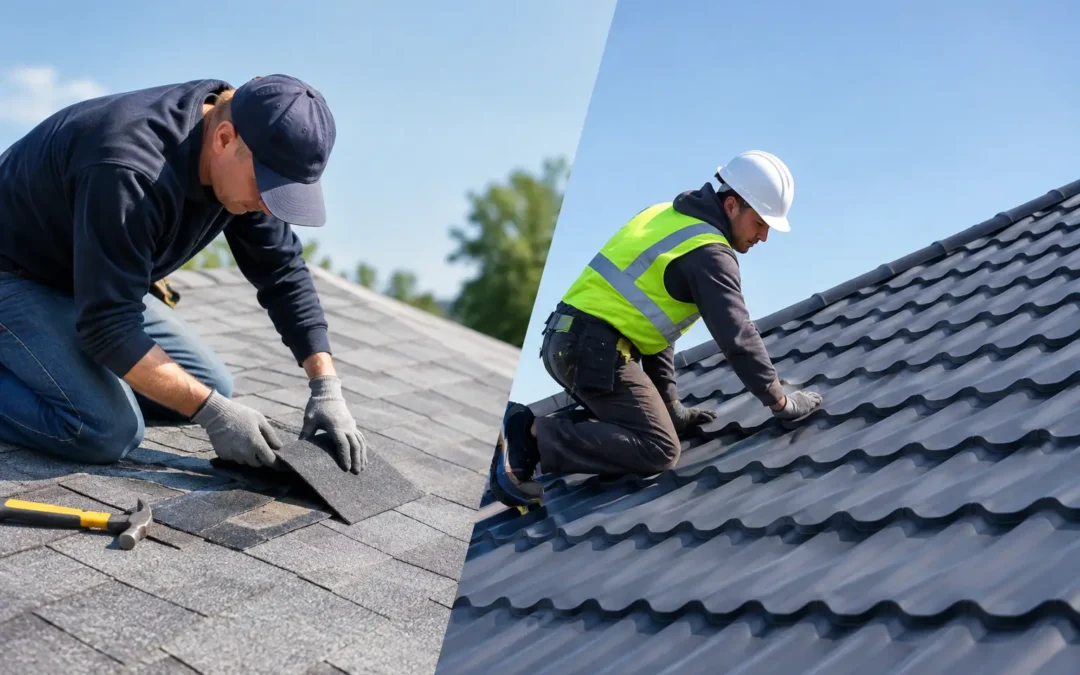
Reroofing usually means installing a new layer of shingles over an existing layer. It is different from a full roof replacement, which involves removing the old roofing materials down to the deck before installing a new system.
Because reroofing avoids a complete tear-off, it can be faster and less expensive upfront. It may be an option for a roof with only one existing layer of shingles, a solid roof deck, and no signs of trapped moisture or structural concerns. Local building requirements and the roof’s condition still determine whether it is allowed and appropriate.
Reroofing has limits. It does not allow the contractor to fully inspect the decking, and it can cover problems that should be corrected instead. If there are soft spots, hidden leaks, rotted wood, poor ventilation, or two existing layers of shingles, reroofing is generally not the right path. Adding weight over compromised materials is not protection.
For many property owners, the term “reroof” is used casually to mean any new roof. During an estimate, ask whether the proposal calls for a shingle overlay or a full tear-off and replacement. Those are very different scopes of work, costs, and long-term outcomes.
Roof Repair Versus Reroofing: The Questions That Matter
The decision becomes clearer when you look beyond the visible damage. Start with the roof’s age. Asphalt shingle roofs commonly show more widespread wear as they approach the end of their expected lifespan, though actual performance varies based on ventilation, installation quality, weather exposure, and maintenance.
Next, consider the pattern of the problem. One missing shingle after a windstorm is different from brittle shingles across every slope. A single leak around a chimney is different from multiple water stains, attic mold, or sagging areas. The more widespread the symptoms, the less likely a limited repair will provide dependable protection.
Then look at the roof deck and ventilation. A roofing system is more than the shingles you see from the driveway. Underlayment, flashing, ventilation, ice and water protection, and properly secured decking all affect how a roof performs. In areas that see snow and freeze-thaw cycles, inadequate ventilation can contribute to ice dams and moisture issues that shorten roof life.
Finally, think about your plans for the property. If you expect to sell soon, a well-documented repair may be sufficient for a localized issue. If you plan to stay for years, investing in a complete system may offer better long-term value, stronger warranty coverage, and fewer surprises.
When a Full Replacement Is the Better Choice
A full replacement costs more than a repair or overlay, but it gives your contractor the ability to inspect and address the entire roof structure. Old shingles are removed, damaged decking can be replaced, and the new system can be built with properly integrated underlayment, flashing, ventilation, and shingles.
Replacement is usually the better option when the roof has widespread damage, persistent leaks, missing or deteriorated shingles in several areas, visible sagging, or signs of deck rot. It is also the responsible choice when there are already two layers of roofing or when moisture has been trapped beneath existing materials.
For commercial properties, the same principle applies. A localized repair can protect a sound low-slope roof, while recurring ponding water, membrane failure, seam separation, or widespread deterioration may justify a larger restoration or replacement plan. The goal is not to sell the biggest job. It is to prevent a manageable issue from becoming interior damage, inventory loss, or operational disruption.
Cost Is More Than the Initial Estimate
It is understandable to focus on the first number. A repair may cost far less today than reroofing or replacement. But the better comparison is cost over time.
A properly completed repair on a healthy roof can be an excellent investment. A repair on a failing roof can turn into a cycle of service calls, interior repairs, and growing water damage. Likewise, a cheaper shingle overlay may not be a bargain if hidden decking or ventilation problems remain in place.
Ask for an estimate that clearly explains the condition found, the recommended scope, materials, warranty details, and any additional work that could be needed once the roof is opened. Honest communication matters, especially when hidden damage is possible. A professional contractor should explain the trade-offs without pressure and document what they see.
Do Not Wait on Active Leaks
An active leak deserves prompt attention whether the eventual answer is repair, reroofing, or replacement. Move valuables away from the affected area, contain dripping water safely, and avoid climbing onto a wet or damaged roof. Water can damage insulation, drywall, framing, and electrical components long before the stain on the ceiling becomes dramatic.
Fast response also matters after high winds, fallen limbs, or ice damming. Temporary protection can limit further damage while a qualified roofing professional evaluates the permanent solution. CPG Roofing & Siding helps property owners assess urgent roofing concerns and understand the work needed to protect the building.
Choose the Work That Protects Your Property
Do not let a small-looking roof problem dictate a small solution. Choose the scope that matches the condition of the roof, the age of the materials, and the risks beneath them. A clear inspection and a straightforward recommendation give you the confidence to act before the next storm makes the decision more expensive.