A roof leak over a family bedroom and a leak above a retail showroom may both start with a small stain, but the right response is rarely the same. Residential versus commercial roofing involves different roof designs, materials, drainage demands, safety requirements, budgets, and installation methods. Knowing which system your property needs helps you make a confident decision before a minor issue turns into interior damage, business disruption, or an emergency repair.
Residential Versus Commercial Roofing: The Main Difference
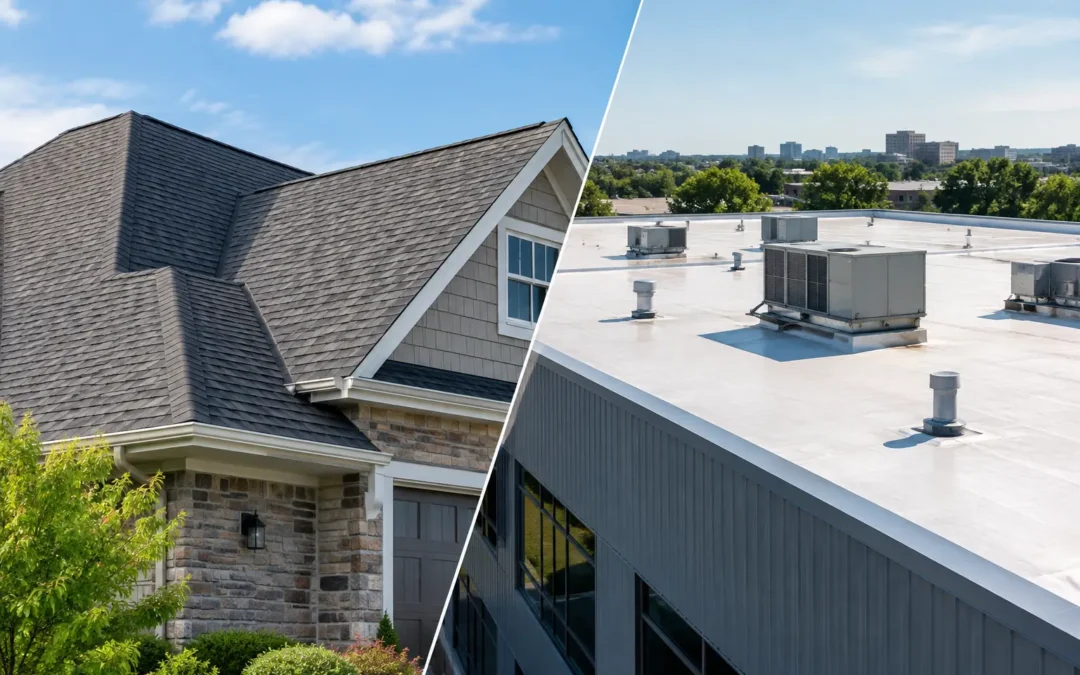
The clearest difference is roof shape. Most homes in the Hudson Valley have steep-slope roofs with visible peaks and angled planes. Those slopes shed rain, snow, and ice naturally, which is especially valuable through heavy winter weather. Asphalt shingles are the most common residential choice, although metal, slate, cedar, and synthetic materials can also be appropriate depending on the home and budget.
Commercial buildings more often use low-slope or flat roof systems. A roof may appear flat from the ground, but it should still have a carefully planned slope that directs water toward drains, scuppers, or gutters. These roofs commonly use membrane materials such as TPO, EPDM, PVC, or modified bitumen. Some commercial properties also use metal roofing or coating systems.
That basic design difference changes nearly everything else, from how crews access the roof to how water is managed. A contractor should assess the building itself rather than recommend the same material for every project.
Materials Are Selected for Different Jobs
Residential roofing materials must protect the structure while contributing to curb appeal. Homeowners often compare shingle color, profile, warranty coverage, wind resistance, and how the new roof will look with siding, trim, and gutters. Architectural asphalt shingles are popular because they offer dependable protection, a dimensional appearance, and a practical price point.
Commercial roofing materials are usually chosen for performance across a large, lower-pitched surface. The focus is less on appearance from the street and more on waterproofing, seam strength, resistance to ponding water, reflectivity, foot traffic, rooftop equipment, and long-term maintenance. A white TPO membrane, for example, can reflect sunlight and may help manage cooling costs in the right application. EPDM is known for durability and flexibility, particularly when temperature changes are a concern.
Neither category is automatically better. A residential shingle system is designed to perform on a steep roof, while a membrane system is designed to perform on a low-slope roof. Installing the wrong product or using the wrong details around penetrations, valleys, edges, and drainage points can shorten the roof’s life regardless of material quality.
Drainage Is a Bigger Concern on Low-Slope Roofs
Water moves quickly off a steep residential roof. Problems can still occur at flashing, valleys, chimney transitions, skylights, and clogged gutters, but gravity does much of the work.
On a commercial roof, drainage needs more attention because water can remain on the surface longer. Blocked drains, undersized scuppers, damaged seams, or areas that hold water can place ongoing stress on the system. In freezing Hudson Valley conditions, standing water and repeated freeze-thaw cycles can make small defects worse.
This is why commercial roof inspections should look beyond the membrane itself. Drains, flashing, parapet walls, rooftop HVAC curbs, expansion joints, and edge details all need to work together. A clean, functioning drainage path is part of the roof system, not an afterthought.
Installation Requires Different Planning
A residential roof replacement is often completed quickly, depending on the roof size, complexity, weather, and condition of the decking. Crews remove old materials where needed, inspect the roof deck, install underlayment and flashing, apply the new roofing material, and complete a thorough cleanup. Protecting landscaping, driveways, and the surrounding property matters just as much as doing the roof work correctly.
Commercial work can require more logistical planning. The roof may cover a larger footprint, include multiple equipment penetrations, and need to remain accessible for building operations. A restaurant, office, apartment building, warehouse, or retail location may need the work staged to limit disruption to occupants and customers. Material delivery, safety procedures, access routes, weather windows, and noise can all affect the schedule.
For occupied commercial properties, a contractor should communicate clearly about what will happen, when it will happen, and what the building owner or manager needs to prepare. Good planning protects the roof project, the people below it, and the daily operation of the business.
Repairs Follow Different Clues
Residential roof damage often shows up as missing shingles, granules in gutters, lifted flashing, a ceiling stain, or a visible leak during a storm. Ice dams are another frequent local issue. When snow melts and refreezes near the eaves, water can back up beneath shingles and enter the home.
Commercial roof leaks can be more difficult to trace. Water may enter at one point and travel through insulation, decking, or structural components before becoming visible indoors. The source could be a puncture, an open seam, deteriorated flashing, a drain issue, or a failed seal around rooftop equipment.
That is why a quick patch is not always a complete repair. The immediate goal is to stop active water intrusion. The next goal is to identify why it happened and whether moisture has affected insulation, decking, or interior materials. Fast response matters, especially after wind, heavy rain, or snow events, but a careful diagnosis prevents repeat leaks.
Cost Depends on Scope, Not Just Square Footage
It is tempting to compare residential and commercial roofing by price per square foot. That number alone does not tell the full story. Roof complexity, tear-off requirements, deck repairs, insulation, access, flashing, drainage upgrades, material type, and warranty requirements all affect the final cost.
A large commercial roof may have a lower material cost per square foot than a highly detailed residential roof, yet the overall project can still be much more involved. Conversely, a home with steep pitches, multiple dormers, skylights, and valleys may require more labor than its footprint suggests.
The best estimate explains the scope clearly. Property owners should know what material is being installed, what existing components are being removed or retained, how flashing and ventilation or drainage will be handled, and what protection is included for the property during the work. Financing may also make a necessary replacement more manageable when repair is no longer the responsible option.
Maintenance Protects Both Types of Roofs
Every roof benefits from regular inspections, especially after major storms and before winter. Residential owners should watch for shingle damage, loose flashing, gutter clogs, sagging areas, and attic signs of moisture. Keeping gutters clear and addressing small repairs promptly can help prevent larger water problems.
Commercial owners and property managers should maintain a scheduled inspection plan. Low-slope roofs need drains and scuppers kept clear, debris removed, seams checked, and rooftop equipment areas inspected. Foot traffic should be controlled, because sharp tools, dropped equipment, and careless service work can puncture a membrane.
Maintenance does not mean a roof will never need replacement. It does mean you are more likely to catch deterioration early, protect warranty coverage, and plan a replacement on your schedule instead of reacting to a major failure.
Choosing the Right Contractor for Your Property
The contractor you hire should have experience with the type of roofing system your building requires. Residential and commercial projects share the need for skilled workmanship, insurance coverage, clear communication, clean job sites, and dependable warranties. But they should not be approached as identical jobs.
Ask how the contractor will evaluate the roof deck, flashing, drainage, ventilation, insulation, and existing damage. For commercial work, ask how the crew will protect operations and address rooftop penetrations. For a home, ask how landscaping and exterior surfaces will be protected and how cleanup will be handled. Clear answers before work begins are a strong sign of an organized, professional process.
For property owners across the Hudson Valley, CPG Roofing & Siding provides residential and commercial roofing support with the urgency, workmanship, and straightforward communication a roof problem demands. Whether you are dealing with a persistent leak or planning ahead for replacement, a professional inspection gives you a practical starting point. Acting before the next storm is often the simplest way to protect what is underneath your roof.