A roof that looks fine in October can become a problem by January. Snow load, freeze-thaw cycles, ice dams, and heavy runoff all test a roofing system in ways mild climates never do. If you are comparing the best roofing materials for snow, the right choice is not just about appearance – it is about how well your roof sheds moisture, handles weight, and holds up through repeated winter stress.
In the Hudson Valley, that matters more than many homeowners expect. One storm rarely destroys a good roof. It is the pattern of wet snow, overnight freezing, melting during the day, and backed-up gutters that causes trouble over time. That is why the best material for one house may not be the best fit for another.
What makes a roof good in snow?
The best snow-performing roofs do three things well. They manage weight, resist water intrusion, and stay stable when temperatures swing up and down. A roofing material can be strong in one category and weaker in another, which is why material selection should always match the home, the slope, and the condition of the roof deck beneath it.
Roof pitch plays a major role. Steeper roofs naturally shed snow faster, while low-slope sections tend to hold snow and make drainage more difficult. Ventilation and insulation matter too. Even the best roofing materials for snow can underperform if warm attic air melts the underside of the snowpack and creates ice dams at the eaves.
Best roofing materials for snow: what actually performs
Metal roofing
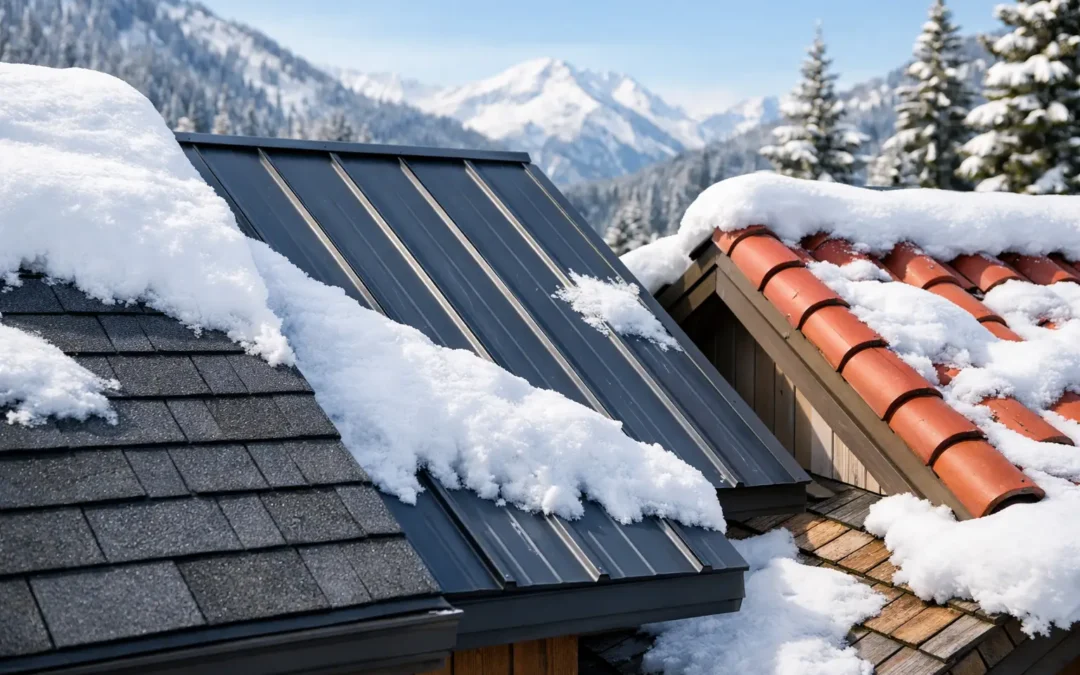
Metal is often the first material mentioned for snowy climates, and for good reason. It sheds snow more efficiently than most other systems, especially on steeper pitches. Snow tends to slide off instead of lingering, which reduces long-term load and lowers the chance of standing moisture working its way into vulnerable areas.
It also performs well during freeze-thaw cycles. Metal panels do not absorb water, and properly installed systems have fewer places for moisture to sit compared with layered shingle systems. Standing seam metal, in particular, is a strong choice because the seams are raised above the drainage plane.
The trade-off is cost and snow control. Metal roofing is usually more expensive upfront than asphalt shingles, and because it sheds quickly, sliding snow can become a hazard over entryways, walkways, landscaping, and lower roof sections. Snow guards can help, but they need to be planned as part of the system, not treated as an afterthought.
Architectural asphalt shingles
Architectural asphalt shingles remain one of the most common choices in New York because they balance affordability, appearance, and solid winter performance. A quality shingle roof, installed with proper underlayment and ice-and-water protection, can do very well in snowy conditions.
This option makes sense for many homeowners because it is cost-effective and easier to repair than some premium systems. If storm damage affects one area, isolated repairs are often simpler than they are with metal or slate. For many homes, that practicality matters just as much as theoretical lifespan.
Still, asphalt does have limits. It does not shed snow as quickly as metal, and lower-grade shingles may age faster under repeated freezing and thawing. The quality of installation is critical here. If flashing, ventilation, or ice barrier placement is poor, even a decent shingle product can struggle through winter.
Slate roofing
Slate is one of the most durable roofing materials available, and it performs very well in snow when the home is built to support it. It resists moisture, handles cold temperatures well, and can last for decades longer than many alternatives.
For homeowners focused on long-term value and a premium appearance, slate is hard to ignore. It is especially attractive on historic or high-end homes where durability and curb appeal both matter.
But there are two major drawbacks. First, slate is heavy. Snow already adds substantial load to a roof, so combining that with a heavy roofing product requires proper structural support. Second, slate installation and repair require specialized skill. It is not the kind of roof every contractor should touch.
Synthetic slate and composite roofing
Synthetic slate and other composite roofing systems have become more popular because they offer some of the visual appeal of slate with less weight. In snowy regions, that lower weight can be a real advantage. You get a product designed to resist moisture and weather exposure without placing the same structural demand on the home.
These systems can be a smart middle ground for owners who want upgraded durability and appearance but do not want the cost or structural requirements of natural slate. Some products also handle impact well, which is helpful in areas that see winter storm debris.
As always, product quality varies. Composite roofing is not one single material with one performance standard. Some premium systems hold up very well. Cheaper versions may not age as gracefully, especially after years of UV exposure and cold-weather expansion and contraction.
Cedar shakes and wood shingles
Wood roofing has a natural look many homeowners love, but it is usually not the top recommendation for heavy snow climates where moisture management is a constant concern. Cedar can perform respectably when installed correctly and maintained well, but it demands more attention than asphalt, metal, or synthetic alternatives.
Snow itself is not the only issue. The bigger concern is prolonged moisture retention. If snow sits, melts, and refreezes repeatedly, wood can be more vulnerable to wear, splitting, or decay over time than less absorbent materials.
For that reason, cedar tends to be chosen more for aesthetics than winter performance. It can work, but it is rarely the most practical answer if snow handling is your top priority.
The material is only part of the system
This is where many roofing decisions go wrong. Homeowners compare materials but overlook the supporting components that actually decide whether the roof stays dry. Underlayment, flashing, attic ventilation, insulation, and gutter design matter just as much in winter as the visible roofing surface.
Ice-and-water shield is especially important in areas prone to snow and freezing rain. It adds a layer of protection in the places most vulnerable to backup and infiltration, such as eaves, valleys, and around penetrations. Without that protection, snowmelt can find its way under otherwise solid roofing materials.
Ventilation also deserves more attention than it gets. Poor attic airflow allows heat to build unevenly, which melts snow in patches and increases ice dam risk. Many winter leak calls are not caused by a failed shingle or panel. They are caused by a roofing system that was never balanced properly in the first place.
Which roof is best for your property?
For many homes, architectural asphalt shingles are the practical choice. They offer reliable performance at a manageable price, and when installed correctly, they hold up well through New York winters. If budget matters and the roof design is straightforward, this is often the best value.
If your priority is maximum snow shedding and long-term durability, metal roofing is usually the stronger performer. It costs more upfront, but it excels in harsh winter conditions and can reduce the strain that heavy snow places on the roof over time.
If you own a historic, custom, or high-end property and want premium longevity, slate or high-quality synthetic slate may be worth serious consideration. The right fit depends on your structure, your maintenance expectations, and how long you plan to stay in the property.
Commercial and mixed-use buildings are a little different. Low-slope roofing systems require a separate conversation because drainage design becomes even more important than snow shedding. In those cases, the best material is the one that works with the building’s slope, insulation strategy, and drainage layout.
When to replace instead of repair
Winter exposes weak points fast. If your roof is already aging, missing granules, curling, leaking around valleys, or showing signs of repeated ice dam damage, material choice should be part of a bigger replacement discussion rather than a small repair decision.
That is especially true if the current roof was installed without modern ice barrier protection or has ventilation issues that were never corrected. In many cases, upgrading to one of the best roofing materials for snow only pays off if the full roofing system is rebuilt correctly from the deck up.
A good contractor should be willing to explain trade-offs clearly. Not every homeowner needs the most expensive roof. But every property needs a system that matches its pitch, load demands, drainage pattern, and winter exposure.
The right roof for snow is the one that keeps doing its job after the storm has passed, when the melting starts, the temperatures drop again, and the hidden problems usually show up.