The first sign is usually not dramatic. A line of thick icicles forms along the eaves, snow stays put on the upper roof, and then a brown water stain appears on a ceiling that was perfectly dry a week ago. If you are wondering how to prevent ice dams, the answer is not a quick hack from the ground. It starts with understanding why your roof is getting warm enough to melt snow in the wrong places.
Ice dams happen when heat from the house escapes into the attic and warms the roof deck. Snow melts higher up on the roof, runs down toward the colder overhang, and refreezes at the edge. As that ridge of ice grows, it traps more water behind it. That backed-up water can work its way under shingles, into underlayment, and eventually into your home.
In the Hudson Valley, this is a common winter problem because we often get the exact mix that creates ice dams – snow cover, fluctuating temperatures, overnight freezes, and older homes with uneven insulation or ventilation. That means prevention has to be built around the roof system as a whole, not just one product or one repair.
How to prevent ice dams starts in the attic
If the attic is too warm, the roof above it will be too warm. That is the root of most ice dam problems.
Start with insulation. Many homes lose a surprising amount of heat through the top floor, especially around attic hatches, recessed lights, bath fan penetrations, plumbing stacks, and wall top plates. When warm interior air leaks into the attic, it raises the roof temperature enough to start the melt-freeze cycle. Adding insulation helps, but insulation alone is not always enough if air is still escaping around gaps and penetrations.
Air sealing usually makes the biggest difference. A well-insulated attic with major air leaks can still create ice dams. On the other hand, an attic with properly sealed bypasses and balanced insulation is far better at keeping heat where it belongs. This is one of those areas where the details matter. Missing a few openings around wiring or duct chases can undercut the entire effort.
Ventilation also plays a major role. Proper intake and exhaust ventilation helps keep attic temperatures closer to outdoor conditions. In simple terms, outside air should be able to enter low and exit high, creating steady airflow under the roof deck. Ridge vents, soffit vents, and baffles all need to work together. If soffit vents are blocked by insulation, the system cannot do its job.
That said, ventilation is not a magic fix for a badly leaking attic. If warm air is pouring in from the house below, adding vents without addressing the heat loss may only treat part of the problem. The best results usually come from air sealing, insulation improvements, and ventilation corrections done together.
Focus on the roof edge and drainage
Even with a well-performing attic, roof edges still need to handle winter runoff. Gutters and downspouts should be clear before snow season starts. If water cannot move away from the eaves, ice builds faster and heavier, increasing the chance of backup.
This does not mean gutters cause every ice dam, because they do not. Ice dams can form on homes with or without gutters. But clogged or poorly pitched gutters can make a bad situation worse by holding slush and water right where refreezing happens most. In many cases, gutter condition is part of the prevention plan, not the whole plan.
Roof design matters too. Valleys, low-slope sections, dormers, and wide overhangs can create colder zones where water refreezes more easily. These features are not defects by themselves, but they often need closer inspection because they concentrate snow and runoff in predictable areas.
An ice and water barrier under the shingles near the eaves adds another layer of protection. It does not stop ice dams from forming, but it can reduce the chance that backed-up water reaches the interior. Homeowners sometimes misunderstand this point. Underlayment helps manage risk, but it does not replace proper attic performance or roof drainage.
Snow removal can help, but it has limits
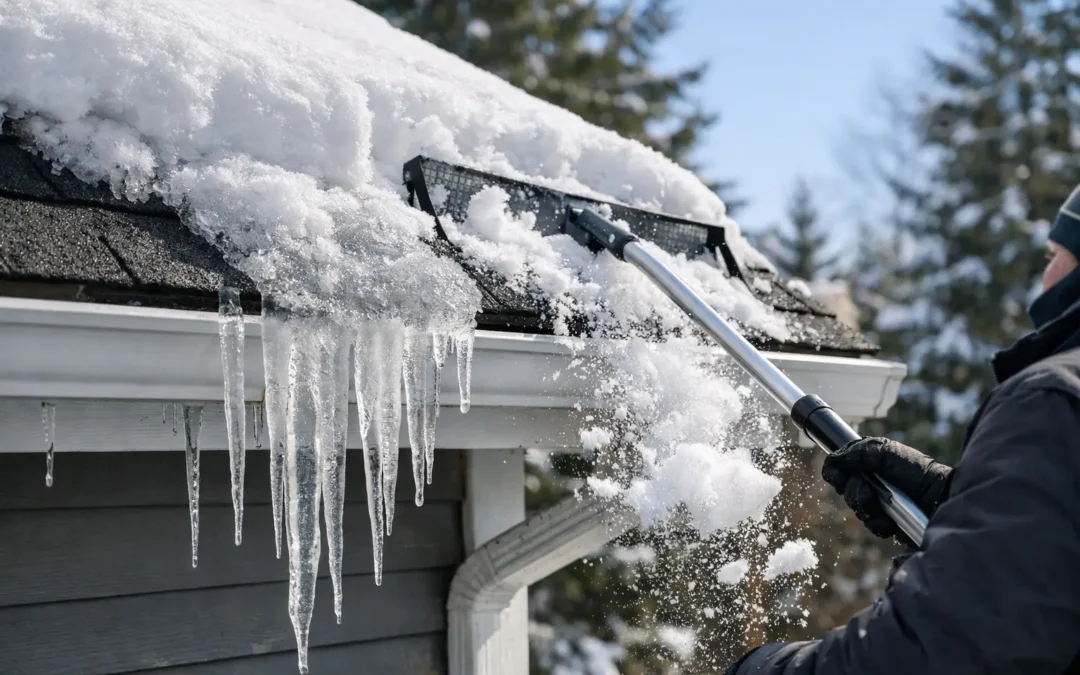
When a storm drops heavy snow, removing the lower few feet of snow from the roof edge can reduce the chance of ice buildup. A roof rake is the safest tool for this because it lets you work from the ground. If you use one, pull snow down gently and avoid scraping shingles aggressively.
Still, this is a short-term measure. It can help after a storm, especially if your home has a history of ice dams, but it does not correct the underlying cause. It also has practical limits on taller homes, steep roofs, and areas over landscaping or walkways where falling snow creates hazards.
Heating cables are another tool people ask about. They can create channels for drainage in problem sections, but they are not a complete fix and they should be installed carefully. If used in place of proper repairs, they often become a recurring expense rather than a real solution. On some homes they make sense as part of a broader strategy. On others, they simply mask bigger issues in the attic or roof assembly.
Warning signs you should not ignore
Ice dams rarely show up without clues. Thick icicles along one roof edge but not another often point to uneven heat loss. Frost in the attic, wet insulation, peeling paint near exterior walls, and winter ceiling stains are all signs that moisture and heat are moving where they should not.
You may also notice snow melting in irregular patches. A roof that looks striped in winter, with some sections bare and others still covered, is often telling you where heat is escaping. That pattern is useful because it helps identify where insulation, ventilation, or air sealing may be failing.
If leaks have already started, it is smart to move quickly. Water entering around the roof edge can travel before it becomes visible indoors, which means the damage may be broader than the stain suggests. Wet decking, damaged insulation, stained drywall, and mold growth can follow if the issue is left alone.
How to prevent ice dams without guessing
The most effective approach is a professional inspection that looks at the full system: attic insulation levels, ventilation balance, air leaks, roof condition, flashing details, and gutter performance. Guessing usually leads to partial fixes. You might add insulation but leave major air leaks untouched, or replace shingles without correcting the attic conditions that caused the problem in the first place.
A good inspection should identify whether the issue is mainly heat loss, poor airflow, drainage trouble, roof aging, or a combination of those factors. In many homes, it is more than one thing. That is why two neighboring houses can have very different winter roof performance, even after the same storm.
For homeowners in older parts of Orange, Dutchess, Ulster, or Sullivan County, this matters even more. Older rooflines, additions, and past repairs can create hidden weak points. One section of the attic may be insulated properly while another is not. One soffit run may be open while another is blocked. You need a diagnosis based on your actual home, not a one-size-fits-all answer.
What prevention work usually pays off
The best long-term value often comes from work that reduces heat loss and protects the roof edge at the same time. Air sealing attic penetrations, correcting insulation depth, opening blocked soffits, improving exhaust ventilation, and fixing drainage issues are all high-impact upgrades when they are done correctly.
If the roof is already aging or has had repeated leak problems, replacement may be the more cost-effective path. That is especially true when shingles, flashing, and underlayment are near the end of their service life. A newer roof system with proper edge protection and ventilation design gives you a much better chance of getting through winter without recurring damage.
There is always a cost question, and the honest answer is that it depends on the condition of the home. A minor ventilation correction is very different from a full attic retrofit or roof replacement. But repeated interior repairs, emergency leak calls, and hidden water damage add up fast. Prevention is usually cheaper than another winter of damage control.
If your roof has already shown signs of ice buildup, now is the time to deal with it before the next hard freeze. The right fix protects more than shingles. It protects insulation, ceilings, framing, and the overall health of your home. Strong winter protection starts with finding where the heat is escaping and stopping the cycle before ice gets the upper hand.