A ridge of ice along the edge of your roof may look like a winter nuisance, but it can quickly become a water-damage problem. When melting snow has nowhere to drain, it backs up beneath shingles and into the roof system. Prompt ice dam repair helps protect your attic, ceilings, insulation, walls, and the structure of your property before a small issue turns into an expensive emergency.
For Hudson Valley homeowners, ice dams are especially common during stretches of snow, freezing nights, and daytime thawing. The right response is not simply breaking up visible ice. Effective repair starts with controlling the immediate risk, identifying where water is getting in, and correcting the conditions that allowed the dam to form.
What Causes an Ice Dam?
An ice dam forms when the upper portion of a roof is warm enough to melt accumulated snow while the roof edge remains below freezing. Meltwater runs down the roof, reaches the colder eaves, and refreezes. As that ice ridge grows, later meltwater pools behind it instead of flowing safely into the gutters.
The most common cause is uneven roof temperature. Heat escaping from the living space can warm the roof deck from underneath, especially around poorly insulated attic areas, recessed lights, plumbing penetrations, attic hatches, and ductwork. Inadequate attic ventilation can add to the problem by trapping warm, moist air where it does not belong.
Clogged or frozen gutters can make drainage worse, but they are not always the root cause. A roof with clean gutters can still develop an ice dam if warm air is escaping into the attic and melting snow from below. That distinction matters because removing ice without addressing the source can leave you dealing with the same problem after the next storm.
Signs You Need Ice Dam Repair
Not every icicle means your roof is leaking. Long icicles can be a warning sign, though, particularly when they appear alongside heavy snow buildup or a thick band of ice at the eaves. The signs that call for faster action are usually inside the property.
Watch for water stains on ceilings or exterior walls, damp insulation in the attic, peeling paint, dripping around windows, warped trim, or a musty odor near the upper floor. In commercial buildings, look for discolored ceiling tiles, wet insulation, damaged wall finishes, or leaks around roof drains and perimeter walls.
A roof leak during freezing weather is not always a straightforward hole in the shingles. Water can travel a surprising distance beneath roofing materials before it appears indoors. A professional inspection helps pinpoint the entry path and determine whether the damage is limited to a small section or has reached the roof deck, insulation, or interior finishes.
What to Do When an Ice Dam Is Forming
Safety comes first. Do not climb onto an icy roof, chip at the dam with a hammer or axe, or use an open flame, salt, or harsh chemicals on shingles. Those methods can damage roofing materials, gutters, flashing, and landscaping while putting you at serious risk of a fall.
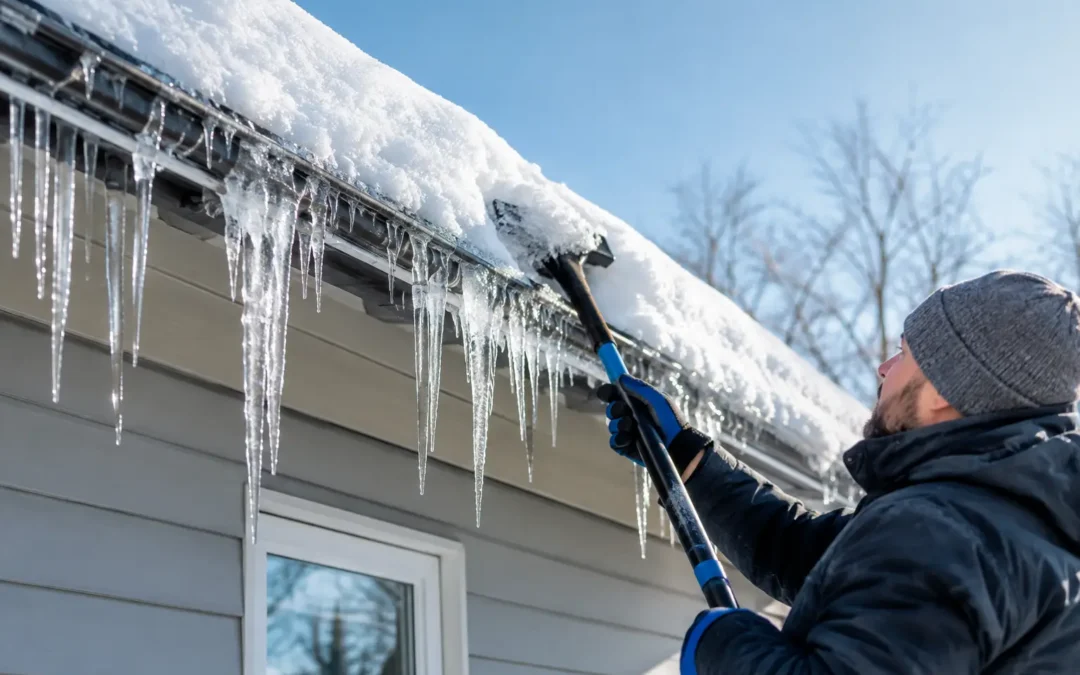
From the ground, a roof rake can be used carefully to remove loose snow from the lower few feet of the roof. This reduces the amount of meltwater feeding the dam. Use a rake designed for roofs, work from a safe position, and keep people clear of falling snow and ice.
Inside, contain any active leak as best you can. Move furniture and electronics, place containers below drips, and take photos of visible water damage for your records. If the ceiling is sagging from trapped water, stay out of that area. A saturated ceiling can fail without much warning.
If water is entering the home, the ice dam is extensive, or you cannot safely reduce the snow load, call for professional help. Emergency service is particularly valuable when temperatures are expected to fluctuate, because each thaw-and-freeze cycle can force more water under the shingles.
How Professional Ice Dam Repair Works
Professional ice dam repair is about removing the immediate threat without creating new roof damage. Depending on conditions, a roofing crew may use controlled steam removal to cut channels through the ice and allow trapped water to drain. Steam is generally safer for roofing materials than striking the ice mechanically, although the best method depends on the roof pitch, shingle condition, access, snow depth, and severity of the dam.
Once the area is accessible, the roof should be inspected for lifted shingles, damaged flashing, compromised underlayment, loose gutters, and signs of water intrusion. If water has reached the attic, the inspection may also include insulation, ventilation pathways, roof decking, and interior moisture damage.
Some repairs can be completed immediately, such as replacing damaged shingles or securing a vulnerable flashing detail. Other work may need to wait for safer, drier weather. A dependable contractor should explain what can be done now, what should be monitored, and what permanent repair is recommended once conditions allow.
At CPG Roofing & Siding, the goal is not to offer a temporary fix without answers. Homeowners deserve a clear assessment of the leak, the condition of the roof, and the practical steps that can reduce the chance of another ice dam next winter.
Preventing Future Ice Dams
Long-term prevention usually requires a whole-system approach. The roof surface, attic, insulation, ventilation, gutters, and interior air leaks all affect how snow melts and where that water goes.
Start with an attic evaluation. Air sealing gaps between the home and attic is often one of the most effective improvements because it limits warm air from reaching the underside of the roof. Insulation should be properly installed and deep enough for the home, without blocking soffit vents that supply needed airflow.
Ventilation also needs balance. Intake vents near the eaves and exhaust vents near the ridge can help maintain a more consistent roof temperature when they are correctly designed and unobstructed. More ventilation is not automatically better if the system is poorly configured, so this is an area where a roof professional can help identify what your home actually needs.
Keep gutters maintained before winter arrives. Remove leaves and debris, make sure downspouts direct water away from the foundation, and repair sagging sections that hold water. Gutter protection products can reduce debris buildup in some homes, but they will not solve heat loss or ventilation issues on their own.
When replacing a roof, ask about ice and water protection at vulnerable areas such as eaves, valleys, roof-to-wall transitions, skylights, and penetrations. This self-adhering membrane adds an important layer of defense if water backs up beneath shingles. It does not eliminate the need for proper attic performance, but it can significantly reduce the risk of interior leakage.
When a Repair Is Enough and When Replacement Makes Sense
Ice dams do not automatically mean you need a new roof. If the roof is relatively new and damage is localized, targeted repairs, attic improvements, and better drainage may be the right investment. A professional inspection can confirm whether the shingles remain sound and whether water has reached the roof deck.
Replacement may be worth considering when the roof already has widespread wear, curling or missing shingles, recurring leaks, deteriorated flashing, or repeated winter damage. In that situation, repairing one trouble spot can become a short-term expense on a system that is nearing the end of its service life.
The best option depends on the roof’s age, the extent of water intrusion, the condition of the attic, and your plans for the property. Clear recommendations and documented findings help you make that decision with confidence instead of reacting to the next storm.
Winter roof problems move fast, but you do not have to guess at the right response. If you see interior water, a growing ice ridge, or snow melting unevenly across your roof, arrange an inspection early. Acting before the next freeze can protect the roof over your head and the rooms beneath it.