
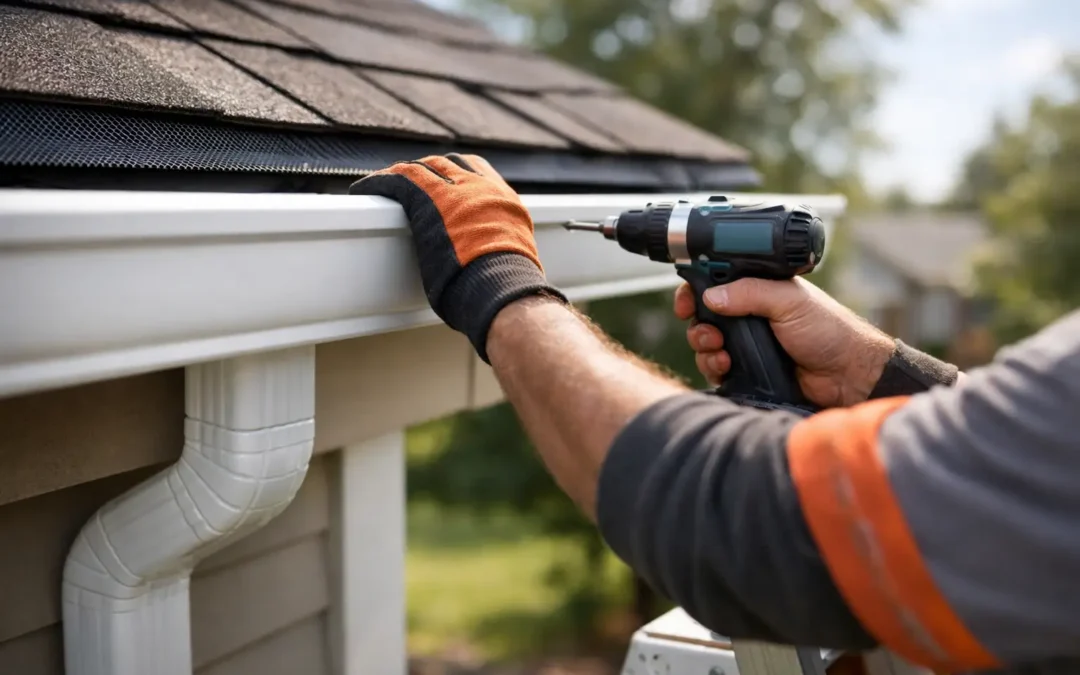
A lot of gutter problems do not start with a dramatic failure. They start with a small overflow near the front step, a damp corner in the basement, or mulch washing out after every hard rain. That is why gutter installation matters more than most property owners realize. When the system is sized right, pitched correctly, and tied into the roofline properly, it does one job extremely well – it moves water away from the parts of your home that are expensive to repair.
Why gutter installation matters so much
Your roof sheds thousands of gallons of water over the course of a year. Without a dependable path to carry that runoff away, water ends up where it should not be. Fascia boards stay wet. Siding gets stained. Soil around the foundation erodes. In winter, trapped water can freeze near the eaves and add pressure where your roof edge is already vulnerable.
A proper gutter system is not just an accessory. It is part of your exterior protection system, right alongside roofing, flashing, and siding. If one part fails, the rest of the house feels it. That is why good installation work is not only about hanging gutters straight. It is about understanding drainage, roof load, local weather, and the specific trouble spots on your property.
What a proper gutter installation includes
The best installations start before any material goes up. The roofline is measured carefully, downspout locations are planned, and runoff volume is considered. A long roof section with a steep pitch may need more drainage capacity than a small porch roof, even if the visual difference seems minor.
Pitch is one of the most overlooked details. Gutters should look level from the ground, but they need a slight slope so water flows toward the downspouts instead of pooling in the channel. Too much pitch looks sloppy. Too little leaves standing water, which adds weight and shortens the life of the system.
Fastening matters too. Gutters need secure hangers spaced correctly for durability, especially in areas that see heavy rain, snow, and ice. In the Hudson Valley, freeze-thaw cycles can expose weak installation quickly. A system that seems fine in summer can begin sagging or separating once winter adds stress.
Then there is downspout placement. This is where function beats guesswork. If downspouts empty too close to the foundation, the gutter is doing only half its job. Extensions, splash control, and drainage direction all need to be part of the plan.
Seamless vs. sectional gutters
For most homes, seamless gutters are the stronger choice. They are custom-cut to fit the structure, which means fewer joints and fewer places for leaks to develop over time. They also tend to look cleaner and perform better in the long run.
Sectional gutters can work in some situations, usually when budget is the biggest concern or when a small repair is being made on part of an existing system. The trade-off is simple. More seams usually mean more maintenance and more potential failure points. If you plan to stay in the property and want fewer headaches, seamless is often the better investment.
Choosing the right gutter material
Aluminum remains the most common option for residential gutter installation because it balances cost, appearance, and durability well. It resists rust, comes in a wide range of colors, and works for most homes.
Copper is a premium option that offers a distinctive look and long life, but it costs significantly more. Steel is stronger in some applications, though it can be more prone to rust if protective coatings wear down. Vinyl is inexpensive, but in a climate with temperature swings and winter stress, it is usually not the first choice for long-term performance.
The right material depends on your budget, the style of the property, and how long you expect the system to last before replacement becomes necessary.
Signs your home needs new gutters, not another repair
Not every gutter issue means full replacement. Sometimes a reattachment, resealing, or downspout correction is enough. But there comes a point when patching stops making financial sense.
If you see repeated leaks at seams, visible sagging, rust, cracks, peeling paint near the roof edge, or water collecting around the foundation after rain, those are signs the system may be past its useful life. Overflow during normal rain is another red flag. Sometimes homeowners assume that means the gutters just need cleaning. That may be true, but it can also mean the system is undersized or installed with poor pitch.
Age matters as well. Older gutters that have already been repaired multiple times often fail in stages. One section loosens, then another starts leaking, then fascia damage appears behind it. At that stage, replacement is often the more practical move.
Why installation quality matters more than the product alone
A high-quality gutter product installed poorly will still underperform. This is where many property owners get frustrated. They choose a decent material, spend real money, and still end up with overflow or drainage issues because the layout was wrong from day one.
Professional installation should account for roof area, slope, water volume, mounting points, and how the gutters interact with roofing and fascia. That is especially important if the home has valleys, dormers, multiple rooflines, or areas where water concentrates heavily during storms.
The installer should also look beyond the gutter itself. If fascia wood is rotted, if drip edge is missing, or if old fastener holes have weakened the attachment area, those conditions should be addressed before the new system goes up. Covering a hidden problem only delays the repair and often increases the eventual cost.
Gutter guards – worth it or not?
It depends on the property. Gutter guards can reduce the amount of debris entering the system and cut down on cleaning frequency, which is helpful if your home is surrounded by trees. They can also help water keep moving during heavy leaf drop in the fall.
That said, gutter guards are not a cure-all. Some systems perform better than others, and no guard eliminates maintenance entirely. Fine debris can still build up over time, and the wrong product can create its own flow issues if it is not matched to the roof and gutter design.
For many homes, guards make sense as part of a new gutter installation, especially when access is difficult or seasonal debris is a constant issue. The key is choosing a system based on real conditions, not just marketing promises.
What homeowners should expect from a professional installation process
The experience should feel organized from the first appointment. A contractor should inspect the roofline, identify drainage issues, explain material options, and provide a clear scope of work. You should know what is being installed, where downspouts will go, what color options are available, and whether any wood repair or related exterior work is needed first.
On installation day, crews should protect landscaping, work cleanly, and leave the property in good condition. That may sound basic, but it matters. Exterior work should improve your home, not create a cleanup project for you after the truck leaves.
Communication matters just as much as workmanship. If the installer sees an issue once old gutters come down, you should hear about it clearly and promptly. Good contractors do not disappear behind vague language. They explain what they found, what it means, and what the next step should be.
Timing matters more than most people think
Many homeowners wait until gutters are falling off or actively leaking into the home. By then, the damage may already include fascia rot, siding stains, foundation moisture, or landscape erosion. Replacing gutters earlier can be the cheaper decision.
If your roof is being replaced, that is often the smartest time to evaluate the gutter system too. The same goes for siding work or major exterior repairs. Coordinating projects can improve fit and finish while reducing the chance that one trade disturbs another contractor’s work later.
In areas like Orange County, Dutchess County, Ulster County, and Sullivan County, timing before winter is especially important. A weak gutter system heading into freezing weather is a risk. Snowmelt and ice can turn a manageable problem into emergency repair territory quickly.
The real value of getting it done right
The cheapest quote is rarely the full story. With gutters, small shortcuts show up fast. Poor fastening, weak slope, bad downspout placement, and low-grade materials can all lead to callbacks, repairs, and damage outside the gutter system itself.
A well-executed installation protects more than the roof edge. It helps protect siding, windows, entryways, walkways, landscaping, and the foundation below. It also gives you one less thing to worry about every time heavy rain moves through.
That peace of mind is what most property owners are actually buying. Not just metal attached to the house, but a drainage system that works when the weather turns bad. If you are investing in your exterior, gutter installation should be treated with the same seriousness as roofing and flashing. Done right, it stays quiet, out of the way, and dependable year after year.
If your current system is sagging, leaking, or simply not keeping up, this is one of those projects where acting sooner usually saves money later.