
A gutter guard should reduce dangerous ladder work and protect your home from clogs. It should not create a new drainage problem at the roofline. This gutter guard systems review looks at the options homeowners see most often, how they perform through Hudson Valley rain, leaf drop, snow, and ice, and when a guard is worth the investment.
The right answer depends on your roof pitch, gutter size, surrounding trees, and the condition of the existing gutter system. A high-priced guard on a sagging gutter will not solve the underlying problem. Before choosing any product, make sure water can reach the downspouts and move safely away from the foundation.
What a Gutter Guard Needs to Do
A good guard has one job: keep enough debris out of the gutter while allowing heavy rain to enter without running over the front edge. That balance is harder than it sounds. Large leaves, pine needles, maple seeds, roof grit, moss, and shingle debris all behave differently once wind and water are involved.
For homeowners in Orange, Dutchess, Ulster, and Sullivan counties, winter performance matters too. Guards do not prevent ice dams. Ice dams are usually connected to heat loss and ventilation issues in the attic. However, guards can make cleaning more difficult if gutters are already holding standing water or if snow and ice repeatedly build up at the eaves.
The best systems also fit securely under or along the roof edge without damaging shingles, restricting water flow, or creating a place for debris to collect. Installation quality matters as much as the guard itself.
Gutter Guard Systems Review: Common Types Compared
Screen guards
Basic screen guards use perforated metal, plastic, or vinyl panels across the top of the gutter. They are usually the most affordable option and can block larger leaves effectively. For a home with a few broadleaf trees and easy roof access, a quality metal screen can be a practical improvement.
The trade-off is that smaller debris can still pass through. Pine needles and roof grit may settle in the gutter, while wet leaves can sit on top of the screen and require occasional brushing off. Plastic screens often become brittle after repeated freeze-thaw cycles, so metal is generally the better choice for long-term exterior performance.
Reverse-curve or surface-tension guards
These guards guide rainwater around a curved front edge and into a narrow opening, while leaves are intended to fall away. They can do a good job handling large debris and often have a clean, finished appearance.
Their weak point is heavy rainfall. On certain roof pitches, water can overshoot the opening during a hard storm, especially if the system is poorly sized or installed at the wrong angle. They also need professional fitting to work as intended. A system that looks good but sends water behind the gutter or over the edge can still damage fascia, siding, landscaping, and foundations.
Fine micro-mesh guards
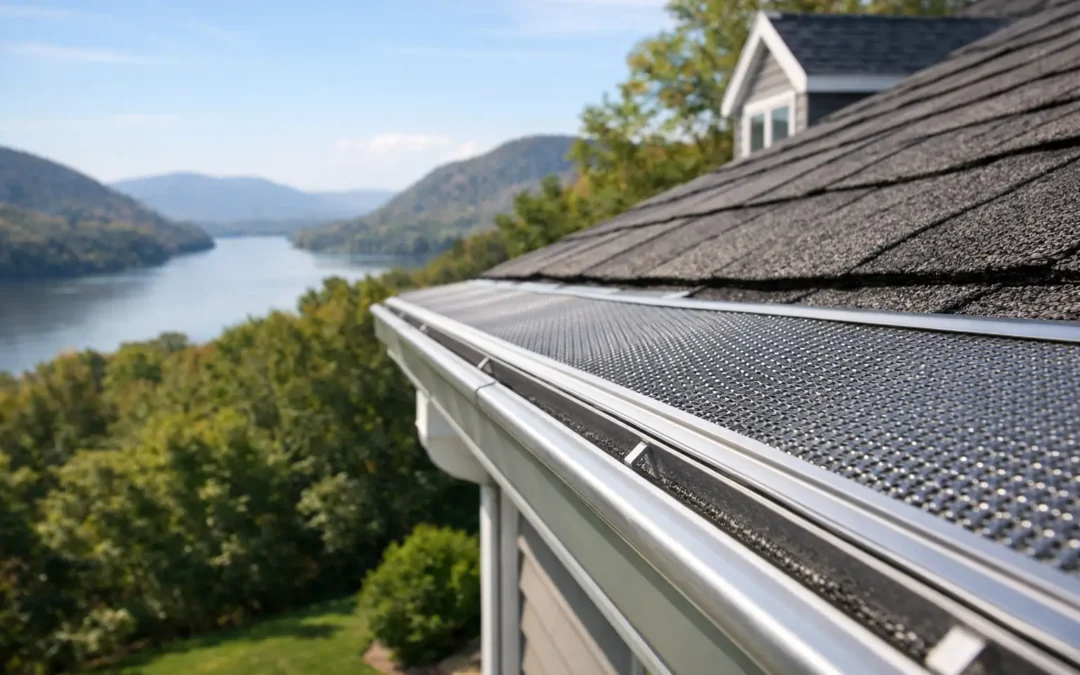
Micro-mesh systems use a very fine stainless steel or aluminum mesh to block small debris while admitting water. In this review, they are often the strongest all-around choice for homes surrounded by mixed trees, including pine, oak, maple, and locust. They are particularly useful where needles and seed pods make standard screens ineffective.
Not every micro-mesh guard performs the same. The frame must be strong enough to resist warping, and the mesh needs a proper slope so debris sheds off rather than forming a wet layer on top. Cheap mesh products can clog with roof grit or become difficult to clean. A professionally installed system with a durable frame costs more, but it can provide better long-term protection when matched to the roof and gutter profile.
Foam inserts and brush inserts
Foam and brush inserts sit inside the gutter rather than covering it. They are inexpensive and easy for some homeowners to install, which makes them appealing as a quick fix.
They are rarely a strong long-term solution. Leaves can collect on top, fine debris can become trapped inside, and the material itself can hold moisture. In shaded areas, that combination can encourage organic buildup. Foam may also deteriorate over time. These products can be useful in limited situations, but they should not be treated as maintenance-free gutter protection.
Solid covers with narrow slots
Solid covers use a rigid panel with a small intake slot or louvered opening. They can keep out large debris and are generally more durable than lightweight screens. Performance varies widely by design. Some models manage high water volume well; others struggle when rain hits a steep roof surface at speed.
This category requires a closer look at the roofline. The guard must not interfere with shingles, drip edge, or the gutter’s mounting system. A qualified installer should assess the roof pitch, valley locations, and downspout capacity before recommending a solid-cover system.
The Problems Guards Cannot Fix
Gutter guards are not a substitute for a sound gutter system. If gutters are undersized, pitched incorrectly, loose from the fascia, or missing enough downspouts, water will still overflow. The same is true when underground drain lines are blocked or downspouts discharge too close to the home.
Roof valleys deserve special attention. A valley can send a concentrated sheet of water into one short section of gutter. Even a well-made guard may be overwhelmed if that area does not have adequate gutter capacity. In some cases, a wider gutter, an additional downspout, or a diverter provides more protection than changing guard styles.
Homeowners should also be cautious about any promise that a guard will eliminate cleaning forever. Most systems reduce cleaning frequency. Few remove the need for inspection. Windblown debris, roof granules, and nests can still affect water flow, particularly after severe weather.
How to Choose the Right System for Your Property
Start with the trees around your home. Large oak and maple leaves create a different challenge than white pine needles. Next, consider roof pitch and roof valleys. A steep roof or a high-flow valley may need a system designed for greater water volume, not simply the finest mesh available.
Then inspect the gutters themselves. Look for standing water after rain, visible sagging, peeling paint, loose hangers, stains on siding, and erosion beneath downspouts. These are signs that repair or replacement may need to happen before guards are installed.
Material quality should be part of the decision. Aluminum and stainless steel generally perform better outdoors than thin plastic components. Ask how the system is attached, whether it affects the roof warranty, how it handles winter conditions, and what the workmanship warranty covers. A clear answer is a good sign. Vague claims about a lifetime, clog-free system are not enough on their own.
Price should be viewed over the expected life of the gutter system. An inexpensive insert that needs regular replacement may cost more in time and frustration than a properly fitted metal guard. On the other hand, a premium system may not be necessary for a low roof with minimal tree coverage and easy maintenance access.
Professional Installation Makes the Difference
A guard installation is an opportunity to correct small gutter issues before they become larger exterior repairs. The crew should clean the gutters, check their slope, secure loose sections, inspect the fascia area, and confirm that downspouts are moving water properly. Cleanup matters here as well. Loose fasteners, sharp metal cutoffs, and debris left around the home are signs of rushed work.
At CPG Roofing & Siding, gutter recommendations should begin with the property, not a one-size-fits-all product. A clear inspection helps determine whether guards are the right next step or whether gutter repair, replacement, or roof-edge work needs attention first.
Before the next heavy rain or fall leaf drop, take a close look at how water moves around your home. The right gutter guard can reduce maintenance and protect the areas below your roofline, but only when it is built for your conditions and installed on a gutter system that is ready to perform.