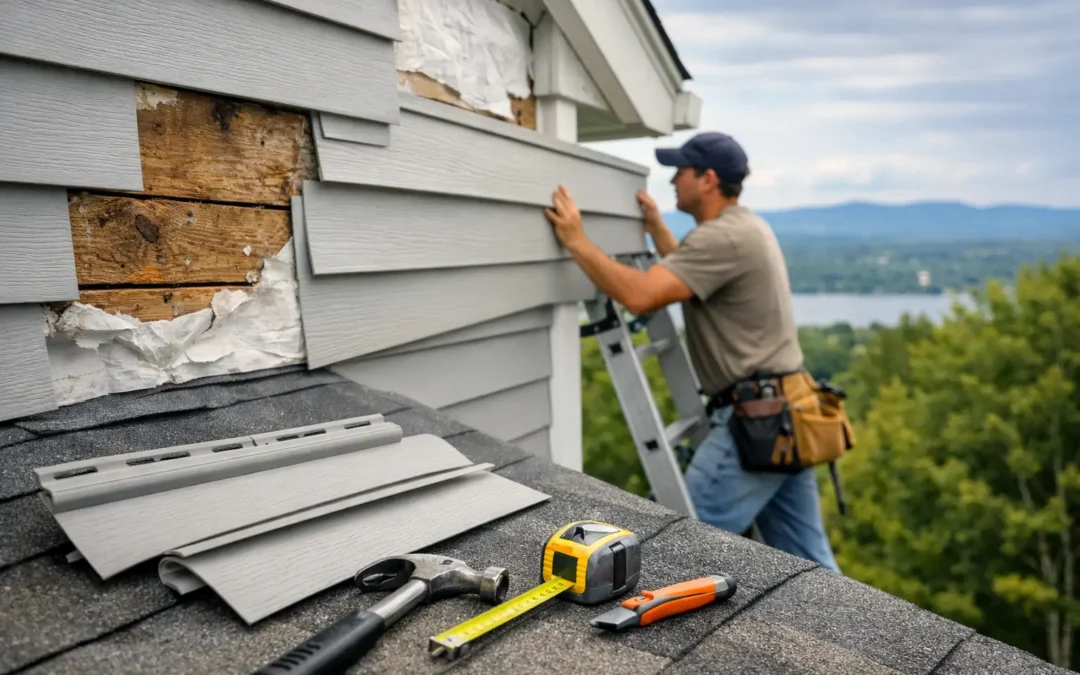
A cracked vinyl panel or a section of rotted wood may look like a small exterior issue, but it can become a moisture problem fast. What does siding repair cost? For most Hudson Valley property owners, the answer depends less on the visible damage alone and more on what is happening behind the siding.
A simple repair can cost a few hundred dollars. A larger repair involving multiple panels, hidden rot, damaged house wrap, or difficult access can move into the thousands. The right next step is not guessing from a photo. It is getting the damaged area inspected before rain, wind, pests, and winter weather turn a manageable repair into a broader exterior project.
What Does Siding Repair Cost? Typical Price Ranges
Most professional siding repairs fall within a wide range because materials, labor requirements, and underlying damage vary significantly. As a general planning guide, homeowners can expect minor, accessible repairs to start around $300 to $800. Repairs involving several damaged sections often range from $800 to $2,500. More involved projects, especially those with rot repair, water damage, custom material matching, or multi-story access, may cost $3,000 or more.
These figures are planning ranges, not a substitute for a written estimate. A contractor needs to evaluate the material, remove enough siding to see the condition of the wall beneath it, and determine whether water has reached framing or insulation. A repair that looks inexpensive from the ground can require more work once the affected area is opened.
The good news is that quick action usually controls the scope. Replacing one storm-damaged section is far less expensive than repairing soaked sheathing, framing, and interior wall finishes months later.
Minor siding repairs: $300 to $800
This range may apply when the issue is limited to a small number of vinyl panels, loose trim, popped fasteners, a minor crack, or a small area of damaged caulk. The work is generally more straightforward when the affected location is on a one-story wall and the existing siding is easy to match.
Even a small repair deserves careful attention. Siding is part of your property’s weather barrier, not simply a cosmetic finish. A correctly repaired section should be secured, flashed where needed, and integrated with the surrounding material so water sheds away from the home.
Moderate repairs: $800 to $2,500
This is a common range for repairs involving multiple siding boards or panels, corner posts, trim, damaged soffit areas, or localized rot beneath the siding. Labor becomes a bigger factor here because the contractor may need to remove surrounding materials, replace deteriorated wood, install new flashing, and restore the exterior to a clean finished appearance.
For many homeowners, this is also where color matching becomes a real consideration. Existing vinyl and painted siding can fade over time. A new panel may be structurally correct but visually noticeable, particularly on a sun-exposed elevation. In some cases, replacing a larger section creates a more consistent result.
Extensive repairs: $3,000 and up
Costs rise when water intrusion has spread beyond the siding itself. Damaged sheathing, framing repairs, mold-related remediation, large sections of cedar or fiber cement, chimney or roof-to-wall flashing issues, and second-story access can all add to the project.
Commercial properties may also see higher costs because of building height, access requirements, material specifications, and the need to protect tenant operations. The priority is still the same: identify the source of damage, correct it, and rebuild the exterior assembly properly.
What Drives Your Siding Repair Estimate?
The size of the damaged area matters, but it is only one part of the estimate. A dependable contractor should explain what is being repaired, why it is necessary, and whether there are options that fit your budget and long-term plans.
Siding material
Vinyl siding is often one of the more affordable materials to repair because individual panels can sometimes be replaced without extensive cutting or refinishing. However, older or discontinued profiles can be difficult to source, and brittle vinyl may crack during removal.
Wood siding can require more labor because it may need to be cut, primed, painted, and protected against future moisture damage. If rot is present, the repair must address the cause, not just replace the damaged board.
Fiber cement is durable and attractive, but it is heavier and requires specialized cutting, fastening, and finishing practices. Aluminum siding can be difficult to repair invisibly because dents are hard to remove, while matching replacement pieces may be limited. Stucco, engineered wood, and composite siding each have their own repair methods and cost considerations.
Hidden water damage
This is the factor that surprises property owners most often. Siding can hide deteriorated plywood, wet insulation, rusted fasteners, insect damage, or compromised framing. A responsible estimate may include an allowance for concealed conditions or explain how pricing would change if damage is found after materials are removed.
That is not a sign of an unreliable contractor. It is an honest reflection of how exterior repairs work. No one can see through a wall, but an experienced crew can recognize warning signs and communicate clearly before moving forward.
Access and height
A small repair near ground level may be completed quickly. The same repair on a steep lot, above a garage roof, or on a second or third story requires more time, equipment, and safety measures. Landscaping, decks, utility lines, and tight property access can also affect labor costs.
In the Hudson Valley, weather can influence scheduling as well. Rain, snow, ice, and high winds can delay exterior work or require temporary protection until a permanent repair can be completed safely.
Matching materials and finishes
Matching siding involves more than selecting a similar color. The profile, exposure, texture, thickness, and trim details need to line up. If a close match is unavailable, a contractor may recommend using the new material on a less visible wall, replacing an entire elevation, or adding a complementary trim solution.
The lowest-cost patch is not always the best value if it leaves an obvious mismatch or fails to protect the wall correctly. A clear estimate should help you weigh appearance, durability, and budget without pressure.
Repair or Replacement: Which Makes More Sense?
Repair is usually the right choice when damage is isolated, the existing siding is in good condition, and matching material is available. It is a practical way to stop water intrusion and extend the life of the exterior without taking on a full replacement project.
Replacement may be the better investment when repairs keep appearing, the siding is warped or brittle across multiple elevations, rot is widespread, or the home has poor moisture management behind the walls. If you are already planning major window, roofing, or insulation work, coordinating exterior improvements can also reduce disruption and avoid redoing trim or flashing later.
A trustworthy contractor will not recommend full replacement for every damaged panel. They should show you the condition of the siding, explain the risks of repair versus replacement, and provide an option that protects the property without overselling the project.
Can Insurance Help Cover Siding Repair Costs?
Insurance coverage depends on the cause of the damage and the details of your policy. Sudden events such as wind, hail, falling branches, or storm damage may be covered, subject to your deductible and policy limits. Wear, age-related fading, neglected maintenance, and long-term water intrusion are less likely to qualify.
If a storm has damaged your siding, take clear photos before temporary repairs are made, keep records of the event, and request a professional inspection. Emergency protection may be needed to prevent further damage, but documentation can help support your claim. Do not wait for visible interior leaks before taking action.
How to Keep a Small Repair From Becoming a Major Bill
Watch for loose or missing panels, cracked caulk, peeling paint, soft wood, stains beneath windows, warped boards, and gaps around trim. These issues often point to water getting where it does not belong. After severe weather, walk around the property from a safe distance and look for obvious changes, especially near rooflines, chimneys, windows, and corners.
Regular gutter maintenance also matters. Overflowing gutters can soak siding and trim repeatedly, creating the exact conditions that lead to rot. Keeping water directed away from the building is one of the simplest ways to protect the exterior.
CPG Roofing & Siding helps property owners throughout the Hudson Valley identify siding damage, explain repair options clearly, and complete work with attention to cleanup and lasting protection. If you see a damaged section, do not wait for the next storm to tell you how serious it is. A prompt inspection can give you a clear answer, a realistic estimate, and the confidence to protect your property before the damage spreads.