
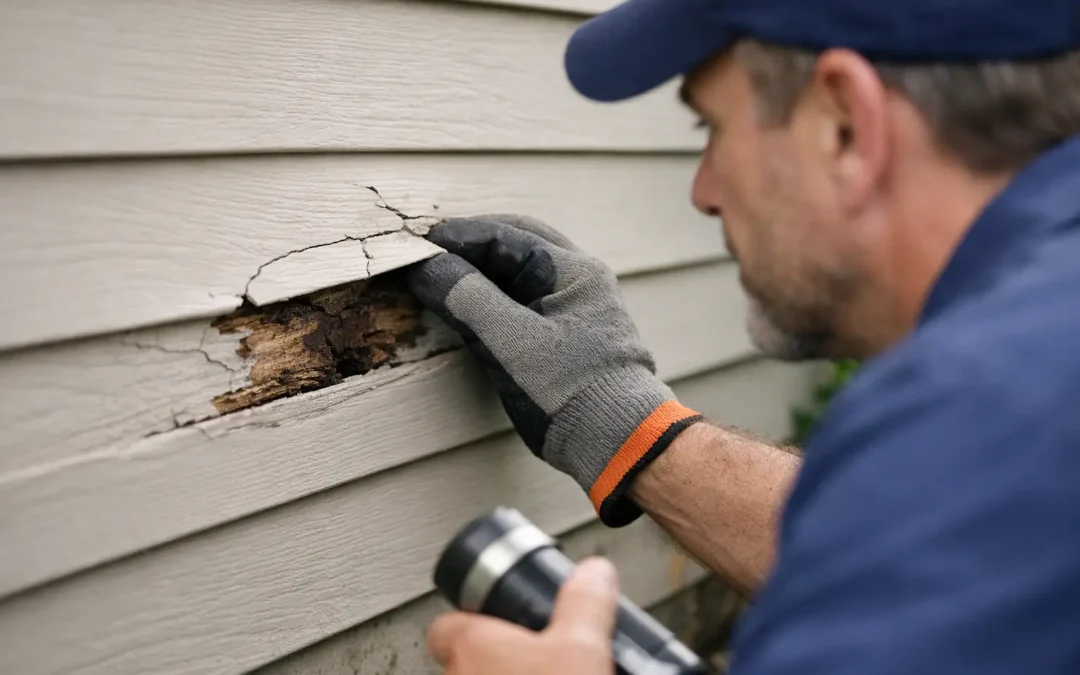
A loose siding panel can look like a small cosmetic issue from the driveway. After one Hudson Valley winter, however, that opening may allow wind-driven rain, melting snow, and pests behind the exterior. By the time you see a stain indoors, the repair may involve more than siding.
Knowing how to spot siding damage gives you a chance to address problems while they are still contained. A careful ground-level inspection a few times each year, especially after a major storm, can protect your home or commercial property from moisture damage, energy loss, and expensive structural repairs.
How to Spot Siding Damage During a Walk-Around
Start outside on a dry, well-lit day. Walk slowly around the entire structure and look at the walls from more than one angle. Low morning or late-afternoon sunlight can reveal uneven panels, dents, and rippling that are hard to see at noon.
Focus on the areas that take the most punishment: the sides exposed to prevailing wind, walls below roof valleys, sections near downspouts, and lower courses near landscaping, decks, or snow piles. Keep an eye on siding around windows, doors, utility penetrations, and the foundation. These transition points are common places for water to get behind the cladding.
Do not climb onto a roof or lean a ladder against questionable siding to inspect it. Binoculars, a phone camera with zoom, or a professional inspection can provide a safer look at upper walls, gables, and chimney transitions.
Cracks, Holes, and Missing Pieces
Cracked vinyl, chipped fiber cement, split wood, and punctures in aluminum siding all deserve attention. Even a small opening can expose the material underneath to water and insects. Hail can leave round dents or impact marks, while windblown branches may create tears, scratches, or holes that are easy to overlook.
Look closely near lawn equipment paths as well. Repeated contact from a mower, trimmer, grill, or outdoor furniture can damage lower panels. One isolated mark may only need a targeted repair. Several cracks across a wall can be a sign of aging, impact damage, or material that has become brittle from years of sun and temperature changes.
Warping, Buckling, and Loose Panels
Siding should lie flat and align consistently from one course to the next. Panels that bow outward, ripple, buckle, or pull away from the wall may have been installed too tightly, damaged by heat, or affected by moisture behind the siding.
Vinyl siding expands and contracts with temperature changes, so a slight amount of movement is normal. Deep waves, obvious gaps, or panels that rattle in the wind are not. On wood siding, cupping or curling boards can point to long-term moisture exposure. Fiber cement that appears swollen, soft, or delaminated may also be taking on water.
Pay close attention after periods of high wind. Siding can loosen at a corner or along the top edge before a larger section comes free. Securing it early is usually far simpler than replacing damaged panels and repairing the wall beneath them.
Signs of Moisture Behind the Siding
The most serious siding damage is not always visible from the street. Moisture can travel behind exterior panels and affect sheathing, insulation, framing, and interior finishes. That is why surface appearance should be considered alongside what you see and smell inside the property.
Look for peeling paint, dark streaks, green algae, or persistent mildew on a wall. Some surface growth is normal on shaded exterior areas, but recurring staining around seams, windows, or trim can indicate poor drainage or water intrusion. Soft spots are especially concerning. If a wood-sided area gives when gently pressed, do not ignore it.
Inside, check exterior-facing rooms for new water stains, bubbling paint, musty odors, or unexplained humidity. Drafts near outlets and windows can also signal gaps in the exterior assembly. None of these signs proves the siding is the sole cause. A roof leak, failed flashing, window issue, or gutter overflow may be involved. The key is identifying the moisture path before rot spreads.
Stains Around Windows and Doors
Window and door trim are not just decorative. They help direct water away from vulnerable openings. Caulk that is cracked, shrinking, or missing can allow water behind the trim, where it may damage the wall without showing immediate symptoms.
Check for gaps at the top corners of window trim, soft wood, separated joints, or stains below the sill. If siding appears intact but the trim is failing, prompt repair can prevent a much larger siding and sheathing project. Caulk is not a permanent answer for every problem, though. If the flashing or installation details are wrong, simply adding more caulk can trap water instead of directing it out.
Damage That Looks Like Normal Aging
Not every faded panel means your siding has failed. Sun exposure naturally dulls color over time, particularly on south- and west-facing walls. Light surface dirt can often be cleaned without replacement, and a few minor scuffs may be purely cosmetic.
The concern rises when fading comes with brittleness, cracking, warping, or exposed material. Uneven color can also reveal that a past repair does not match the original siding, which may affect the appearance of a larger replacement project. For wood siding, paint that repeatedly peels in the same location is usually more than an appearance issue. It can be a warning that moisture is reaching the back of the boards.
Age matters, but condition matters more. A well-maintained siding system can remain protective for many years, while newer siding can fail early after storm damage or poor installation. A professional evaluation helps separate routine maintenance from an issue that requires repair or replacement.
Check the Gutters and Landscaping Too
Siding and water management work together. Overflowing gutters, loose downspouts, and clogged underground drains can dump gallons of water against an exterior wall. During a rainstorm, observe whether water is spilling over gutter edges or running down the siding. Once the weather clears, look for splash marks, eroded soil, or damp areas near the foundation.
Keep mulch, soil, and plants from resting against the siding. Organic material holds moisture and can hide damage near the bottom of the wall. Trees and shrubs should be trimmed back enough to prevent branches from scraping panels during wind and to allow airflow for drying.
Ice and snow deserve extra attention in the Hudson Valley. Snow piled against lower siding can hold moisture in place for days, while freeze-thaw cycles can widen small cracks and loosen trim. Remove snow carefully with a plastic shovel or broom rather than striking the siding with metal tools.
When to Call a Siding Professional
Call for an inspection promptly if you find loose or missing panels, soft areas, repeated moisture stains, widespread cracking, or damage after hail and high wind. Commercial property owners should also act quickly when siding damage is near entrances, loading areas, or public walkways, where a loose panel can become a safety concern.
A qualified exterior contractor can determine whether the visible issue is limited to siding or connected to the roof, gutters, flashing, windows, or wall structure. That distinction matters. Replacing a few panels may be the right solution for localized impact damage, while widespread moisture intrusion may call for removing siding, repairing sheathing, and correcting the source of the water.
CPG Roofing & Siding provides organized exterior inspections and repair guidance for property owners who need clear answers, not guesswork. Fast action after a storm can also help document damage before conditions worsen.
Take a few photos whenever you notice a new crack, stain, or loose section, and note when it appeared. That simple record can help a professional identify whether the problem is active, storm-related, or gradually developing. Your siding is one of your property’s first protective layers. Give small warning signs the attention they deserve before water finds its way behind the wall.