
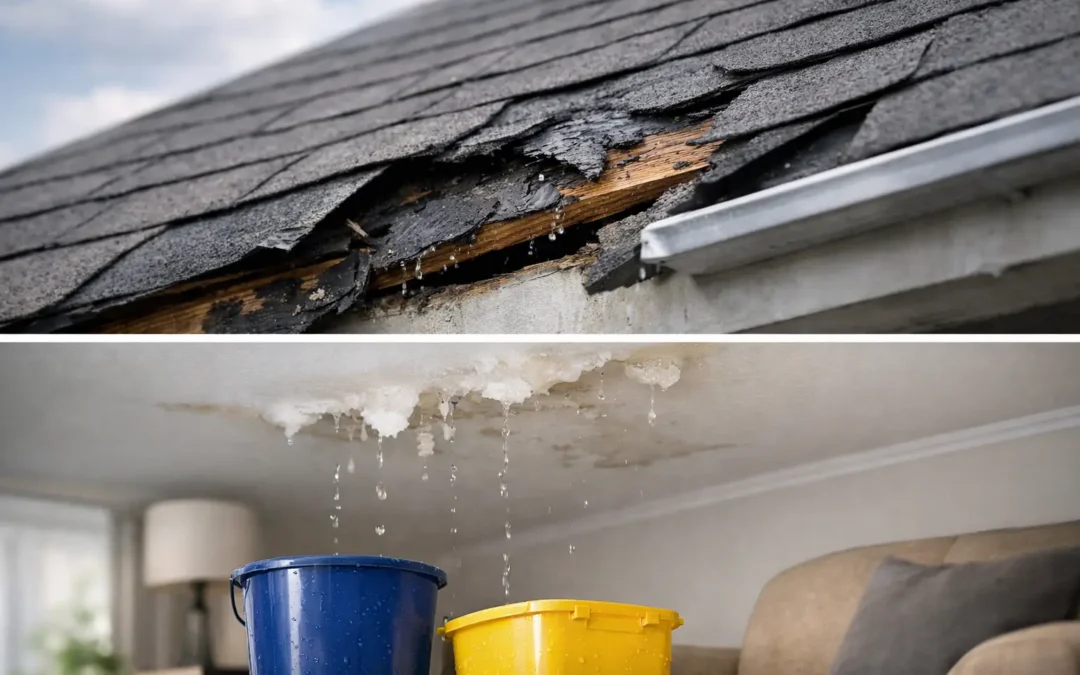
A brown ceiling stain, a damp wall, or a drip from a light fixture can turn an ordinary rainy day into a property emergency. If you are wondering what causes roof leaks indoors, the visible water is often only part of the problem. Water can travel along roof decking, rafters, insulation, pipes, and framing before it reaches the room below. That means the drip is not always directly under the actual roof failure.
The right response is quick, calm action. Protect the interior, document what you see, and have the roof evaluated before a small opening turns into damaged insulation, mold growth, rotted wood, or a larger repair.
What Causes Roof Leaks Indoors?
Indoor roof leaks usually happen when water finds a path through the roofing system or around a roof penetration. In the Hudson Valley, wind-driven rain, snow buildup, freeze-thaw cycles, and ice dams can expose weak points that may not be obvious from the ground.
A leak can also be caused by a problem outside the roof itself, such as clogged gutters, failed siding transitions, plumbing vents, or condensation in the attic. A professional inspection is the most reliable way to separate a roofing issue from another moisture source.
1. Missing, Cracked, or Worn Shingles
Shingles are the first layer of defense against rain and snow. When shingles crack, curl, blow off, or lose protective granules, water can get beneath them and reach the roof deck. Aging roofs are especially vulnerable, but even newer roofs can lose shingles after high winds or storm debris impact.
One missing shingle does not always cause an immediate ceiling drip. However, it creates an opening that can worsen with every storm. If granules are collecting in gutters or you can see exposed roof areas from the ground, it is time to schedule an inspection.
2. Failed Flashing Around Chimneys, Vents, and Skylights
Flashing is the metal or waterproof material installed where the roof meets a chimney, wall, vent pipe, skylight, or other transition. These areas require precise installation because water naturally collects and changes direction there.
Loose flashing, dried-out sealant, rust, or improper installation can let water in during heavy rain. Chimneys and skylights are frequent suspects, but the source may be a few feet uphill from where water appears inside. This is why simply adding caulk is rarely a dependable long-term repair.
3. Damaged Roof Valleys
A roof valley is where two roof slopes meet. Because it channels a large volume of water, it is one of the most important areas of the roof to keep watertight. When valley shingles, underlayment, or flashing fail, water can enter quickly during a hard rain.
Valley leaks may show up as stains near upper-floor ceilings, along interior walls, or near the center of a home. Leaves and branches that settle in valleys can trap moisture as well, especially on shaded roofs that stay wet longer.
4. Clogged or Overflowing Gutters
Gutters are not just an accessory. They move water away from the roof edge, fascia, siding, foundation, and walkways. When gutters are packed with leaves, ice, or roof granules, water can back up beneath the shingles and soak the roof edge.
Overflowing gutters can also send water behind fascia boards or into exterior wall assemblies, making the indoor moisture look like a roof leak. This is a common issue after fall leaf drop and during winter thaw cycles. Regular cleaning and properly sized gutters protect far more than the gutter system itself.
5. Ice Dams Along the Roof Edge
Ice dams are a serious winter concern in New York. They form when heat escaping into the attic melts snow higher up on the roof. The melted water runs downward and refreezes at the colder eaves, creating a ridge of ice that blocks drainage.
As water backs up behind the ice, it can work beneath shingles and enter the home. You may notice water stains near exterior walls, peeling paint, wet insulation, or dripping during a thaw. Removing visible ice without addressing attic heat loss and ventilation may only provide a temporary fix. The best solution depends on the roof design, insulation levels, ventilation, and the condition of the roofing materials.
6. Roof Decking or Underlayment Failure
Shingles are only one part of a complete roofing system. Underlayment provides a secondary water-shedding layer beneath the shingles, while roof decking creates the structural surface beneath it all. If either material has deteriorated, water can reach the attic and interior even when the shingles appear mostly intact.
Older roofs are more likely to have brittle underlayment, soft decking, or hidden moisture damage. A contractor may find these issues during a repair, particularly around roof penetrations, valleys, and eaves. In some cases, a targeted repair is enough. In others, widespread deterioration may make replacement the more responsible investment.
7. Attic Condensation That Looks Like a Leak
Not all indoor moisture comes from rain entering through the roof. Warm, humid air from bathrooms, kitchens, or living spaces can enter a cold attic and condense on roof framing or the underside of the roof deck. The water then drips onto insulation and ceilings, often during cold weather.
Condensation is more likely when bathroom fans vent into the attic instead of outdoors, attic ventilation is inadequate, or air leaks allow warm indoor air to rise into the attic. The timing offers a clue: if moisture appears during cold periods without rain or snow, condensation should be considered.
8. Cracked Pipe Boots and Roof Vent Problems
Plumbing vent pipes extend through the roof and are sealed with rubber or metal boots. Over time, rubber can crack from sun exposure and temperature changes. Water then enters around the pipe, often causing a localized stain near a bathroom, hallway, or upper-floor closet.
These leaks can be deceptively small at first, but they should not be ignored. A failed pipe boot is often repairable when caught early. Leaving it in place can allow water to damage the decking around the opening.
9. Storm Damage and Fallen Debris
Wind can lift shingles without tearing them completely off. Hail can bruise or crack roofing materials, while tree branches can puncture shingles, damage flashing, or break gutters. After a major storm, damage is not always visible from the driveway.
If a leak begins after high winds, heavy snow, or a fallen branch, do not wait for the next storm to confirm it. A prompt inspection can identify storm-related damage and help prevent a minor opening from becoming a larger interior restoration project.
What to Do When Water Is Coming Through the Ceiling
Your first priority is safety. Keep people away from wet ceilings, light fixtures, and electrical outlets. If water is near electricity, turn off power to that affected area only if it is safe to do so. Never stand in water to reach a breaker panel.
Place a bucket beneath active drips and move furniture, electronics, and valuables out of the area. If the ceiling is bulging with trapped water, do not puncture it unless you understand the risk and can safely control the water. A saturated ceiling can collapse without warning.
Take photos of the ceiling stain, active drip, attic moisture, exterior damage, and any storm debris you can safely see. Documentation is useful for tracking the problem and may help with an insurance claim when storm damage is involved.
Then arrange a professional roof inspection. A dependable contractor should examine the roof surface, flashing, gutters, attic, and likely water paths rather than guessing based on the location of the stain alone.
Why Fast Roof Leak Repair Protects More Than the Ceiling
A small leak can stay hidden for weeks or months. During that time, wet insulation loses effectiveness, wood framing can deteriorate, and mold may develop in enclosed spaces. The longer moisture remains trapped, the more difficult and expensive the repair can become.
Fast action does not always mean rushing into a full roof replacement. The honest answer depends on the roof’s age, the extent of damage, the number of failing areas, and whether the underlying decking is still sound. A focused repair may be the right choice for a newer roof with isolated damage. A roof with repeated leaks, widespread shingle wear, or soft decking may need a broader solution.
For homeowners and property managers in Orange, Dutchess, Ulster, and Sullivan counties, CPG Roofing & Siding can help identify the source, explain the repair options clearly, and protect the property with clean, professional workmanship. If you see a new stain or hear a drip during a storm, treat it as an early warning and get the roof checked before the next round of weather has a chance to make it worse.