
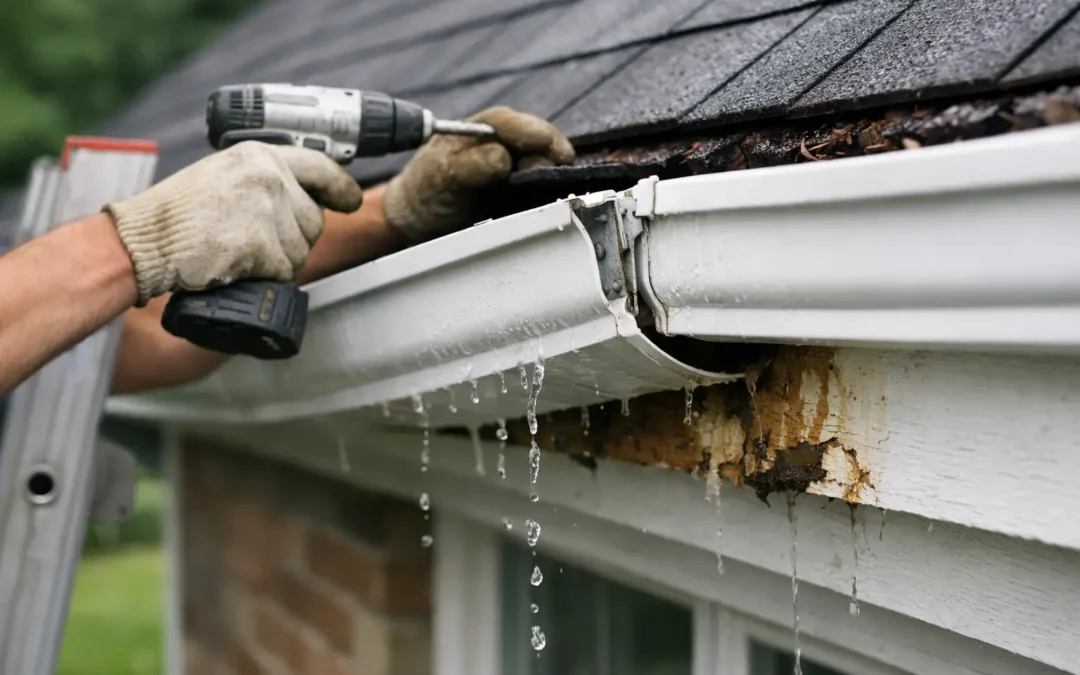
A gutter that pulls away from the roofline is not just an eyesore. It can send rainwater behind the gutter, onto your siding, and straight toward your foundation. Knowing how to fix sagging gutters early can prevent a relatively small repair from becoming rotted fascia, damaged landscaping, basement moisture, or a roof-edge leak.
In the Hudson Valley, gutters carry more than rain. Wet leaves, spring downpours, snowmelt, and ice can put serious weight on a system that is already loose or poorly supported. The right repair depends on why the gutter is sagging in the first place, so start with a careful inspection instead of simply pushing it back into place.
Why Gutters Start Sagging
Most sagging gutters have one of two problems: they are carrying too much weight, or the hardware and wood holding them up have failed. Often, it is a combination of both.
Clogged gutters are a common cause. Leaves, shingle grit, twigs, and standing water add weight until the hangers bend or pull loose. During winter, trapped water can freeze, creating an even heavier load. If the gutter sags only in one section, a clog near that low spot or downspout may be the immediate issue.
Loose or damaged hangers are another frequent culprit. Modern gutters are typically secured with hidden hangers and long screws that fasten through the gutter and into the fascia board. Older spike-and-ferrule systems can gradually loosen as the wood expands, contracts, and deteriorates.
The fascia board itself may be the real problem. When water repeatedly spills behind a gutter, the board can rot. New screws will not hold securely in soft wood, even if the gutter looks straight for a short time. A bowed roof edge, an undersized gutter system, or improper installation pitch can also contribute to repeated sagging.
Inspect the Gutter Before You Repair It
Choose a dry day and use a stable extension ladder on level ground. Avoid leaning a ladder directly against the gutter, since that can create more damage. If the roofline is high, the ground is sloped, or you are not comfortable working at height, this is a repair worth handing to a qualified exterior contractor.
Start by looking along the gutter from the ground. A properly installed gutter should have a subtle slope toward the downspout, usually about one-quarter inch for every 10 feet of run. It should not look perfectly level, but the slope should be gradual enough that it is barely noticeable.
Then inspect the problem area closely. Look for overflowing debris, standing water, bent hangers, missing screws, separated seams, and gaps between the gutter and fascia. Press lightly on the gutter. If the entire section moves, several hangers may be loose. If one screw spins without tightening, the fascia behind it may be deteriorated.
Pay attention to where the water has been going. Peeling paint, dark staining, soft wood, mildew on siding, or erosion beneath the roof edge are signs that the issue has been active longer than it appears.
How to Fix Sagging Gutters Caused by Clogs
If the fascia is solid and the hangers are intact, cleaning may solve the problem. Remove leaves and debris by hand while wearing work gloves, then flush the gutter with a garden hose. Start at the end opposite the downspout and work toward it.
If water pools instead of flowing out, clear the downspout. A hose with a spray nozzle can dislodge light clogs. For packed debris, disconnect the downspout carefully and clear it from the bottom up. Never assume water will drain just because the visible portion of the gutter is clean.
After cleaning, check the gutter’s pitch with a hose. Water should move steadily to the downspout without collecting in the middle. If it still pools, the gutter needs to be re-secured at the correct slope.
Refasten Loose Hangers and Reset the Pitch
For a gutter that is structurally sound but drooping between fasteners, replace weak or missing hangers with heavy-duty hidden gutter hangers and corrosion-resistant gutter screws. Do not simply add a screw through the front of the gutter wherever it is sagging. The support needs to fasten into solid fascia at the proper location.
Begin near the downspout, where the gutter should sit slightly lower. Reposition the gutter so it follows the intended slope, then secure a hanger close to the downspout. Work back toward the opposite end, checking the alignment as you go. Hangers are commonly spaced about every two to three feet, though closer spacing is often wise in areas that see heavy snow and ice.
When installing screws, make sure they bite into solid wood. A screw that turns freely, pulls out, or sinks into soft material is a warning that the fascia needs repair. Adding more fasteners to rotten wood may hold temporarily, but it will not protect the roof edge through another wet season.
Older spike-and-ferrule gutters can sometimes be tightened, but replacement is often the more dependable option. Long gutter screws and hidden hangers generally provide stronger, cleaner support than repeatedly driving old spikes back into weakened fascia.
Repair Fascia Damage Before Rehanging Gutters
Rotting fascia changes the job from a simple gutter adjustment to an exterior repair. The gutter may need to come down so the damaged board can be fully assessed and replaced. This is also the right time to inspect the drip edge and roof decking along the eave.
A proper repair means removing compromised wood, installing sound replacement fascia, and ensuring the roof edge directs water into the gutter rather than behind it. If water has reached the soffit, siding, or roof decking, those areas should be checked as well. Covering damage with caulk or driving screws into a nearby section of wood does not address the moisture source.
This is where professional help is particularly valuable. Gutter support, roof drainage, flashing, and fascia all work together. A repair that ignores one part of that system can leave the property exposed to the same water damage months later.
When Sagging Means the Gutter System Is Undersized
Sometimes the gutter is not failing because it is old. It is failing because it cannot manage the amount of water coming off the roof.
Large or steep roof planes shed water quickly during heavy rain. If the gutters overflow even after cleaning, or if the system sags repeatedly despite solid hangers, a larger gutter profile or additional downspouts may be needed. Five-inch gutters work well for many homes, but certain roof designs benefit from six-inch gutters and wider downspouts.
Seamless gutters can also reduce leak-prone joints on long runs. They are not automatically necessary for every home, and no gutter system eliminates the need for seasonal cleaning, but a properly sized and professionally pitched system provides far more reliable drainage.
Avoid These Quick Fixes
A few shortcuts can make a sagging gutter worse. Avoid using ordinary wood screws that are too short to reach solid fascia, and do not rely on caulk, wire, or straps as permanent support. Do not force a badly bent gutter back into shape if it has cracked at a seam or pulled away from the roof edge.
It is also risky to work from a roof during wet, icy, or windy conditions. Gutter repairs may look straightforward from the ground, but ladder falls and roof-edge instability are not worth the risk. For commercial buildings, multi-story homes, or systems affected by ice damage, professional inspection is the safer choice.
Keep Repaired Gutters From Sagging Again
Once the repair is complete, keep the gutter system clean and supported. Clean it at least twice a year, typically after spring pollen and again after fall leaf drop. Properties with large trees may need more frequent service.
During inspections, look for loose fasteners, standing water, leaking seams, and downspout discharge that lands too close to the foundation. Extensions or properly planned drainage can move water away from the building and reduce soil erosion.
In Orange, Dutchess, Ulster, and Sullivan counties, winter deserves extra attention. Safely removing heavy snow buildup when appropriate, addressing ice dams promptly, and repairing loose gutters before freeze-thaw cycles set in can protect both the gutter system and the roof edge.
A straight, secure gutter is one of the simplest forms of property protection. If your gutter keeps pulling loose, overflows during ordinary rain, or reveals soft wood behind it, act before the next storm turns that warning sign into interior or structural damage. CPG Roofing & Siding can assess the full drainage and roof-edge system, explain the right repair clearly, and help protect your property with work built to last.