A roof rarely fails all at once. More often, it gives you warnings first – a stain on the ceiling, shingles in the yard, higher energy bills, or that nagging feeling that something looks off after a storm. Knowing the top signs of roof failure can help you act before a small issue turns into interior damage, mold, insulation problems, or a full replacement you did not plan for.
For homeowners and property managers, the hard part is knowing what is cosmetic and what is serious. Not every missing granule means your roof is done. Not every leak means total failure either. But when several warning signs show up together, your roof may be telling you it is reaching the end of its reliable life.
Why roof failure usually starts small
Most roofs break down in stages. Age, sun exposure, heavy rain, wind, poor attic ventilation, ice dams, and past repairs all play a role. In the Hudson Valley, freeze-thaw cycles and storm activity can speed up that wear, especially on older asphalt shingle systems.
That is why early detection matters. A roof in decline can still look acceptable from the ground while moisture is already getting beneath the surface. By the time you notice obvious interior damage, the repair scope is often larger than expected.
Top signs of roof failure on the outside
The first signs usually show up on the roof itself, but they are not always easy to interpret. A close inspection helps separate normal aging from structural risk.
Curling, cracked, or missing shingles
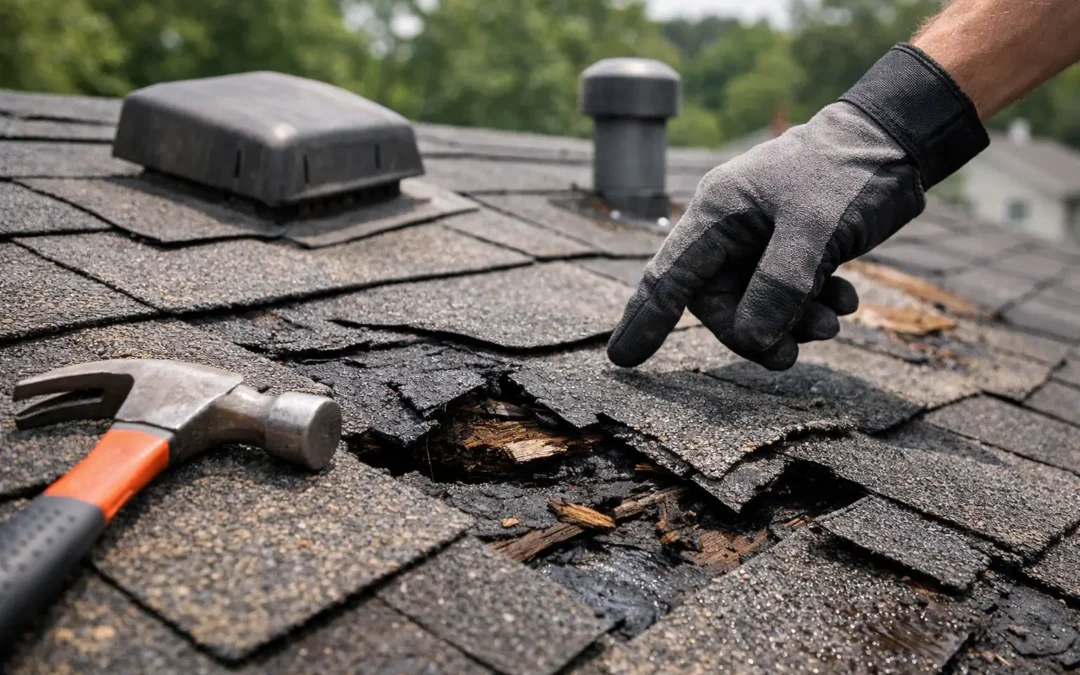
Shingles should lie flat and create a continuous protective surface. When they start curling at the edges, cracking through the body, or blowing off entirely, the roof is becoming vulnerable to water intrusion.
A few damaged shingles after a windstorm may be a repair issue. Widespread curling across multiple slopes usually points to age, heat exposure, or installation problems. If the pattern is broad, patchwork repairs may only buy limited time.
Granule loss and bald spots
Asphalt shingles shed some granules over time, especially on newer roofs. What you do not want to see is heavy granule buildup in gutters or bare, dark patches where the shingle surface has worn away.
Granules protect the shingle from UV damage. Once they are gone, the material dries out faster and becomes brittle. If your roof looks uneven or patchy from the street, it deserves a closer look.
Sagging roof lines
A roofline should appear straight and solid. If you notice dipping, bowing, or sagging along the ridge or roof deck, that can signal trapped moisture, rotted decking, or deeper structural problems.
This is one of the more serious top signs of roof failure because it may mean the system underneath the shingles is compromised. A sagging section is not something to monitor for months. It should be evaluated promptly.
Flashing damage around roof penetrations
Chimneys, skylights, vent pipes, and roof valleys are common leak points. When flashing pulls away, rusts out, cracks, or was installed poorly to begin with, water can work its way into vulnerable seams.
Homeowners often focus on shingles and miss the metal components that actually keep transitions watertight. A roof can have decent-looking field shingles and still fail around flashing details.
Interior warning signs you should not ignore
You do not need to climb on the roof to catch many problems. In fact, some of the clearest signs appear inside the house or building.
Water stains on ceilings or walls
Brown spots, bubbling paint, and damp drywall are classic red flags. Even a small stain matters, especially if it grows after rain or snowmelt.
The tricky part is that the leak is not always directly above the stain. Water can travel along rafters or decking before it shows up indoors. That is why a ceiling mark should trigger a full roof assessment, not just a cosmetic patch.
Moldy smells or attic moisture
A musty odor in the attic or upper floor can point to hidden moisture. You may also see damp insulation, black staining on wood, or frost buildup in winter that later melts into the attic space.
Sometimes this is a ventilation issue rather than a direct roof leak. Sometimes it is both. Either way, excess attic moisture shortens roof life and can lead to rot, mold growth, and poor energy performance.
Sunlight coming through the attic
If you can see daylight through boards or around penetrations, water and cold air can get in too. Small openings tend to become bigger openings under wind and weather pressure.
This sign is especially concerning if it appears alongside drafts, wet insulation, or visible nail rust. It usually means the roofing system is no longer sealed the way it should be.
When age becomes one of the top signs of roof failure
Even if your roof is not actively leaking, age still matters. Most asphalt shingle roofs last around 20 to 30 years, but actual performance depends on ventilation, installation quality, storm exposure, and maintenance history.
A 22-year-old roof with repeated repairs may be a stronger candidate for replacement than a 17-year-old roof with one isolated issue. Commercial roofs follow a similar logic. Membrane systems can last a long time, but once seams, flashing, and drainage start failing together, ongoing repairs become less cost-effective.
If you do not know your roof’s age, look for clues in home records, permits, or real estate documents. If the roof is approaching the end of its expected service life and showing active wear, it is smart to get ahead of the problem rather than wait for an emergency.
Rising energy bills and poor ventilation
Some roof problems do not start with water. They start with heat and airflow. If your upper floor feels harder to cool in summer or your heating costs keep rising in winter, the roof and attic system may be part of the issue.
A failing roof can allow air leakage and moisture intrusion that reduce insulation performance. Poor attic ventilation can also cook shingles from below, trapping heat and shortening the roof’s lifespan. In these cases, replacing shingles without addressing ventilation may not solve the root problem.
Storm damage that looks minor but is not
After strong wind, hail, or heavy snow, the damage you can see may only be part of the picture. Lifted shingles can reseal poorly. Hail can bruise shingles without punching obvious holes. Ice can force water up beneath the roofing material and into the decking.
This is where experience matters. Storm damage often hides in seams, flashing, ridge caps, and roof edges. If your area has gone through a major weather event, it is worth getting the roof checked even if there is no dramatic leak yet.
Repair or replacement? It depends on the pattern
This is the question most property owners really want answered. The honest answer is that it depends on how widespread the damage is, how old the roof is, and whether the issues are isolated or systemic.
A newer roof with localized damage around one vent pipe may be a straightforward repair. An older roof with missing shingles, granule loss, repeated leaks, and soft decking is usually telling a different story. At that point, investing in more repairs can become the expensive way to delay the inevitable.
A good inspection should leave you with clear options, not pressure. You should know what can be repaired safely, what may fail next, and whether replacement would offer better long-term value.
What to do if you notice the signs
Start with documentation. Take photos of anything visible from the ground, inside the attic, or on interior ceilings. Note when leaks happen and whether they follow rain, snow, or wind-driven storms. That information helps narrow down the source.
Then schedule a professional roof inspection. A trained contractor can check the shingles, flashing, ventilation, decking condition, and drainage system as a whole. That full-picture approach matters because roof failure is often a combination problem, not a single broken part.
For homeowners and businesses that want a fast, organized response, this is where a contractor like CPG Roofing & Siding can make the process easier – especially when the goal is not just fixing a leak, but protecting the property, communicating clearly, and avoiding a mess during the work.
If your roof is showing even a few of these warning signs, trust what you are seeing. Roof problems almost always get more expensive with time, but catching them early gives you more options, less disruption, and a better chance to protect what matters underneath.