
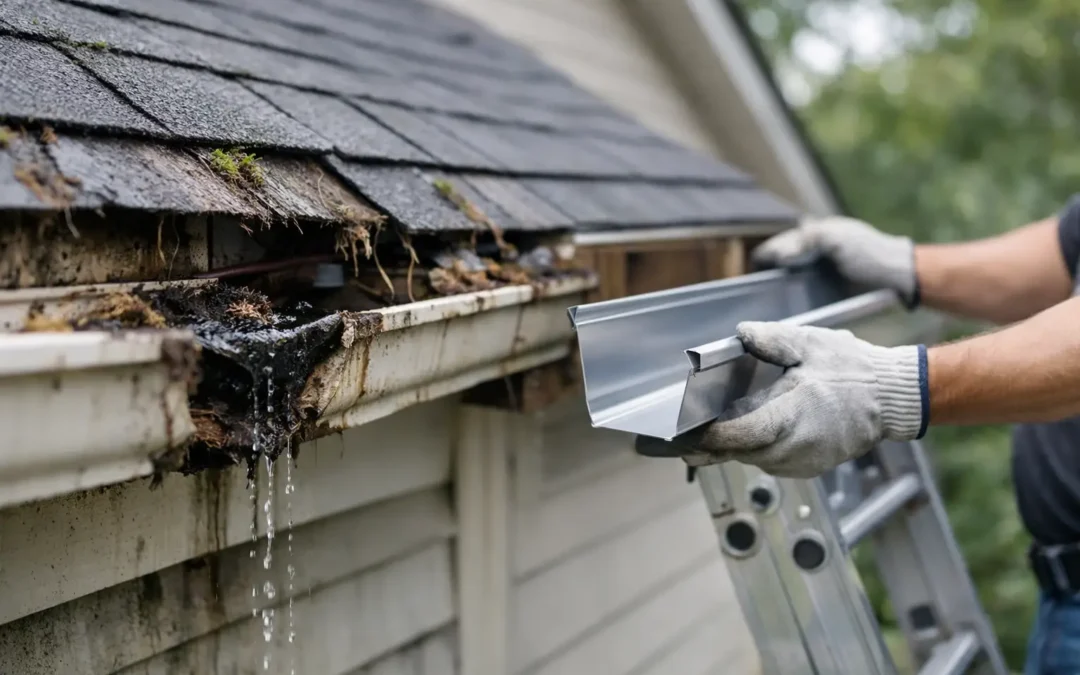
A gutter can look like a minor exterior detail until the first hard Hudson Valley rain sends water over the edge, against the siding, and toward the foundation. Knowing the signs gutters need replacement helps you address a failing system before it contributes to basement moisture, damaged trim, landscape erosion, or ice problems during a New York winter.
Gutters do not last forever, even when they are cleaned regularly. Aluminum systems commonly provide many years of service, but age, poor installation, heavy snow, clogged downspouts, and storm damage can shorten that life. The right fix depends on the condition of the whole system. A small leak may be repairable. Widespread corrosion, recurring separation, or water damage around the home usually points to replacement.
1. Your Gutters Sag or Pull Away From the Roofline
A gutter should follow the roof edge in a clean, steady line. If sections dip, bow outward, or pull away from the fascia board, they are no longer positioned to move water where it needs to go.
Sagging often starts when standing water, wet leaves, snow, or ice adds more weight than the hangers can support. In some cases, new hangers and a proper adjustment can solve the problem. But if multiple sections are distorted, seams have opened, or the fascia behind the gutter has begun to rot, replacing the system is the more dependable choice.
Do not treat sagging as cosmetic. A low spot holds water, which creates more weight, encourages corrosion, and can eventually cause a section to detach during a storm.
2. Water Spills Over the Sides During Rain
Overflow is one of the most visible signs your gutters need replacement or immediate attention. Sometimes the cause is simple: a clog in the gutter channel or downspout. A professional cleaning may restore normal drainage if the gutter itself remains properly pitched and secure.
If the gutters are clear but water still rushes over the sides, the system may be undersized, incorrectly sloped, dented, or installed without enough downspouts. Overflow can also occur where roof valleys direct a high volume of water into one short section of gutter. Replacing the system gives you an opportunity to correct the design, not just repeat the same problem with new materials.
Watch where that water lands. Repeated overflow near entryways, patios, flower beds, siding, and foundation walls can create expensive problems well beyond the gutters themselves.
3. You See Cracks, Holes, or Open Seams
Small cracks can become major leaks after a freeze-thaw cycle. Holes and separated seams let water run behind the gutter rather than through it, often soaking the fascia board and roof edge where damage is hard to notice from the ground.
A single small hole may be sealed as a short-term repair. However, multiple patches are a warning that the material is reaching the end of its useful life. Sectional gutters have seams by design, and those joints can fail over time. Seamless gutter replacement reduces the number of joints along each run, which can lower the chance of recurring seam leaks.
Look for drips on a clear day after a recent rain. Water stains beneath a joint, rust-colored streaks, or darkened trim often reveal a leak that needs closer inspection.
4. Rust, Corrosion, or Peeling Paint Keeps Returning
Peeling paint may mean water is repeatedly escaping the gutter system or sitting inside it too long. Rust is even more concerning because it signals that the metal has begun to deteriorate. Once corrosion progresses, the gutter can weaken around fasteners, seams, and low points.
Not every discolored area requires a full replacement. Surface staining can sometimes be cleaned, and paint damage on nearby trim may be repaired after the drainage issue is fixed. But widespread rust, flaking metal, or recurring paint failure usually means moisture has been present for too long. Replacement protects the roofline before decay spreads to the wood behind it.
5. Fasteners, Spikes, or Hangers Are Coming Loose
If you find gutter spikes on the ground or see brackets pulling away from the fascia, act quickly. Loose hardware may be caused by heavy loads, aging materials, or softened wood behind the gutter. Reattaching a single hanger can be reasonable when the fascia is solid and the gutter is otherwise in good condition.
When hardware failures appear in several places, the problem is rarely limited to the fasteners. The gutter may be overloaded, out of alignment, or attached to deteriorated fascia. A full assessment should include the gutter pitch, downspout placement, roof edge, and condition of the supporting wood before anyone recommends a repair.
6. The Fascia, Soffit, or Siding Shows Water Damage
Gutters are designed to keep water away from your exterior. When they fail, the evidence often appears on the parts of the home they were meant to protect. Look for soft or rotted fascia boards, peeling paint under the roofline, stained soffits, warped siding, or mildew growth near the upper walls.
These issues do not always mean the gutters alone are at fault. A roof leak, missing flashing, or ice dam can also send water into the same areas. That is why a careful inspection matters. Replacing gutters without identifying the true water source can leave the underlying issue unresolved.
For homeowners, landlords, and commercial property owners, early action is usually less disruptive than waiting until trim replacement or interior repairs are necessary.
7. Downspouts Drain Too Close to the Foundation
A gutter system is only as effective as its downspouts. Water collected at the roofline must be directed safely away from the building. If downspouts empty next to the foundation, are crushed, disconnected, or constantly clogged, water can saturate the soil around basement walls.
Signs of trouble include pooling water, washed-out mulch, settling soil, damp basement odors, or water entering a lower level after heavy rain. Extensions and drainage adjustments may solve the issue when gutters are otherwise sound. If the system has poor placement, insufficient downspouts, and aging materials, replacement provides a better long-term fix.
8. You Find Puddles, Erosion, or Foundation Moisture
Water pooling near your home is not always caused by gutters. Poor grading, underground drainage issues, and hardscape design can contribute. Still, a failing gutter system is one of the first areas worth checking because it controls thousands of gallons of roof runoff each year.
Pay attention after a steady rain. If water pours from one location, digs channels through landscaping, or gathers near the foundation, the system needs service. A contractor can determine whether the answer is cleaning, re-pitching, new downspouts, larger gutters, or complete replacement.
9. Ice Dams and Large Icicles Form Repeatedly
Icicles can look harmless, but heavy ice on gutters can bend metal, pull fasteners loose, and damage the roof edge. Repeated ice dams are often connected to attic heat loss and ventilation issues, so replacing gutters alone may not stop them.
Still, damaged, undersized, or clogged gutters make winter drainage worse. If ice has permanently warped sections or separated seams, replacement may be needed after the underlying roof and insulation conditions are evaluated. Never chip ice from gutters with sharp tools or climb onto an icy roof. The risk of injury and further damage is too high.
10. Repairs Are Becoming a Regular Expense
One repair does not mean you need new gutters. Several repairs over a short period are different. If you are repeatedly sealing leaks, reattaching sections, clearing the same drainage failures, and repairing water-damaged trim, replacement may cost less than continuing to patch an aging system.
This is especially true when gutters are nearing the end of their expected service life or when you are replacing the roof or siding. Coordinating exterior work can ensure the gutter system is properly integrated with the new roof edge, flashing, and fascia details.
When to Repair and When to Replace Gutters
Repair is often appropriate for isolated clogs, one loose hanger, a minor alignment issue, or a small leak in an otherwise sound system. Replacement makes more sense when there is widespread sagging, corrosion, cracked sections, recurring overflow, damaged fascia, or a layout that cannot handle the roof’s water volume.
Material and design also matter. Seamless aluminum gutters are a practical option for many Hudson Valley properties because they resist rust and have fewer joints. Larger gutter sizes, properly placed downspouts, guards, and extensions may be worthwhile for homes with steep roof planes, long gutter runs, or heavy tree coverage. The best choice should be based on your roof, drainage pattern, budget, and the condition of the surrounding exterior.
A prompt inspection is the safest next step when you see warning signs. CPG Roofing & Siding can evaluate the entire drainage path, explain whether repair or replacement is the better value, and help protect your property before the next storm finds the weak spot.