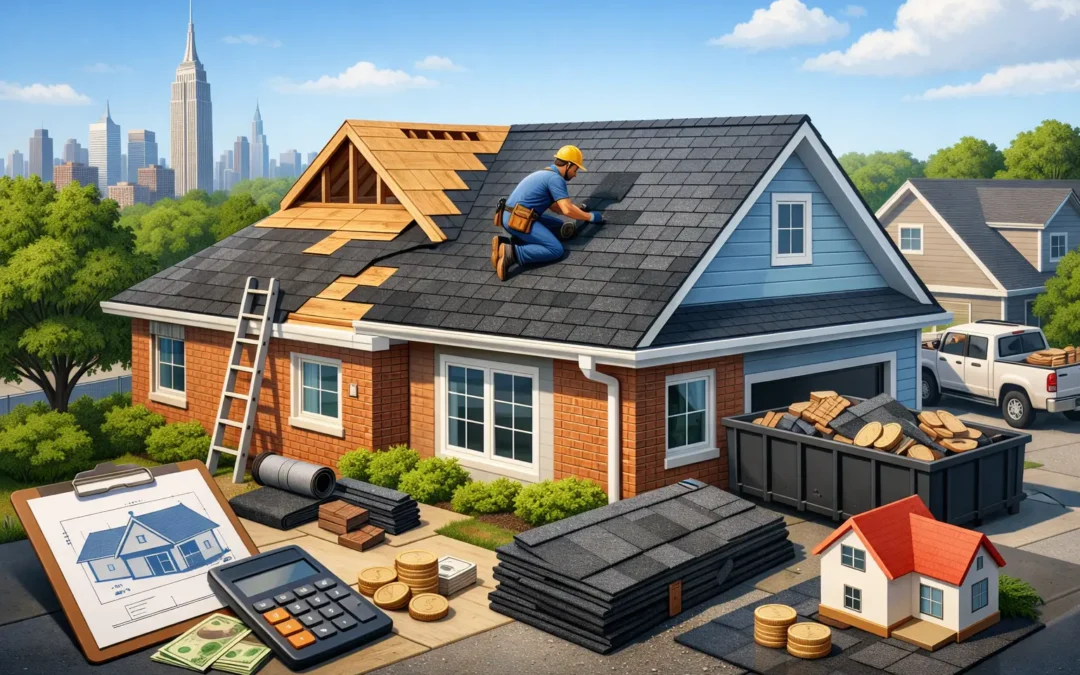
A roof quote can feel all over the map until you know what is actually driving the number. If you are trying to estimate the roof replacement cost for a New York home, the biggest variables are not just shingles and square footage. In the Hudson Valley, weather exposure, roof complexity, decking condition, ventilation, and local labor all matter, and they can change the final price more than many homeowners expect.
That is why two homes with similar footprints can receive very different estimates. One roof may be a simple walkable ranch with one existing layer to remove. The other may have steep sections, aging plywood, chimney flashing issues, and signs of moisture trapped in the attic. The second project will almost always cost more, even if the homes look similar from the street.
What is the roof replacement cost for a New York home?
For many homeowners in New York, a full asphalt shingle roof replacement lands somewhere between about $9,000 and $25,000 or more. A smaller, straightforward roof may come in below that range, while a larger or more complex home can move well above it. If you are looking at architectural shingles on a typical single-family home in the Hudson Valley, a realistic planning range is often in the low-to-mid five figures.
Metal, cedar, slate, and premium roofing systems can push the budget much higher. So can structural repairs, multiple tear-off layers, and detailed flashing work around skylights, chimneys, dormers, and valleys. The honest answer is that price depends on what is underneath the old roof as much as what goes on top of it.
A trustworthy estimate should break down the scope clearly. You want to know whether it includes tear-off, disposal, underlayment, ice and water protection, flashing replacement, ridge ventilation, cleanup, and any plywood replacement allowance. A low number is not always a better number if key protection components are left out.
Why New York roofing costs are different
New York homes deal with real seasonal stress. Snow load, freeze-thaw cycles, wind-driven rain, and ice dams all put pressure on roofing systems. In areas like Orange County, Dutchess County, Ulster County, and Sullivan County, roofs often need stronger waterproofing details than what might work in a milder climate.
That affects both materials and labor. Ice and water shield along eaves, around penetrations, and in valleys is not an optional upgrade on many New York homes. Proper attic ventilation also matters more than homeowners realize, because poor airflow can shorten shingle life and contribute to moisture problems during winter.
Permits, disposal costs, insurance requirements, and regional labor rates also influence pricing. So when you compare online national averages to an actual local quote, the gap is not always contractor markup. Often, it reflects the real cost of building a roof that holds up in this region.
The biggest factors behind roof replacement cost on a New York home
Roof size is the obvious starting point, but it is only one part of the total. Roofing is usually priced by the square, or 100 square feet of roof surface. A home with more roof area needs more shingles, underlayment, nails, flashing, and labor hours. Still, size alone does not tell the full story.
Pitch and accessibility can change labor demands fast. A steep roof requires more safety setup, slower movement, and more hands on site. If crews cannot access the roof easily because of landscaping, fencing, tight driveways, or building layout, that can also affect the price.
Material choice is another major factor. Standard three-tab shingles are typically less expensive than architectural shingles, and designer shingles cost more than both. Metal roofs usually carry a higher upfront cost, but some homeowners choose them for longer lifespan and weather performance. The right choice depends on budget, appearance goals, and how long you plan to stay in the home.
Then there is the condition of the roof deck. If old shingles come off and the plywood or boards underneath are soft, rotted, or delaminated, sections may need replacement before the new roof goes on. That work is often one of the biggest reasons a project total changes after tear-off. It is not a red flag by itself. It is a sign the contractor is addressing the actual condition of the home rather than covering over a problem.
Material costs and trade-offs
Asphalt shingles remain the most common choice because they balance cost, appearance, and durability well. For many New York homeowners, architectural shingles are the sweet spot. They cost more than basic shingles, but they usually offer a better look, stronger wind ratings, and a longer service life.
Metal roofing appeals to homeowners who want longevity and a distinctive appearance. It can perform very well in snow and rain, but the upfront investment is usually much higher. Not every home needs that upgrade, and not every budget supports it. The right move depends on whether long-term value outweighs initial cost for your situation.
Slate and cedar can be beautiful, but they are specialty systems with higher installation costs and more structural considerations. On older or historic homes, they may be worth preserving or replicating. On a typical residential replacement, they are usually chosen for aesthetics and longevity rather than affordability.
Hidden costs homeowners should expect
A good estimate should prepare you for the parts of the project you cannot fully confirm until the old roof is removed. Deck repairs are the most common. Flashing replacement around chimneys, walls, and skylights is another. If those components are old or improperly installed, replacing them is often the smarter long-term move.
Ventilation upgrades can also add cost, but they are often worth it. A roof that cannot breathe properly may trap heat and moisture, which can reduce shingle life and contribute to mold, condensation, and ice dam issues. Ridge vents, intake ventilation, and exhaust balancing are not flashy line items, but they matter.
Gutter work sometimes enters the conversation too. If gutters are damaged, undersized, or pulling away from the fascia, a roof replacement may be the right time to address them. It is not mandatory in every case, but coordinated exterior work can save time and reduce future headaches.
How to compare estimates without getting burned
Do not compare roofing quotes by total price alone. Look closely at what each contractor is actually including. One estimate may specify full tear-off, synthetic underlayment, ice and water barrier, starter strips, ridge caps, ventilation, site protection, magnetic cleanup, and manufacturer-backed installation standards. Another may leave several of those items vague.
Ask whether the contractor is insured, whether the crew is experienced with your roof type, and how cleanup is handled. Ask what kind of workmanship warranty is included and whether manufacturer certifications apply. Homeowners are often focused on shingles, but the contractor’s process matters just as much.
This is especially true after storms, when low-price offers and fast promises show up quickly. A rushed replacement can lead to leaks, poor flashing details, or ventilation mistakes that cost far more later. The safer investment is a contractor who explains the scope clearly, communicates well, and treats your property with care from setup through cleanup.
When roof replacement makes more sense than repair
If your roof has isolated damage and the rest of the system is in good shape, a repair may be the right call. But if the roof is aging, leaking in multiple areas, losing granules, curling, or showing signs of widespread wear, replacement often makes more financial sense. Repeated repairs can add up fast without solving the root issue.
Age matters too. Many asphalt roofs in New York start showing serious wear somewhere around the 20-year mark, though ventilation, storm exposure, and installation quality can shorten or extend that timeline. If your roof is near the end of its life, a replacement gives you a clean reset and a stronger layer of protection for the whole home.
For homeowners in the Hudson Valley, timing matters. Waiting too long can turn a roofing project into a decking, insulation, drywall, and mold project. Acting earlier usually gives you more material choices, less stress, and better control over the budget.
Planning your budget with confidence
If you are trying to budget for the roof replacement cost on a New York home, start with a realistic range instead of chasing the lowest advertised number. Think about your roof size, age, visible wear, and whether you want a basic replacement or a longer-lasting upgraded system. Build in room for possible decking repairs, because older roofs often reveal hidden issues once tear-off begins.
Financing can make sense for many homeowners, especially when replacement is urgent and delaying the work risks interior damage. A strong contractor should be able to explain options clearly, provide a written scope, and help you understand where your money is going. That clarity matters just as much as the number at the bottom of the estimate.
At CPG Roofing & Siding, we see the same concern every week from local homeowners: they want a fair price, a clean job site, and a roof that truly protects the house when New York weather turns rough. That is a reasonable expectation. A roof is not just another exterior upgrade. It is the layer standing between your family, your investment, and the next hard storm. Getting the price right starts with making sure the work is right.