
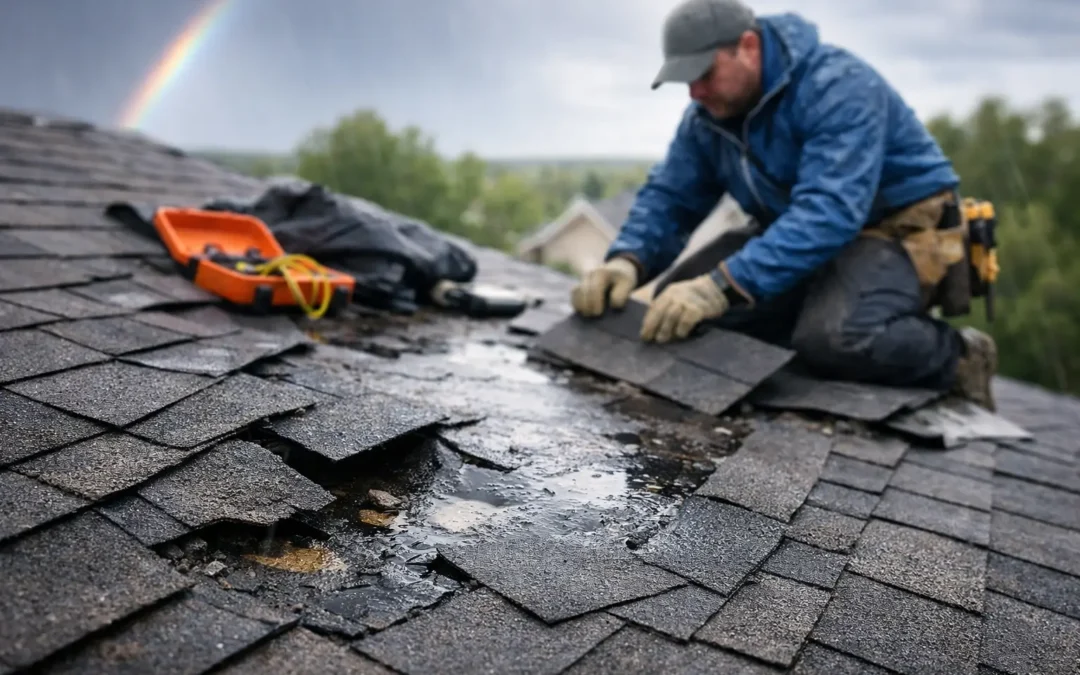
A roof leak rarely shows up where you expect it. After a hard storm, the water stain on your ceiling may be several feet away from the actual damage, and waiting a day or two can turn a manageable repair into soaked insulation, damaged drywall, and mold concerns. That is why roof leak repair after storm damage needs a fast, steady response – not guesswork.
The first priority is safety. If water is actively dripping inside, move electronics, furniture, rugs, and anything valuable out of the area. Put down buckets or containers, and if the ceiling is bulging, that can mean water is pooling above the drywall. In that situation, keep people away from the area until a professional can assess it. If water is near light fixtures or outlets, shut off power to that part of the home if you can do so safely.
What causes a roof leak after a storm?
Storm-related leaks are not always dramatic. Sometimes a tree limb tears shingles right off the roof, but often the damage is smaller and easier to miss. Wind can lift shingles and break the seal that keeps water out. Heavy rain can exploit weak flashing around chimneys, skylights, and vent pipes. Hail can bruise shingles and shorten their life, even if the roof still looks mostly intact from the ground.
In the Hudson Valley, weather can be especially tough on roofing systems because storms do not happen in isolation. A roof may already be dealing with age, flashing wear, clogged gutters, or older repairs before the storm ever arrives. That is why two homes on the same street can take very different levels of damage from the same weather event.
What to do before roof leak repair after storm service begins
Homeowners are often tempted to climb up and look for the source right away. That is understandable, but it is also where many injuries happen. A storm-damaged roof can be slippery, soft in spots, or structurally compromised. If there are downed branches, loose shingles, or metal flashing bent upward, the surface may be more dangerous than it appears.
A better first step is to inspect from the ground and from inside the attic, if you have safe access. Outside, look for missing shingles, debris impact, lifted ridge caps, damaged gutters, or flashing that looks loose. Inside the attic, look for wet decking, drips, staining, or damp insulation. Take clear photos if possible. Documentation helps with repair planning and can also support an insurance claim.
Temporary protection matters. If the leak is active, a professional roofer may recommend emergency tarping to reduce additional water intrusion until full repairs can be completed. This is not the same as fixing the roof. It is a short-term protective measure that buys time and limits interior damage.
When a leak is an emergency and when it can wait a day
Not every roof leak means the entire roof has failed, but some situations call for immediate action. If water is entering fast, if part of the roof deck may be sagging, or if the leak is affecting electrical systems, do not wait. Commercial properties should also act quickly because even a localized leak can interrupt operations, damage inventory, or create liability issues.
On the other hand, a minor stain with no active dripping may allow for a scheduled inspection rather than middle-of-the-night emergency work. The trade-off is that weather forecasts matter. If another round of rain is coming, a small leak today can become a major problem tomorrow.
How professional roof leak repair after storm damage is diagnosed
A good roofer does not just patch the obvious spot and leave. Storm leak repair starts with tracing the path of water and understanding why the system failed. That might involve checking shingle condition, flashing details, sealant failure, underlayment exposure, gutter drainage, and attic ventilation conditions.
This part matters because the visible leak is not always the root issue. For example, water around a chimney may look like failed masonry, but the real problem may be step flashing or counter flashing. A leak near an exterior wall may actually begin higher on the roof, where wind-driven rain slipped under lifted shingles.
Professional diagnosis also helps answer a key question: repair or replacement? If the storm caused isolated damage to an otherwise healthy roof, a targeted repair is usually the smart move. If the roof is older, has widespread shingle loss, or has repeated leak history, a repair may only buy limited time.
Common repairs after storm leaks
The right repair depends on the roofing system and the extent of damage. On asphalt shingle roofs, repairs often involve replacing missing or torn shingles, resealing lifted areas, and rebuilding flashing around penetrations or sidewalls. On flat or low-slope sections, repairs may include patching membrane damage, correcting seam failures, or addressing ponding areas that let water sit too long.
Gutters are part of the conversation too. Storm debris can block drainage and force water back toward the roof edge. In some cases, the leak is made worse by overflowing gutters, damaged fascia, or water backing up under the first course of shingles.
This is also where workmanship matters. A rushed patch might stop dripping for a week, but if flashing is not properly integrated or matching materials are installed poorly, the leak often returns. Property owners do not just need a fast fix. They need a durable one.
Insurance claims and what homeowners should know
After a storm, many property owners wonder whether insurance will cover the repair. The answer depends on the cause of loss, the condition of the roof before the storm, and the details of the policy. Sudden storm damage is often treated differently than long-term wear, neglected maintenance, or older roof deterioration.
That is why good documentation is so important. Take photos of interior stains, active leaks, attic moisture, visible exterior damage, and debris around the property. Keep notes on when the storm occurred and when the leak first appeared. If a contractor performs emergency tarping or temporary measures, save that paperwork too.
It also helps to work with a contractor who can provide a clear inspection report and explain the scope in plain language. Confusing estimates and vague descriptions create friction during the claims process. Clear communication saves time.
Why timing affects the final cost
One of the biggest mistakes after a storm is assuming a small leak can wait until it becomes more convenient. Water does not stay politely in one place. It moves into insulation, framing, drywall, trim, and sometimes flooring. What begins as a limited roof repair can expand into interior restoration, mold remediation, and much higher costs.
Fast action does not always mean replacing the entire roof. It means getting eyes on the problem early enough to keep your options open. In many cases, a timely repair is significantly less expensive than delayed damage control.
For landlords and business owners, there is also the cost of disruption. A leak in a rental unit or commercial space can quickly become a tenant issue, a scheduling problem, and a reputation problem. Prompt service protects more than the roof itself.
Choosing the right contractor after a storm
Storm season brings out both qualified roofers and opportunists. If someone knocks on your door right after a weather event and pressures you to sign immediately, be careful. A reliable contractor should be able to inspect, document damage, explain options, and outline next steps without rushing you into a decision.
Look for a company that is insured, established, and experienced with emergency response as well as permanent repairs. Certifications, warranties, and strong customer reviews matter, but so does the everyday stuff – showing up when promised, communicating clearly, and leaving the property clean. Those details are often the difference between a stressful repair and a well-managed one.
For homeowners in areas like Orange County, Dutchess County, Ulster County, and Sullivan County, local experience also helps. Roofing in this region means dealing with wind, heavy rain, snow load, ice, and seasonal temperature swings. Repairs need to hold up to the next storm, not just the current one.
If you need roof leak repair after storm damage, the best move is usually the simplest one: act early, stay off the roof, document what you can, and get a qualified professional involved before a small breach becomes a bigger problem. Strong roofs protect everything underneath them, and quick action is often what keeps damage from spreading.