A ridge of ice along the edge of your roof can look manageable from the ground. Then water appears on a ceiling, a gutter begins to pull away, or a heavy sheet of ice slides near an entryway. Ice dam removal safety is about protecting people first, then limiting water damage without turning a winter roofing problem into a fall, electrical, or structural emergency.
For Hudson Valley property owners, ice dams often arrive after a familiar pattern: snowfall, fluctuating temperatures, and a few sunny afternoons followed by a hard freeze. Acting quickly matters when water is entering the building, but fast should never mean reckless. The safest response depends on the roof pitch, snow depth, ice thickness, access around the building, and whether a leak is already active.
What an Ice Dam Can Do to Your Roof
An ice dam forms when snow higher up on the roof melts, runs toward the colder eaves, and refreezes. The new ice blocks the path of additional meltwater. That water can back up beneath shingles, around flashing, and into the roof deck or wall system.
The visible ice is only part of the problem. A dam can add substantial weight to gutters and roof edges, especially when it is paired with deep, wet snow. It can force water into insulation, stain ceilings, damage drywall, and create conditions for mold if the area does not dry properly. On commercial buildings, backed-up water can also affect interior finishes, inventory, and occupied spaces below.
The instinct to chip away at the ice is understandable. It is also where many homeowners get hurt or cause expensive roof damage. Shingles, gutters, skylights, and flashing become brittle in cold weather. A metal tool used with enough force to break ice can easily break something else first.
Ice Dam Removal Safety Starts on the Ground
The safest place to assess an ice dam is from the ground. Look for ice buildup along the eaves, icicles that are growing rather than shrinking, sagging gutters, and snow piled above the roof edge. From indoors, check the attic and upper-floor ceilings for damp spots, peeling paint, dripping water, or a musty odor.
Do not climb a ladder alone, walk on a snowy roof, or work beneath hanging icicles. Frozen roofing surfaces are unpredictable even for experienced workers. Snow can conceal valleys, skylights, roof edges, and weak spots. Ice also creates a serious falling hazard for anyone entering or leaving the property.
Create a clear safety zone below the affected roofline. Keep children, pets, tenants, customers, and parked vehicles away from the area where ice or snow could fall. If an entrance sits below the dam, use another safe entrance until the hazard is addressed.
If water is coming through a ceiling, move furniture and valuables away from the area and place containers beneath active drips. If water is near a light fixture, outlet, electrical panel, or other electrical equipment, do not touch the wet area. Shut off power to the affected area only if it can be done safely, then call a qualified professional for help.
When a Roof Rake May Be Appropriate
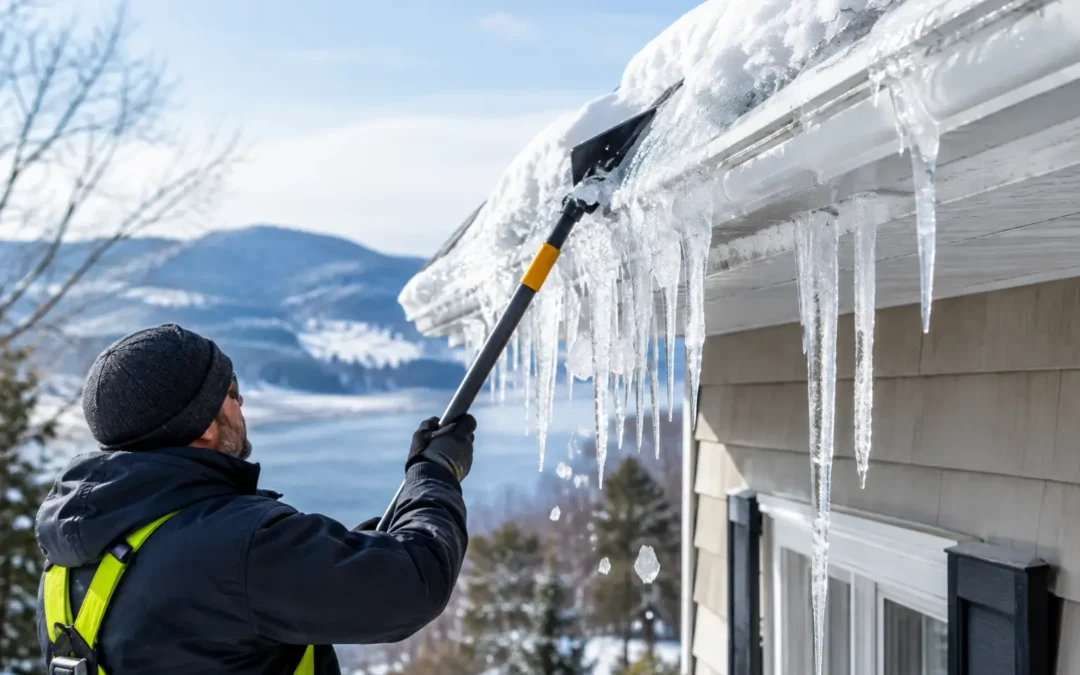
A roof rake can reduce the amount of snow feeding an ice dam, but it is not a cure for every situation. It is most useful when operated from the ground on a low, accessible roof edge. The goal is to pull down loose snow near the eaves, not to scrape the roof clean or break the ice free.
Use a rake with a long handle and a non-damaging head designed for roofing. Stand well back from the drop zone, work in small sections, and keep clear of overhead power lines. Never pull hard enough to catch shingles, gutter brackets, or flashing. Leave a thin layer of snow behind rather than dragging the rake against the roof surface.
A roof rake is not a good choice for steep roofs, multi-story homes, heavy snow loads, or roofs where ice has already formed into a thick, solid mass. In those situations, the work can put you directly in the path of falling snow and ice. It can also create uneven snow loading if sections are removed without a plan.
Methods That Put Roofs and People at Risk
Several common ice dam removal methods can create more damage than the dam itself. Avoid these approaches, even when the leak feels urgent:
- Chipping or chopping ice with an axe, hammer, shovel, pry bar, or other metal tool can tear shingles and puncture the roof deck.
- Pouring hot water on the roof can cause rapid refreezing, making the surface more hazardous and adding more ice weight at the eaves.
- Using open flames, torches, or improper heating equipment can start a fire and damage roofing materials.
- Applying rock salt or other harsh de-icing products can harm shingles, metal components, landscaping, and surrounding surfaces.
Salt-filled fabric tubes are sometimes used by professionals as a temporary channeling measure, but placement matters. A poorly placed treatment can create narrow melt paths while leaving the larger dam in place, or allow salty runoff to damage materials below. This is not a substitute for correcting the conditions that caused the ice dam.
When to Call for Professional Ice Dam Help
Call for professional assistance when there is an active interior leak, thick ice buildup, sagging gutters, large icicles near entrances, or snow loads that you cannot safely manage from the ground. The same is true for steep, high, complex, or multi-level roofs. A qualified roofing team can evaluate the roof, remove snow and ice using methods suited to the surface, and inspect for damage once conditions allow.
Professional service is particularly valuable when the roof has vulnerable details such as skylights, solar equipment, chimney flashing, low-slope sections, or older shingles. These areas are more likely to leak when water backs up, and they require careful handling during snow and ice removal.
Ask what removal method will be used and how the crew will protect gutters, landscaping, windows, and access areas. A reliable contractor should explain the scope clearly, secure the work zone, and tell you whether the immediate goal is snow reduction, controlled ice relief, emergency leak mitigation, or a follow-up roof repair.
At CPG Roofing & Siding, the focus during a winter roofing emergency is straightforward: help protect the property, communicate clearly about the risk, and recommend the next practical step based on what the roof needs.
Stop the Next Ice Dam Before It Starts
Removing an existing dam addresses the immediate problem, but prevention requires looking at why the roof surface is warming unevenly. In many homes, heat escaping into the attic melts snow above the eaves. Cold overhangs then refreeze that runoff. Air leaks around attic hatches, recessed lights, plumbing penetrations, chimneys, and ductwork are frequent contributors.
Attic insulation and ventilation matter, but there is no one-size-fits-all fix. Adding insulation without addressing air leaks can trap moisture. Adding ventilation without confirming the intake and exhaust path may not solve the temperature imbalance. Older homes, cathedral ceilings, finished attic spaces, and additions often need a more detailed evaluation because their roof assemblies work differently.
Keep gutters maintained before winter when possible. Clean gutters do not prevent every ice dam, but they help reduce avoidable blockages and allow meltwater to move when temperatures rise. Repair loose gutter sections and make sure downspouts direct water away from walking paths, foundations, and areas where it can refreeze.
A roof inspection after the season is also worthwhile if water entered the building or ice repeatedly formed in the same place. Stained sheathing, lifted shingles, compromised flashing, and gutter damage may not be fully visible from the ground. Catching those issues early can prevent a smaller winter problem from becoming a larger roof repair.
When ice is building up, the safest decision is often to protect the area below, manage interior water carefully, and bring in trained help rather than trying to win a fight with a frozen roof. A careful response protects your home, your roof system, and everyone who depends on the building staying safe and dry.