A hot upstairs bedroom, musty attic odor, peeling exterior paint, or ice building up along the eaves can all point to the same overlooked issue: poor airflow above your ceiling. Knowing how to improve attic ventilation helps protect more than comfort. It can reduce moisture damage, support roof performance, and help your insulation do its job through Hudson Valley summers and winters.
Attic ventilation is not simply about cutting a hole in the roof and adding a vent. A dependable system needs a clear path for outside air to enter low in the attic, move through the space, and exit near the roof peak. When that balance is missing, warm, humid air can become trapped, creating problems that are expensive to ignore.
Why Attic Ventilation Protects Your Roof
Your attic sits between conditioned living space and the outdoor weather. During winter, warm indoor air naturally rises. If it reaches a cold roof deck and condenses, moisture can collect on wood framing, roof sheathing, nails, and insulation. Over time, that moisture may contribute to mold growth, wood deterioration, stained ceilings, and reduced insulation performance.
Summer brings a different challenge. A poorly ventilated attic can hold extreme heat, which transfers into the rooms below and puts added demand on your air conditioner. Heat buildup can also accelerate wear on roofing materials. Ventilation will not make an attic the same temperature as the outdoors, but properly designed airflow helps prevent excessive trapped heat and moisture.
For homes in Orange, Dutchess, Ulster, and Sullivan Counties, ventilation matters even more because the weather asks a lot of a roof. Snow, freeze-thaw cycles, humid summers, and sudden storms make moisture control and roof-deck protection practical priorities, not optional upgrades.
Warning Signs Your Attic Airflow Needs Attention
Some ventilation problems are visible from the ground, while others only show up during an attic inspection. Watch for patterns rather than relying on one symptom alone. The following signs deserve a closer look:
- Frost, damp wood, dark staining, or mold-like growth on the underside of the roof deck
- Insulation that is wet, compressed, or blocked around the attic perimeter
- Peeling paint, blistering siding, or moisture staining near soffits and eaves
- Uneven snow melt or recurring ice dams along roof edges
- A second floor that stays unusually hot in summer or feels drafty in winter
A roof leak can look similar to condensation damage, and the solution is very different. Water stains after a storm may indicate damaged shingles, flashing, pipe boots, or other roof components. Moisture that appears during cold spells without an obvious roof leak may point to air leakage and ventilation issues. A professional inspection can separate the two before repairs begin.
How to Improve Attic Ventilation With Balanced Airflow
The most effective approach combines intake ventilation with exhaust ventilation. Intake vents bring outdoor air into the attic near the lowest practical point, usually through soffits or the eaves. Exhaust vents release warmer, moisture-laden air near the ridge or upper roof area. This low-to-high movement is what creates useful airflow.
Start with clear intake at the soffits
Soffit vents are often the missing piece in an attic ventilation system. Homeowners may see ridge vents or box vents on the roof and assume the attic is covered, but exhaust vents cannot work efficiently if they have no incoming air to pull from.
Check whether insulation has been pushed tightly into the eaves. This is common in older homes and in attics that received additional insulation without proper ventilation baffles. Baffles, also called rafter vents, maintain an open channel between the soffit and attic while keeping insulation where it belongs. They are a small component with a major role in protecting airflow.
Soffit openings also need to be clean and unobstructed. Paint buildup, insect nests, debris, and enclosed or solid soffit panels can all limit intake. Do not remove material or cut new openings without confirming the soffit design and the condition of the roof edge.
Use the right exhaust vent for the roof design
Ridge vents are a common, effective choice because they run along the roof peak and distribute exhaust across the highest point of the attic. They tend to work best when paired with continuous soffit intake and installed as part of a properly detailed roofing system.
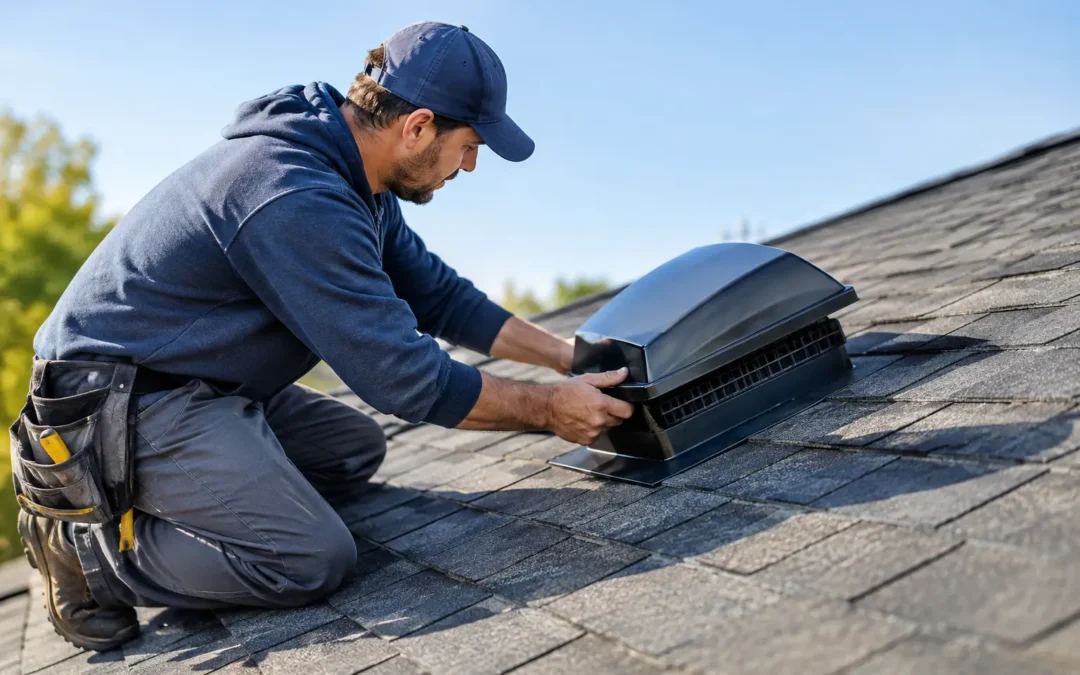
Other homes may use static roof vents, gable vents, turbines, or powered attic ventilators. Each can be appropriate in the right situation, but mixing exhaust types without a plan can reduce performance. For example, a powered fan may pull air from nearby ridge or gable vents instead of drawing fresh air through the soffits. That short-circuits the intended airflow path.
The roof shape, attic layout, available intake area, and local code requirements all affect the right solution. A low-slope roof, a home with multiple attic sections, or an older house with limited eave depth may need a more customized design than a standard ridge-and-soffit setup.
Keep air sealing separate from ventilation
Ventilation manages the attic itself. Air sealing stops heated or cooled household air from leaking into it. Both matter, but they do different jobs.
Before adding more vents, inspect common air-leak locations at the attic floor: plumbing penetrations, electrical boxes, recessed lights not rated for insulation contact, chimney chases, attic hatches, and gaps around ductwork. Warm interior air escaping through these openings carries moisture into the attic during winter. Adding exhaust alone may not solve the underlying issue.
Air sealing should be done carefully around heat-producing fixtures and chimneys. Materials and clearance requirements matter. If you are unsure what you are looking at, it is safer to have the attic assessed than to apply foam or insulation around a component that needs clearance.
Make sure bathroom and kitchen fans vent outdoors
A bathroom fan that discharges into an attic deposits warm, humid air exactly where you do not want it. The same applies to dryer vents and some kitchen exhaust ducts. These should terminate outdoors through an approved exterior vent, not into the attic, soffit cavity, or ridge area.
Look for disconnected, crushed, or poorly insulated fan ducts as well. In winter, humid air can condense inside uninsulated ductwork and drip back into the attic or ceiling. Proper routing and insulation help prevent that moisture from becoming a recurring problem.
Avoid Common Ventilation Mistakes
More ventilation is not automatically better. Roof openings must be installed and flashed correctly, or they can create leak risks. The goal is balanced net free vent area, not random additions across the roof.
Avoid covering soffit vents with insulation, blocking ridge vents with debris, or relying on gable vents as the only solution when the attic has no low intake. Also be cautious with powered attic fans. In some homes, they can create negative pressure that draws conditioned air out of the living space through ceiling leaks, increasing energy costs rather than lowering them.
Do not treat ice dams as a ventilation-only problem. They often involve a combination of attic air leaks, insufficient insulation, uneven roof temperatures, and snow conditions. Better ventilation can be part of the correction, but it rarely replaces proper air sealing, insulation work, or roof repair.
When to Call a Roofing Professional
An attic inspection is especially worthwhile if you see recurring ice dams, damp roof decking, visible mold, unexplained ceiling stains, or a roof that is nearing replacement age. Ventilation upgrades are often easiest and most cost-effective during a roof replacement, when the roofing system, ridge line, flashing, and underlayment are already accessible.
A qualified contractor should inspect the full system rather than recommend a single vent immediately. That means reviewing soffit intake, insulation depth, baffle placement, exhaust configuration, roof condition, and signs of interior air leakage. The answer may be a ridge vent installation, additional soffit ventilation, air sealing, repairs to existing vents, or a combination of these measures.
CPG Roofing & Siding helps property owners evaluate roofing and ventilation concerns with a practical, protection-first approach. Clear recommendations, clean workmanship, and a system designed for the home are more valuable than a quick fix that only treats one symptom.
A dry, properly ventilated attic is quiet protection working above your head every day. If your home is showing warning signs, address them before the next season turns a manageable airflow issue into damaged insulation, roof decking, or interior repairs.