A commercial roof can look perfectly fine from the ground while water is already moving through seams, insulation, and decking above your business. That is why learning how to choose commercial roofing is not simply a matter of picking a material or comparing the lowest bids. The right decision protects your building, tenants, equipment, inventory, and operating budget for years.
For Hudson Valley property owners, the stakes are higher. Heavy rain, wind, snow loads, freeze-thaw cycles, ice buildup, and summer heat all put pressure on a roof system. A commercial roofing choice should be based on your building’s design, the roof’s condition, drainage, long-term plans, and the contractor standing behind the installation.
Start With the Building, Not the Material
Every commercial roof has different demands. A warehouse with a wide low-slope roof needs a different system than a retail storefront, apartment building, office, restaurant, or mixed-use property. Before discussing membranes or coatings, look at what the building needs the roof to do.
Consider the roof slope, square footage, number of penetrations, existing insulation, rooftop HVAC units, skylights, drains, parapet walls, and foot traffic from maintenance crews. A roof with many vents, curbs, and equipment transitions has more vulnerable details than a simple open roof. Those details often determine performance more than the field material itself.
Also consider how long you expect to own the property. If you plan to sell soon, a targeted repair or restoration may be practical if the roof is structurally sound. If you intend to operate the building for another 15 to 25 years, a full replacement with better insulation and a strong manufacturer-backed warranty can make more financial sense.
How to Choose Commercial Roofing for Your Roof Type
Most commercial properties use low-slope or flat roofing systems. “Flat” does not mean level. The roof still needs positive drainage so water reaches internal drains, scuppers, or gutters instead of ponding around seams and equipment.
The common commercial options each offer real advantages, but no one system is best for every building:
- TPO roofing is a white single-ply membrane valued for reflective performance, welded seams, and cost-effective installation. It is a common choice for many low-slope commercial roofs.
- EPDM roofing is a durable synthetic rubber membrane, often black, that performs well across changing temperatures. It is frequently used on larger roofs with straightforward layouts.
- PVC roofing has heat-welded seams and strong resistance to grease, oils, and many chemicals, making it a smart option for restaurants or buildings with exhaust exposure.
- Modified bitumen and built-up roofing use layered asphalt-based materials. These systems can provide dependable protection and may be well suited to certain roofs, especially where durability and repairability are priorities.
Metal roofing may be the right choice for sloped commercial buildings, entry canopies, agricultural structures, or visible architectural sections. It can deliver a long service life, but proper fastening, flashing, expansion allowances, and snow management are essential in New York’s weather conditions.
A qualified contractor should explain why a recommended system fits your property. Be cautious if a proposal names a material without addressing slope, drainage, insulation, flashing details, and rooftop conditions. A membrane alone is not a complete roof system.
Inspect the Existing Roof Before Making a Decision
An accurate inspection prevents expensive guesswork. Surface cracks, loose seams, blisters, standing water, damaged flashing, and clogged drains can all point to problems, but the visible condition is only part of the story.
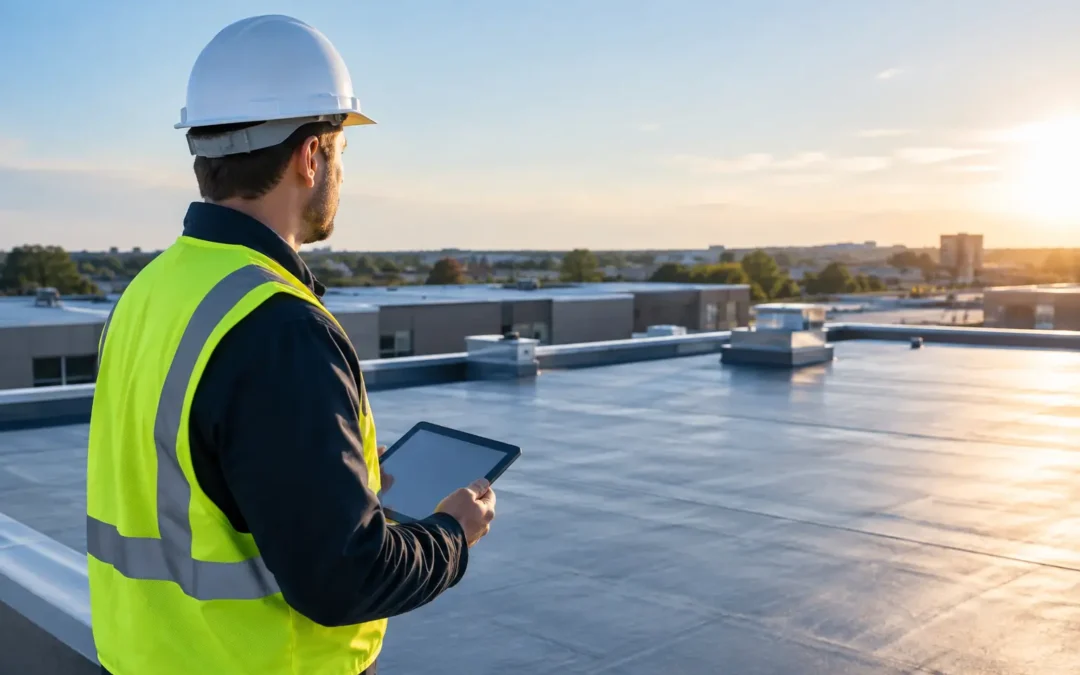
A professional commercial roof inspection should identify the source of leaks, evaluate the condition of the membrane and flashings, check drainage paths, and assess whether moisture may be trapped below the surface. Wet insulation can reduce energy efficiency and allow deterioration to spread beyond the original leak area.
In some cases, a commercial roof can be restored with repairs or a coating system. That can be a valuable option when the existing roof is dry, structurally sound, and nearing the end of its surface life rather than suffering from widespread failure. Coatings are not a shortcut for saturated insulation, failing seams, or damaged decking. Applying a coating over an unresolved problem can delay the right repair while raising the eventual replacement cost.
If replacement is needed, ask whether a tear-off is required or whether a recover system is appropriate. Local building codes, the number of existing roof layers, structural capacity, and the condition of the current roof all matter. A reputable contractor will not recommend a recover simply because it is faster or less expensive upfront.
Put Drainage and Insulation at the Center of the Plan
Many commercial roofing failures begin with water that has nowhere to go. Ponding water adds weight, accelerates membrane wear, exposes weak seams, and can worsen during repeated freezing and thawing. If your roof regularly holds water 48 hours after rainfall, drainage deserves immediate attention.
The solution may involve cleaning or repairing drains, replacing damaged gutters, adding tapered insulation to improve slope, adjusting scuppers, or correcting areas that have settled over time. Drainage work may add to the initial project price, but ignoring it can shorten the life of a new roof.
Insulation deserves the same attention. A commercial reroof is often the best time to improve thermal performance, meet code requirements, and reduce heat loss through the roof assembly. The right insulation package can help stabilize indoor temperatures and lessen strain on HVAC equipment. The ideal R-value depends on your building design, local code, existing assembly, and budget, so request a clear explanation rather than accepting a generic specification.
Compare Proposals Beyond the Bottom Line
A low bid can be appealing, especially when a leak is disrupting business. But commercial roofing proposals can look similar while covering very different scopes of work. Review each estimate closely before you sign.
Make sure it identifies the roofing manufacturer and product line, membrane thickness or system type, insulation details, flashing work, drainage repairs, deck repairs if needed, permits, disposal, and cleanup. It should also explain how the contractor will protect landscaping, entrances, parked vehicles, tenants, and daily operations during construction.
Ask who will perform the work and whether the crew is trained or certified for the specified system. Manufacturer certification can matter because some enhanced warranties require installation by an approved contractor. You should also verify insurance coverage and ask for proof before work begins.
Warranty language needs careful attention. A workmanship warranty covers installation-related issues, while a manufacturer warranty may cover specified material defects or system performance under defined conditions. Length alone does not tell the whole story. Ask what is covered, what is excluded, what maintenance is required, and who handles service if a problem appears after installation.
Plan for Business Operations and Future Maintenance
Commercial roofing projects affect more than the roof. Delivery access, noise, odors, safety barriers, parking, tenant communication, and weather contingencies all need a plan. A contractor should provide a clear schedule and a designated contact who can answer questions as conditions change.
This organized approach matters when your property remains occupied. Restaurants may need to coordinate around kitchen exhaust systems. Medical offices and retail locations may need work staged around customer hours. Apartment owners need advance communication for tenants when access, noise, or parking could be affected.
Once the new roof is installed, protect the investment with routine inspections and maintenance. Clear debris from drains and gutters, check around rooftop equipment after service visits, and schedule inspections after severe storms. Small punctures, loose counterflashing, and drainage issues are far less expensive to address before they become interior leaks.
Choose a Contractor Who Will Be There After the Job
Commercial roofing is a long-term property decision, not a one-day transaction. Look for a local contractor with commercial experience, strong documentation, responsive communication, proper insurance, and a record of standing behind completed work. Emergency availability is also valuable when storm damage or an active leak threatens operations.
CPG Roofing & Siding helps commercial property owners throughout the Hudson Valley evaluate roof conditions, understand their options, and move forward with a clear scope of work. The goal should never be to sell more roof than your building needs. It should be to provide reliable protection with a system designed for the way your property operates.
Before committing, schedule a thorough inspection, ask direct questions, and compare complete scopes rather than headline prices. A well-chosen commercial roof gives you more than a dry building – it gives you confidence when the next hard rain, snowstorm, or busy workday arrives.