A roof can have brand-new shingles and still develop costly problems underneath if the attic cannot breathe. This homeowner guide to roof ventilation explains what proper airflow does, the warning signs to watch for, and when a professional inspection is the safest next step. For Hudson Valley homes that face humid summers, freezing winters, heavy snow, and ice dam conditions, ventilation is not a minor detail. It is part of protecting the entire roofing system.
What Roof Ventilation Actually Does
Roof ventilation moves air through the attic or roof cavity using two connected components: intake ventilation and exhaust ventilation. Fresh, cooler air enters low on the roof, usually through soffit vents beneath the eaves. Warmer, moisture-laden air rises and exits through vents near the roof peak, such as ridge vents or other approved exhaust vents.
That steady exchange helps manage attic heat and moisture. During warmer weather, it reduces the extreme heat that can build beneath the roof deck. In winter, it helps carry away moist indoor air that has found its way into the attic. Left alone, that moisture can condense on the underside of the roof sheathing, wet insulation, encourage mold growth, and contribute to wood deterioration.
Ventilation also supports the service life of the roof materials. Shingles, underlayment, decking, insulation, and framing all perform better when they are not exposed to persistent heat and trapped moisture. It cannot fix every roofing problem, but a balanced system helps prevent small hidden conditions from becoming expensive repairs.
The Homeowner Guide to Roof Ventilation: Intake and Exhaust
A ventilation system only works properly when air has a clear path in and out. Adding more exhaust vents without enough intake is not a solution. In some cases, it can pull conditioned air from the home into the attic instead of drawing fresh outside air through the soffits.
Intake vents bring fresh air in
Intake vents are commonly installed in soffits, the horizontal surfaces under the roof overhang. Other homes may use edge or eave intake systems when soffits are limited. These vents are easy to overlook because they sit below the roofline, but they are essential to the entire airflow pattern.
A frequent issue is blocked soffit ventilation. Insulation can shift against the eaves and cover the openings from inside the attic. Paint, debris, insect nests, or improper previous work can also reduce airflow. Attic baffles help hold insulation back while preserving a channel for air to travel from the soffits into the attic.
Exhaust vents release warm, humid air
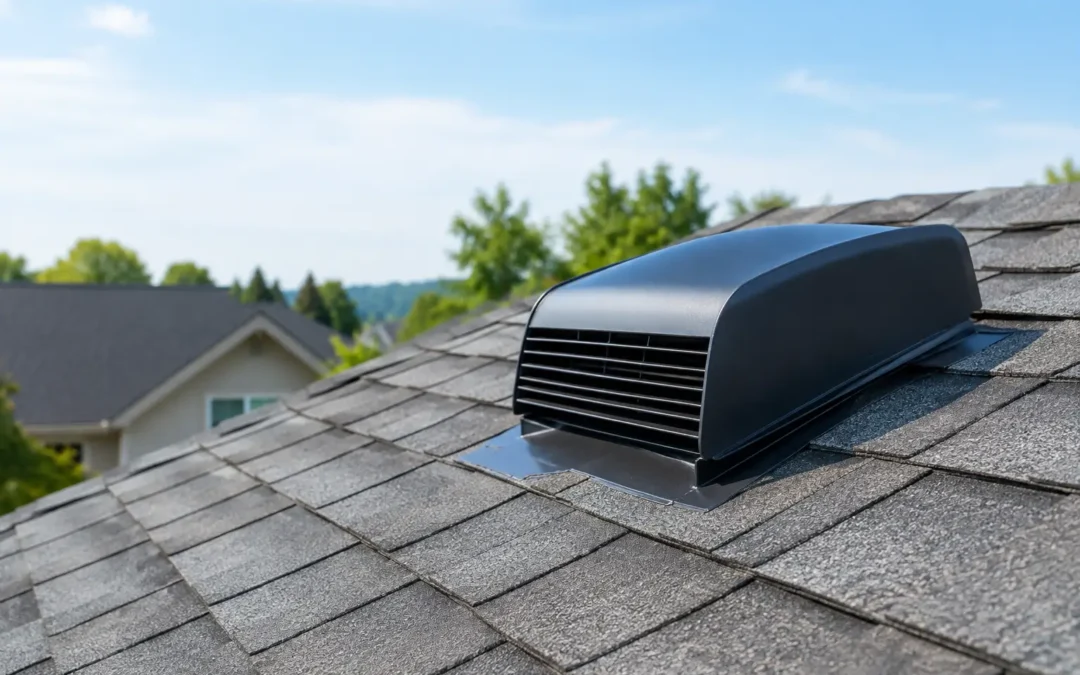
Exhaust ventilation is placed high on the roof because hot air naturally rises. A ridge vent runs along the peak and is often a clean, effective option when paired with adequate soffit intake. Depending on the roof design, other options may include box vents, gable vents, or powered attic ventilators.
There is no single vent type that fits every house. A simple gable roof may be well suited for continuous ridge and soffit ventilation, while a complex roof with hips, valleys, dormers, and short ridge runs may require a more tailored approach. The goal is balanced, code-conscious airflow, not simply adding visible vents wherever there is room.
Why Ventilation Matters in Hudson Valley Weather
Local weather puts a roof through repeated seasonal stress. Summer sun can drive attic temperatures far above the outdoor temperature. Winter brings snow accumulation, freeze-thaw cycles, and the potential for warm indoor air to meet a cold roof deck.
One common concern is the ice dam. An ice dam forms when snow melts on a warmer upper roof surface and refreezes near the colder eaves. The ice can trap water behind it, allowing that water to work beneath shingles and into the home. Ventilation can help keep the roof deck colder and more consistent, but it is not a stand-alone ice dam cure.
Air leaks from the living space and insufficient attic insulation are often major contributors. Warm air escaping through light fixtures, attic hatches, plumbing penetrations, chimneys, and duct openings heats the attic from below. The strongest long-term approach usually combines air sealing, appropriate insulation, and correctly balanced roof ventilation.
Signs Your Attic May Have a Ventilation Problem
Some ventilation issues are visible from inside the attic, while others show up as comfort concerns or roof damage. If it is safe to enter your attic, look for dark staining on roof sheathing, damp wood, rusty nails, wet or compressed insulation, or a musty smell. These conditions deserve attention, especially if they return after a period of dry weather.
Inside the home, peeling paint near ceilings, unexplained moisture, or rooms that feel unusually hot in summer can be clues. Outside, recurring ice buildup at the eaves, curled shingles, blistering shingles, or premature roof aging can also warrant an inspection. None of these symptoms proves ventilation is the only cause, but they are reasons to investigate rather than guess.
Keep an eye on bathroom and kitchen exhaust ducts as well. Those ducts should discharge outdoors, not terminate in the attic. A fan that blows humid air into an attic can create serious moisture problems even when the roof has adequate intake and exhaust vents.
Common Mistakes That Reduce Roof Airflow
Well-intended repairs can accidentally make ventilation worse. Covering soffit vents during painting or siding work, packing insulation tightly into the eaves, or installing a new roof without evaluating the existing vent layout can restrict the airflow a home needs.
Mixing multiple exhaust vent types on the same roof slope can also create competing airflow patterns. For example, a ridge vent combined with gable vents or powered fans may pull air from the wrong location rather than drawing it evenly from the soffits. The right setup depends on roof geometry, attic layout, existing openings, and the condition of the insulation and air barrier.
Another mistake is treating ventilation as a substitute for repair. If a roof has a leak, damaged flashing, rotted decking, or missing shingles, more ventilation will not stop water intrusion. The roof must first be made watertight, then evaluated as a complete system.
When to Schedule a Professional Roof Inspection
A professional inspection is especially worthwhile before a roof replacement, after repeated ice dam issues, when attic moisture is visible, or when the home has had major insulation, siding, or remodeling work. A qualified roofing contractor can evaluate more than the vents you can see from the ground. They can review soffit intake, ridge or roof-top exhaust, roof deck condition, insulation depth, baffles, bathroom fan discharge, flashing, and signs of hidden water entry.
The inspection should lead to a clear explanation of what is happening and why. In some homes, the answer may be as straightforward as clearing blocked soffits and installing baffles. In others, a roof replacement may be the best opportunity to correct an outdated or poorly balanced ventilation design. A dependable contractor should explain the options, the expected benefit, and any related work needed to protect the home properly.
For homeowners in Orange, Dutchess, Ulster, and Sullivan counties, seasonal timing matters. Addressing ventilation concerns before deep winter or before the hottest stretch of summer gives you more control than waiting for attic moisture, shingle damage, or an ice dam emergency.
A Better Way to Protect the Roof Over Your Head
Roof ventilation is largely out of sight, which is why it is easy to postpone. But the attic is where heat, moisture, insulation, and roof decking meet, and small imbalances there can affect the comfort and durability of the entire home. If you have noticed moisture, ice buildup, aging shingles, or an attic that feels like an oven, schedule an inspection and get a clear answer before the next season puts more stress on your roof.