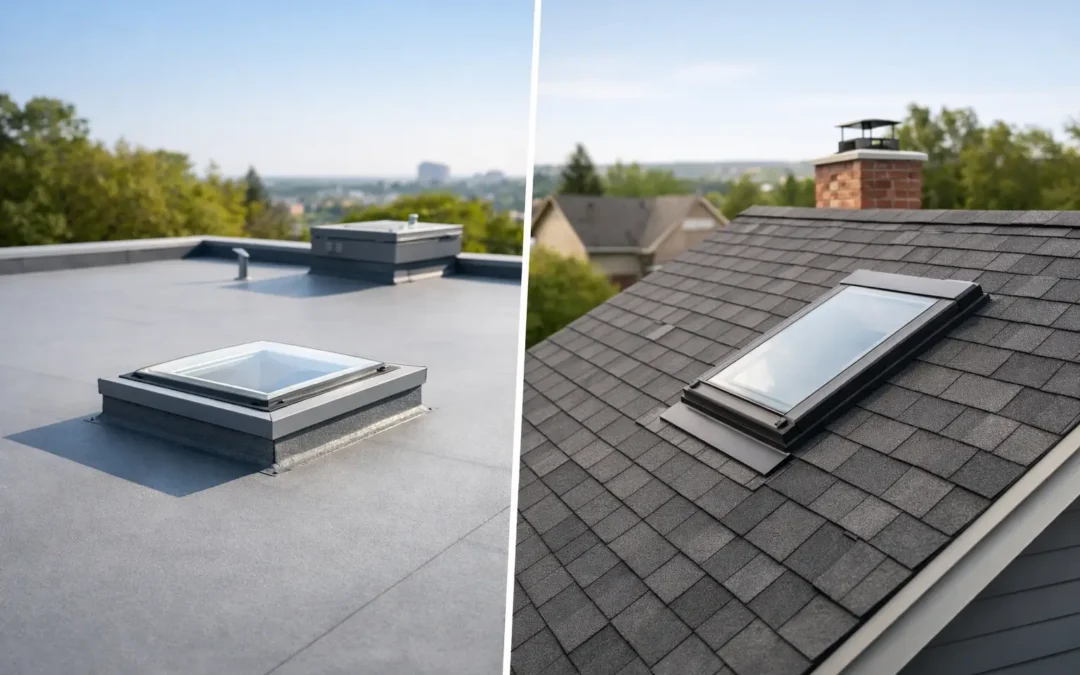
A flat roof versus pitched roof is not simply a question of appearance. The right choice affects how your property handles Hudson Valley rain, snow, wind, drainage, maintenance, energy use, and future repair costs. A low-slope commercial roof may be the practical answer for a business building, while a pitched asphalt shingle roof may offer the reliable water shedding most local homes need. The best system is the one designed for your structure, budget, and exposure to the weather.
Flat Roof Versus Pitched Roof: The Core Difference
A pitched roof has a noticeable slope that directs water, snow, and debris toward the edges of the structure. Most residential homes in Orange, Dutchess, Ulster, and Sullivan Counties have pitched roofs finished with asphalt shingles, metal panels, slate, or similar materials. The slope can be modest or steep, but it is designed to use gravity as part of the drainage system.
A flat roof is not completely flat. It is more accurately called a low-slope roof. It needs enough pitch to move water toward drains, scuppers, or gutters, even though that slope may not be obvious from the ground. Flat and low-slope systems are common on commercial buildings, apartment properties, additions, garages, and modern-style homes. They are often covered with membrane materials such as EPDM, TPO, PVC, or modified bitumen.
The materials, installation methods, drainage details, and maintenance needs are different. That is why a roof type should never be selected based on looks alone.
Drainage and Snow: Where Roof Design Matters Most
For Hudson Valley property owners, drainage is usually the deciding factor. A pitched roof sheds rain and melting snow quickly. When shingles, flashing, gutters, and roof ventilation are in good condition, water has a clear path off the roof. This helps reduce standing water, which is one of the most common causes of premature roofing failure.
A flat roof manages water differently. It relies on properly placed drains or scuppers, correct slope, secure seams, and a membrane that remains watertight under pooling water. A quality low-slope roofing system can perform very well, but small installation errors can become expensive leaks. A blocked drain, deteriorated seam, or low area that holds water needs attention before it damages insulation, decking, ceilings, or interior finishes.
Snow adds another layer of concern. Pitched roofs generally allow snow to slide or melt away more naturally, although heavy snow loads can still stress the structure. Flat roofs hold snow longer, so their framing must be engineered to support the expected load. As snow melts and refreezes, drainage points must remain clear. This is especially important after a freeze-thaw cycle or a major winter storm.
Neither roof type is maintenance-free. The difference is that pitched roofs are built to shed water quickly, while flat roofs depend more heavily on drainage design and regular inspection.
Cost Depends on More Than Square Footage
Flat roofs can appear less expensive because they have a simpler shape and often require less material surface area than a steep roof. However, the total cost depends on the membrane selected, insulation requirements, drainage improvements, roof access, tear-off work, and the condition of the underlying deck.
Pitched roofs often require more labor because installers work on an angle and must build out ridges, valleys, hips, flashing, and edge details. Steeper slopes also require added safety measures. On the other hand, asphalt shingles remain a cost-effective choice for many homeowners, and their broad availability makes future repairs more straightforward.
The lowest estimate is not always the lowest long-term cost. A flat roof installed without proper tapering or drainage can lead to recurring ponding and leak repairs. A pitched roof with poor attic ventilation or incorrect flashing can develop ice dams, rot, and shingle damage. The system needs to be priced as a complete assembly, not just as a layer of roofing material.
When comparing estimates, ask what is included for tear-off, decking repairs, underlayment, flashing, ventilation, insulation, drainage, disposal, cleanup, and warranty coverage. Clear scope details protect you from surprises once work begins.
Appearance, Space, and Property Use
A pitched roof delivers the classic profile many homeowners expect. It can add curb appeal, create attic storage, and support design features such as dormers and extended overhangs. The attic space below can also help separate the living area from the roof deck, provided it is properly insulated and ventilated.
Flat roofs create a clean, modern exterior and are especially practical where building height is limited. On commercial properties, the flat surface provides a convenient location for HVAC equipment, vents, solar equipment, and other mechanical components. On certain homes, it may also support a rooftop deck or outdoor living area, but only if the structure and waterproofing are specifically designed for that use.
There is a trade-off. Equipment on a low-slope roof means more foot traffic and more penetrations through the membrane. Every curb, pipe, drain, and HVAC support is a detail that must be installed and maintained correctly. A rooftop deck can be attractive, but it should never be added over a roof system without confirming the load capacity and waterproofing plan.
Energy Performance and Ventilation
Roof shape alone does not determine energy efficiency. Insulation, air sealing, ventilation, roof color, and installation quality matter just as much.
Pitched roofs commonly use attic ventilation to control moisture and heat buildup. Proper intake and exhaust ventilation can help protect shingles, reduce condensation risk, and support more consistent indoor comfort. In winter, good insulation and air sealing are also important for limiting heat loss that contributes to ice dams.
Flat roofs often use insulation above the roof deck or within the roof assembly. A light-colored or reflective membrane can reduce heat absorption during warm weather, which may benefit commercial buildings and conditioned spaces below. In colder climates, the insulation design must still control condensation and protect the building from heat loss.
An experienced contractor should evaluate the full roof assembly rather than promising that one roof shape will automatically lower utility bills.
Repairs and Expected Maintenance
Pitched roofs make certain repairs easy to identify. Missing shingles, damaged ridge caps, exposed flashing, and storm-related impact damage can often be seen from the ground or during an inspection. Still, leaks can travel beneath shingles and appear indoors far from the actual entry point.
Flat roof leaks may be harder to trace because water can move beneath a membrane or through insulation before reaching the interior. Regular inspections are especially valuable after severe weather. Technicians should check seams, penetrations, drains, edge metal, flashing, and areas where water tends to collect.
For either system, property owners should schedule an inspection when they notice ceiling stains, bubbling paint, loose roofing material, sagging gutters, musty odors, or water around drains. Waiting for a small leak to become visible in several rooms rarely saves money.
Which Roof Type Is Right for Your Property?
Choose a pitched roof when your home’s architecture is built for it, fast snow shedding is a priority, and you want a traditional appearance with familiar material choices. It is often the most natural fit for single-family homes across the Hudson Valley.
Choose a flat or low-slope roof when the building design calls for it, when you need usable rooftop space or mechanical access, or when you own a commercial property designed around a membrane system. The key is not to treat it as a cheaper version of a pitched roof. It needs the right drainage plan, materials, insulation, and trained installation crew.
Before replacing either type, have the roof deck, drainage, flashing, insulation, ventilation, and structural condition evaluated together. CPG Roofing & Siding helps property owners make that decision with clear recommendations, organized workmanship, and attention to the details that keep water outside where it belongs.
If your roof is aging or showing signs of trouble, act before the next hard rain or winter storm turns a manageable repair into interior damage. A professional inspection can give you a practical plan and the confidence to protect your property properly.