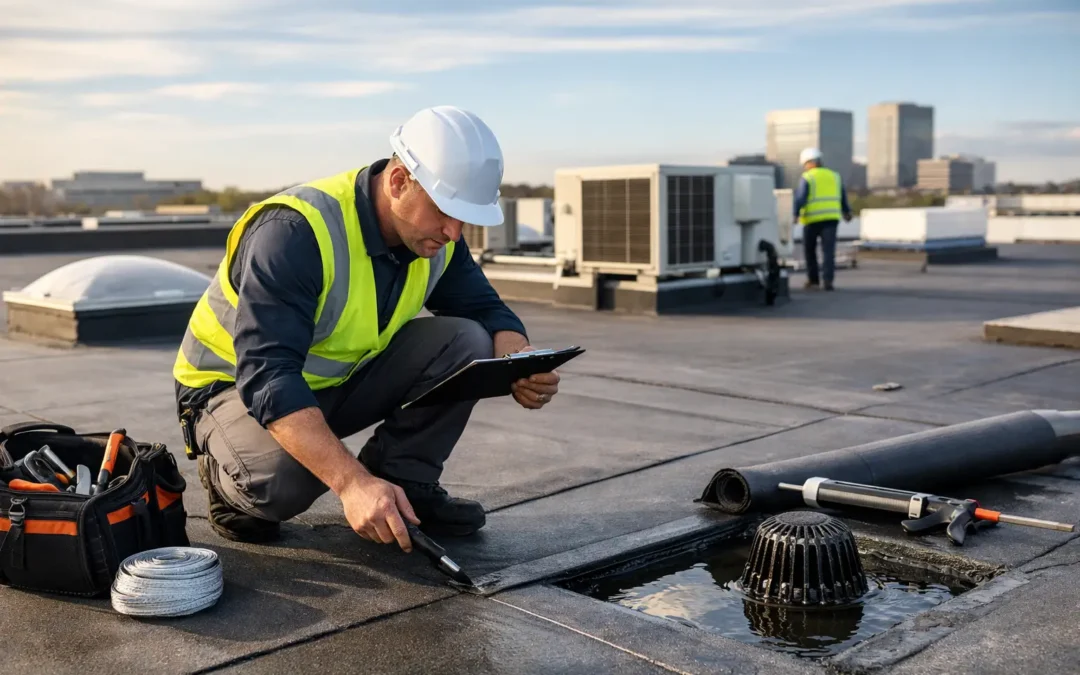
A commercial roof rarely fails all at once. More often, it gives off warning signs first – standing water near drains, loose flashing at the edge, seams starting to separate, or small leaks that only show up after a hard rain. A solid commercial roofing maintenance guide helps property owners catch those issues early, before a manageable repair turns into interior damage, business disruption, or a premature roof replacement.
If you own or manage a commercial building, maintenance is not just housekeeping. It protects tenants, inventory, equipment, and your budget. It also gives you a clearer picture of how much life your roof has left, which matters when you are planning capital expenses instead of reacting to emergencies.
Why a commercial roofing maintenance guide matters
Commercial roofing systems take a beating over time. UV exposure, freeze-thaw cycles, foot traffic from service contractors, storm debris, clogged drains, and poorly sealed penetrations all add up. In the Hudson Valley, winter weather can be especially hard on flat and low-slope roofs because snow loads, ice buildup, and repeated temperature swings can stress seams and flashing.
The biggest benefit of routine maintenance is simple: small problems stay small. A cracked boot around a rooftop pipe or a blocked scupper may not look urgent in the moment. Left alone, either one can allow water intrusion that damages insulation, decking, ceilings, and even electrical systems. The repair bill then has very little to do with the original defect.
There is also a warranty angle. Many commercial roof warranties require documented inspections and upkeep. If maintenance is ignored, a building owner may have a harder time making a claim when a major issue appears.
What should be included in a commercial roofing maintenance guide
A useful maintenance plan covers more than leak response. It should include scheduled inspections, drainage checks, surface condition reviews, documentation, and a process for addressing storm damage quickly. It should also account for the specific roof type on your building, because maintenance needs vary.
Single-ply membranes like TPO, PVC, and EPDM often need close attention at seams, penetrations, and edge details. Modified bitumen and built-up roofing may show wear through blistering, cracks, or surfacing loss. Metal commercial roofs bring a different set of concerns, such as fastener movement, panel separation, corrosion, and flashing fatigue.
That is why a one-size-fits-all checklist only goes so far. The right maintenance approach depends on the roof system, the age of the roof, the amount of rooftop traffic, and how exposed the building is to wind, trees, or pooling water.
How often a commercial roof should be inspected
For most buildings, professional inspections twice a year are a smart baseline – usually in the spring and fall. Spring inspections help identify winter-related damage. Fall inspections prepare the roof for snow, ice, and colder weather. Beyond that, every commercial roof should be checked after major storms, high winds, or any event that may have caused punctures or drainage issues.
Age matters too. A newer roof in good condition may need fewer corrective repairs between inspections. An older roof, especially one with a history of leaks, usually benefits from more frequent monitoring. If your HVAC techs, satellite installers, or other vendors regularly access the roof, more frequent reviews make sense because foot traffic is a common source of accidental damage.
The most common commercial roofing problems to watch for
Leaks get the most attention, but they are only one symptom. Water often enters at flashing transitions, penetrations, wall tie-ins, skylights, and drains rather than in the middle of the membrane. By the time a ceiling stain appears inside, moisture may already be traveling through insulation or structural components.
Ponding water is another major issue. Some flat roofs are designed to handle limited water for a short period, but standing water that remains more than 48 hours is usually a red flag. It can accelerate membrane wear, increase loading, and expose drainage design or blockage problems.
Surface punctures are common around service paths, dropped tools, or unsecured equipment. So are open seams, shrinkage, and flashing separation. On metal systems, loose fasteners and failed sealant joints can quietly create leak paths. On any roof type, clogged drains and gutters can turn a moderate rain into a serious problem fast.
What building owners and managers can do between professional visits
Not every part of roof care requires a service call. Building owners and facility managers can reduce risk by staying observant and addressing obvious issues early. That does not mean making untrained repairs. It means knowing what to look for and when to call a qualified commercial roofer.
After storms, look for debris buildup, blocked drainage points, displaced rooftop equipment covers, or visible membrane damage if it can be viewed safely. Inside the building, watch for stains, drips, musty odors, bubbling paint, or wet insulation around the perimeter and near penetrations. Keep a record of when issues appear, especially if they happen only under certain weather conditions.
Limiting roof access also matters. Many leaks start because other trades cut corners, drag equipment, or leave penetrations poorly sealed. Restrict access to authorized personnel and make sure anyone working on the roof understands they are walking on a finished roofing system, not a utility platform.
Why documentation saves money
One of the most overlooked parts of a commercial roofing maintenance guide is recordkeeping. Good documentation gives you a timeline of roof condition, repairs, recurring problem areas, and weather-related events. That helps with budgeting, warranty support, insurance discussions, and long-term replacement planning.
At a minimum, keep records of inspection dates, photos, repair invoices, leak locations, and notes about storm activity. If a leak returns in the same area six months later, that history helps a roofing contractor diagnose whether the issue is a failed repair, a nearby hidden defect, or a broader system problem.
For multi-tenant properties and commercial facilities, documentation also supports communication. It is easier to explain repair needs and timing to ownership groups or stakeholders when the condition of the roof is clearly documented rather than described from memory.
Repair or replacement – how maintenance helps you decide
A good maintenance program does not automatically mean you can avoid replacement forever. Every commercial roof reaches a point where patching becomes less cost-effective than investing in a new system. The value of maintenance is that it helps you make that call at the right time.
If the roof has isolated defects, dry insulation, and otherwise sound materials, targeted repairs may be the smarter move. If leaks are recurring across multiple areas, seams are failing broadly, drainage is poor, and the roof is near the end of its service life, replacement may be the safer financial decision. Waiting too long can push a planned project into an emergency job, and emergency jobs usually cost more while offering fewer scheduling advantages.
This is where a trusted contractor makes a difference. You want a team that will explain what is repairable, what is aging out, and what can reasonably wait. You do not want guesswork when the roof protects your operations every day.
Choosing the right commercial roofing partner
Commercial roof maintenance is not just about technical skill. It is also about responsiveness, communication, and follow-through. If a contractor takes days to return calls during a leak event, that tells you something. If inspection reports are vague or cleanup is sloppy, that tells you something too.
Look for a contractor with experience across commercial roof types, clear inspection processes, and a reputation for showing up when it matters. For property owners in this region, that local responsiveness can be especially valuable after heavy storms or winter weather, when delays can allow water damage to spread quickly. Companies like CPG Roofing & Siding build trust by combining organized service, certified workmanship, and fast response when a roof issue cannot wait.
A maintenance plan should match the building
A warehouse, retail center, office building, church, and apartment property do not all use their roofs the same way. Some have high rooftop traffic. Some have complex drainage layouts. Some can tolerate a minor repair delay, while others cannot risk any interruption because of equipment, inventory, or tenant needs.
That is why the best maintenance plan is tailored, not generic. The roof system, building use, age, service history, and exposure all shape the schedule and scope of care. A practical plan should be realistic enough to follow and thorough enough to catch risk before it grows.
If your commercial roof has not been inspected recently, that is usually the place to start. A professional assessment gives you facts, not guesses, and puts you back in control before the next storm decides the timeline for you.