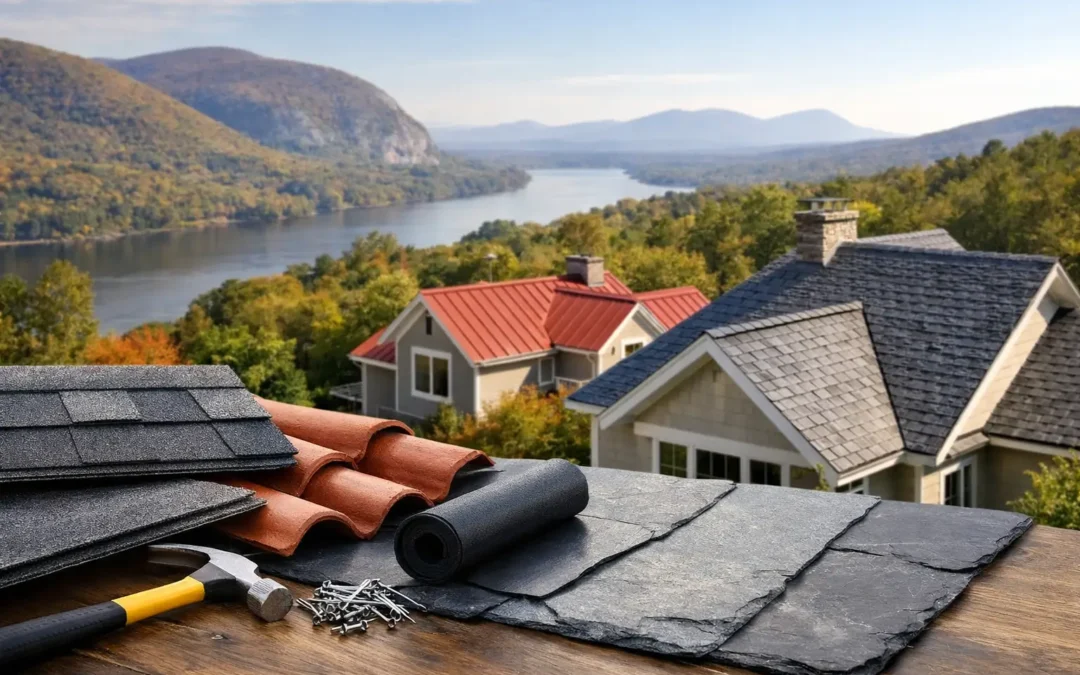
A roof in the Hudson Valley has to handle more than a few rainy afternoons. It faces snow loads, freeze-thaw cycles, wind-driven rain, summer heat, falling branches, and ice dams. That is why choosing the best roofing materials for homes is not simply about selecting the color that looks best from the street. The right choice protects your home, supports its value, and helps prevent expensive repairs when the weather turns.
For most homeowners, the best material comes down to four questions: How long do you plan to stay in the home? What is your budget? What does your roof’s pitch and structure allow? And how much maintenance are you willing to take on? Here is how the leading options compare.
Best Roofing Materials for Homes: Start With Local Weather
A roofing material that performs well in a dry, mild climate may not be the best fit for Orange, Dutchess, Ulster, or Sullivan County. In this region, roofing systems need reliable water shedding, strong flashing details, effective attic ventilation, and installation methods designed for winter weather.
Material matters, but workmanship matters just as much. A premium roof installed with poor ventilation or weak flashing around chimneys, skylights, and valleys can develop leaks long before it should. When comparing materials, evaluate the complete roofing system, not just the visible shingles or panels.
Architectural Asphalt Shingles
Architectural asphalt shingles are the most common choice for residential roof replacement, and for good reason. They offer a practical balance of appearance, durability, installation speed, and cost. Unlike basic three-tab shingles, architectural shingles have a layered construction that creates more depth and generally provides better wind resistance.
For many Hudson Valley homes, a quality architectural shingle is the strongest all-around value. It works well on most roof designs, comes in a wide range of colors, and can complement everything from a classic colonial to a newer ranch-style home. Many products also offer algae resistance, which can help reduce dark streaking in damp or shaded areas.
A properly installed architectural asphalt roof often lasts about 20 to 30 years, though heavy tree cover, poor ventilation, and severe storm exposure can shorten that range. Asphalt is also easier and less expensive to repair than many specialty materials.
The trade-off is that asphalt does not have the lifespan of metal, slate, or certain synthetic products. Homeowners should also remember that a shingle warranty does not replace proper installation, ventilation, or regular inspections.
Best for: Most homeowners who want dependable protection and strong value
Metal Roofing
Metal roofing has become a popular upgrade for homeowners who want longevity and a distinctive look. Standing seam metal roofs use vertical panels with concealed fasteners, while exposed-fastener metal panels are often a more budget-conscious option. Both can perform very well when selected and installed correctly.
A standing seam metal roof can last 40 to 70 years or longer. It sheds snow efficiently, resists fire, and holds up well against wind and rain. Metal is also lightweight compared with slate and can be a smart option for homeowners planning to stay in their property for decades.
The higher upfront cost is the main consideration. Metal roofing typically costs more than architectural shingles, especially for complex rooflines with dormers, valleys, chimneys, and skylights. Installation requires experienced crews because panel layout, expansion, flashing, and penetrations must be handled precisely.
Snow shedding is another point to discuss before installation. While it can reduce the weight of snow buildup on the roof, falling snow can create a hazard near driveways, walkways, decks, and entry doors. Snow guards can help control where and how snow releases.
Best for: Long-term homeowners who want exceptional lifespan and low maintenance
Slate Roofing
Natural slate is one of the longest-lasting roofing materials available. It brings a classic, high-end appearance that is especially fitting for historic homes and distinctive properties throughout the Hudson Valley. A well-installed slate roof can last 75 to 100 years or more.
Slate is non-combustible, highly durable, and naturally resistant to rot and insects. Its appearance also tends to age gracefully, which makes it an attractive option for homeowners preserving the architectural character of an older home.
However, slate is heavy. Before choosing it, a contractor should confirm that the home’s framing can support the load. Slate also requires specialized installation and repair knowledge, and replacement pieces must be matched carefully. The material and labor costs are significantly higher than asphalt or most metal roofs.
Slate is not a casual upgrade. It is an investment for owners who value longevity, historic character, and premium curb appeal enough to support the higher initial cost.
Best for: Historic or high-value homes with adequate structural support
Synthetic Slate and Composite Shingles
Synthetic slate, composite shingles, and polymer roofing products are designed to deliver the appearance of slate, cedar shake, or other premium materials without the same weight or maintenance demands. Many products are engineered to resist impact, moisture, fading, and fire.
For homeowners who like the look of natural slate but do not want to reinforce the roof structure, synthetic options can be an excellent middle ground. They are lighter than natural stone, often easier to install, and may offer long warranties depending on the manufacturer and product line.
The main drawback is price. Composite roofing usually costs more than architectural shingles and may approach metal roofing costs. Product quality can also vary, so it is worth reviewing the manufacturer’s specifications, warranty coverage, and performance ratings rather than choosing based on appearance alone.
Best for: Homeowners seeking premium appearance with less weight than natural slate
Cedar Shakes and Shingles
Cedar roofs offer a warm, natural appearance that few other materials can match. They can look especially striking on cottages, traditional homes, and properties surrounded by mature trees. Cedar also provides natural insulating value and develops a weathered character over time.
That beauty comes with maintenance responsibilities. In the Hudson Valley’s wet, wooded conditions, cedar can be vulnerable to moss, mildew, moisture retention, splitting, and insect activity if it is not properly installed and maintained. Adequate ventilation and drainage are essential.
Cedar also requires periodic inspection and treatment, and some homeowners prefer a lower-maintenance option that delivers a similar look. Local code requirements and fire ratings should be considered before selecting wood roofing.
Best for: Homeowners who prioritize natural character and are prepared for ongoing maintenance
Low-Slope Roofing Materials
Not every home has a steep-pitch roof. Additions, porches, modern-style homes, and certain sections of older properties may have low-slope areas that need a different system. Standard shingles are not always appropriate where water drains slowly.
Modified bitumen, EPDM rubber roofing, and PVC or TPO membranes are common choices for low-slope residential sections. Each is designed to form a continuous water-resistant surface. The best selection depends on slope, drainage, sun exposure, foot traffic, and how the low-slope section connects to the main roof.
This is an area where details make the difference. A low-slope roof needs correctly designed drains or gutters, secure edge flashing, and careful treatment around walls and penetrations. If water ponds after rain, address the drainage issue rather than assuming a new surface alone will solve it.
Do Not Choose by Price Alone
The lowest estimate may leave out parts of the roofing system that protect your home when storms arrive. A complete proposal should explain the decking inspection, underlayment, ice and water protection, flashing, ventilation, ridge cap, cleanup, and warranty coverage. These components can have as much impact on roof performance as the material you choose.
For example, ice and water protection is especially valuable at eaves, valleys, and other vulnerable areas where ice dams or wind-driven rain can force water beneath shingles. Proper attic ventilation can reduce moisture buildup and help limit excessive heat that ages roofing materials prematurely.
It is also wise to consider the condition of gutters, fascia, and siding near the roofline. Water that misses or overwhelms the gutter system can damage the exterior even when the roof covering itself is in good condition.
Make the Choice That Protects Your Home for the Long Term
For many homes, architectural asphalt shingles provide the right mix of cost and reliable performance. Metal is a strong long-term upgrade, while slate and synthetic materials fit homeowners seeking premium appearance and extended service life. The best answer depends on your home, your budget, and the weather exposure around your property.
Before committing, have a qualified roofing professional inspect the roof structure, ventilation, drainage, and existing problem areas. CPG Roofing & Siding can help homeowners compare options clearly, identify risks before they become leaks, and build a roofing plan designed for lasting protection.