A roof can look perfectly sound from the driveway while excess heat and moisture build quietly beneath it. That hidden attic environment can shorten shingle life, encourage mold growth, raise cooling costs, and contribute to destructive ice dams in winter. The benefits of roof ventilation go far beyond making an attic feel less stuffy. When it is designed correctly, ventilation helps protect the roofing system, the structure below it, and the comfort of the people inside.
For homeowners and property managers in the Hudson Valley, that protection matters. Our roofs deal with humid summers, heavy rain, freezing temperatures, snow loads, and fast weather swings. A roof needs more than quality shingles to handle those conditions. It needs a balanced way to move air through the attic space.
How Roof Ventilation Works
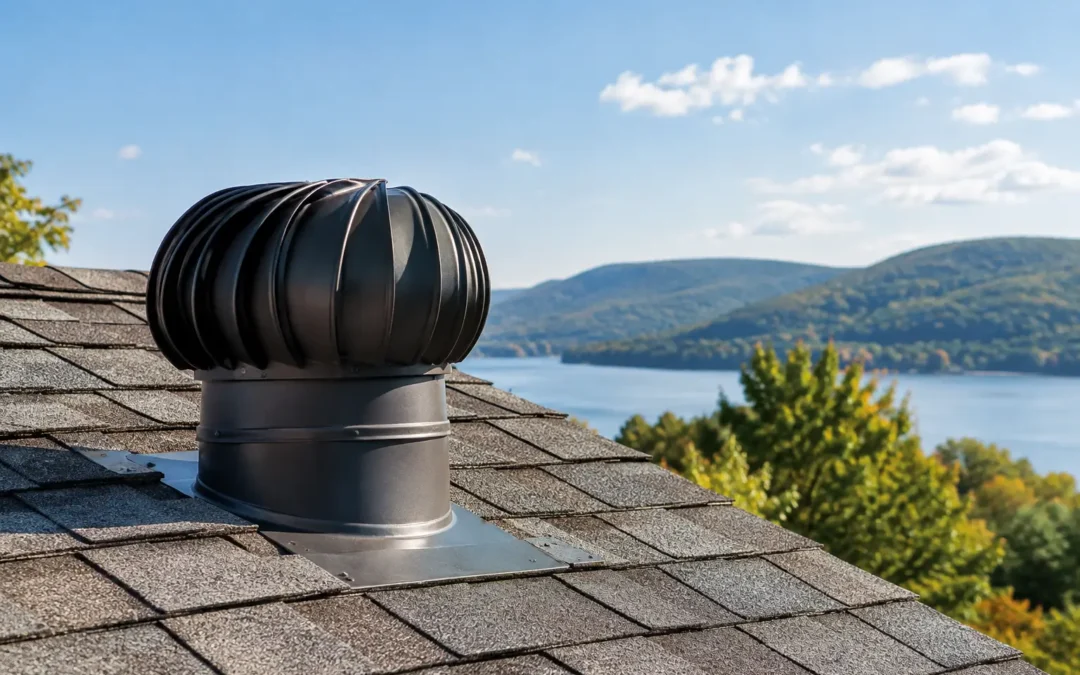
Roof ventilation uses two parts that work together: intake ventilation and exhaust ventilation. Intake vents are usually located low on the roof, often at the soffits or eaves. Exhaust vents are placed higher on the roof, such as along the ridge, near the peak, or through carefully placed roof vents.
Cooler outside air enters through the intake vents. As air in the attic warms, it rises and exits through the higher exhaust vents. This natural movement helps replace hot, humid attic air with drier, more moderate air from outside.
The system must be balanced. Adding only ridge vents without enough intake, for example, can limit airflow. In some cases, exhaust vents may pull air from unintended gaps in the attic rather than through the soffits. A professional roofing assessment looks at the entire system – attic insulation, air sealing, intake, exhaust, roof shape, and existing vent placement – before recommending a solution.
Benefits of Roof Ventilation That Protect Your Home
Less moisture and a lower risk of mold
Warm indoor air naturally carries moisture. During colder months, that air can leak into the attic through ceiling openings around light fixtures, plumbing penetrations, attic hatches, and other gaps. When warm, moist air meets cold roof decking, condensation can form.
Over time, that condensation can dampen insulation, stain sheathing, corrode fasteners, and support mold or mildew growth. Ventilation helps remove humid attic air before moisture has a chance to collect. It is not a substitute for proper air sealing, but it is a key part of moisture control.
If you have noticed a musty attic smell, dark staining on roof decking, damp insulation, or frost on nails in winter, do not assume the issue will disappear when the weather changes. Those are signs worth investigating before they become larger repair problems.
Better protection against ice dams
Ice dams are a common concern on homes throughout Orange, Dutchess, Ulster, and Sullivan counties. They form when heat escaping into the attic warms the upper portion of a snow-covered roof. Snow melts, water travels down toward the colder eaves, and then it refreezes. As ice builds up, melting water can back up beneath shingles and enter the home.
Proper attic ventilation helps keep the roof deck closer to the outdoor temperature. Combined with adequate insulation and air sealing, it reduces the uneven snowmelt that fuels ice dams. Ventilation alone cannot solve every ice dam problem, especially when a home has major air leaks or insufficient insulation, but it is an essential part of a lasting solution.
Longer shingle and roof-deck life
Attics can become extremely hot in summer. That heat transfers to the underside of the roof deck and can place added stress on shingles. Excessive attic temperatures may accelerate shingle aging, cause materials to become brittle sooner, and contribute to curling or premature granule loss.
A well-ventilated attic releases much of that trapped heat. It will not make a dark roof cool to the touch on a sunny July afternoon, but it can reduce the extreme conditions that affect roofing materials day after day. Protecting the underside of the roof deck also helps preserve the structural components supporting your roof.
More consistent indoor comfort
When an attic stores heat, rooms directly below it often become harder to cool. Upper-floor bedrooms may feel noticeably warmer than the rest of the home, forcing the air conditioner to work longer. Ventilation can help reduce that heat buildup and support more even indoor temperatures.
The improvement depends on the home. Insulation levels, ductwork location, window exposure, and air leaks all affect comfort. Still, homeowners who are planning a roof replacement should consider ventilation as part of the whole attic system, not as an afterthought.
Lower strain on cooling equipment
Reducing attic heat may also reduce the workload on your cooling system. The savings vary by home, roof color, insulation, thermostat habits, and the condition of the HVAC system. Ventilation should not be sold as a guaranteed way to cut utility bills by a specific amount.
What it can do is prevent the attic from becoming an unnecessary heat source above your living space. That means your cooling equipment is not fighting as much heat coming down through the ceiling on hot days.
What Good Roof Ventilation Looks Like
The right setup is not the same for every building. A simple gable roof may have straightforward soffit and ridge ventilation, while a home with cathedral ceilings, dormers, additions, or multiple roof lines may require a more tailored approach. Commercial properties also need an evaluation based on their roof type, insulation assembly, and interior use.
A proper ventilation plan typically considers these factors:
- The amount and location of intake ventilation at the eaves
- The amount and location of exhaust ventilation near the roof peak
- Clear airflow paths above attic insulation
- Air sealing between the living space and attic
- Insulation depth and condition
- Roof geometry, local snow exposure, and manufacturer requirements
Mixing different exhaust vent types without a plan can create problems. For example, ridge vents combined with powered attic fans or multiple roof-mounted exhaust styles may disrupt airflow instead of improving it. More vents do not automatically mean better ventilation. Correct placement and balanced intake-to-exhaust capacity matter most.
Signs Your Attic May Need Attention
Some ventilation issues are visible from outside, but many are discovered during a roof inspection or attic evaluation. Watch for recurring ice dams, unusually hot second-floor rooms, peeling paint near roof overhangs, mildew odors, warped roof decking, or moisture stains on ceilings.
You may also see signs at the roofline. Soffit vents that are painted shut, clogged with insulation, or missing altogether cannot provide intake air. Ridge vents that are damaged, improperly installed, or blocked may not exhaust air effectively. If a roof was replaced years ago without improving the attic system, ventilation may have been overlooked.
A new roof is often the best time to correct these details. Access is easier, components can be integrated cleanly, and the ventilation plan can be matched to the new roofing materials. That said, some ventilation and insulation improvements can be made without a full roof replacement.
Roof Ventilation Is Not a One-Part Fix
It is easy to blame every attic issue on poor ventilation, but the best answers come from looking at the full picture. A bathroom fan vented into the attic, for instance, can introduce far more moisture than ventilation can reasonably handle. Significant air leaks from the home can deliver warm, humid air directly to the roof deck. Wet insulation after a roof leak needs to be addressed at the source.
That is why a thorough inspection matters. The goal is not simply to add a vent. The goal is to create a dry, durable attic environment that supports the roof above it. A qualified contractor should explain what is causing the problem, which improvements are appropriate, and what work is not necessary.
CPG Roofing & Siding evaluates ventilation as part of the roofing system, with clear recommendations based on the home, the roof design, and the conditions found on site. For property owners facing repeat ice dams, attic moisture, or an aging roof, a professional assessment can turn a recurring headache into a plan for stronger protection.
Before the next stretch of summer heat or winter snow arrives, take a look in the attic or schedule an inspection. Small details beneath the shingles can make a meaningful difference in how long your roof protects everything below it.