A roof replacement usually starts the same way – with a stain on the ceiling, missing shingles after a storm, or a repair that keeps turning into another repair. If you are looking for a residential roof replacement guide, you probably do not need theory. You need clear answers on when to replace, what it may cost, what material makes sense, and how to avoid hiring the wrong contractor.
That decision matters because your roof is not just another exterior feature. It protects framing, insulation, drywall, electrical systems, and everything you own underneath it. When a roof is near the end of its life, waiting too long can turn a controlled project into emergency damage.
When a roof replacement makes more sense than a repair
Not every roofing problem calls for full replacement. A localized leak around flashing, a few wind-damaged shingles, or minor storm damage may be repairable if the rest of the system is still in solid shape. The problem is that homeowners often get stuck in a cycle of short-term fixes on an aging roof.
If your roof is 20 years old or older, replacement often deserves serious consideration, especially with standard asphalt shingles. Age alone is not the only factor. Widespread granule loss, curling or cracked shingles, soft decking, recurring leaks, sagging areas, and visible water intrusion in the attic all point to a bigger system failure instead of an isolated issue.
There is also a cost trade-off. A repair may be cheaper today, but not if you are calling for another repair six months later. In many cases, replacing the roof at the right time is the more protective and more cost-effective move.
What affects roof replacement cost
Homeowners usually ask for a number first, which is understandable. The real answer is that roof replacement pricing depends on the roof itself, not just the square footage listed in public records.
The biggest cost factors are roof size, pitch, complexity, material choice, number of penetrations, chimney and flashing details, and whether old decking needs to be replaced. A simple ranch with one layer of shingles is very different from a steep roof with multiple valleys, dormers, skylights, and damaged wood underneath.
Tear-off also matters. If there are multiple existing layers, labor and disposal costs go up. If storm damage or long-term leaks have compromised the decking, that structural work will add to the project. This is one reason honest estimates should allow room for conditions that are only fully visible once the old roof comes off.
Financing can also change the decision. Many homeowners could patch the roof now, but choose replacement because predictable payments are easier to manage than repeated repairs and interior damage later.
Choosing the right material for your home
A good residential roof replacement guide should be realistic here: there is no perfect roofing material for every house. The best option depends on budget, appearance, longevity, maintenance expectations, and local weather.
Asphalt shingles
Asphalt shingles are the most common choice for residential homes because they offer strong value. They are cost-effective, widely available, and available in styles that fit most neighborhoods. For many homeowners, architectural shingles hit the best balance between price and performance.
They are also practical for much of the Hudson Valley, where roofs need to handle wind, rain, snow, and seasonal temperature swings. That said, shingle quality varies, and installation quality matters just as much as the product itself.
Metal roofing
Metal roofs offer excellent durability and a longer service life, and they perform well in shedding snow and resisting severe weather. They usually cost more upfront than shingles, so the conversation often comes down to budget versus long-term value.
Metal can be a strong fit if you plan to stay in the home for many years and want lower maintenance. It is not always the right choice for every architectural style or every budget, but it deserves a serious look.
Other systems
Some homes may be suited for synthetic, cedar-look, or specialty roofing products. These options can offer a distinct appearance, but they tend to bring higher material and installation costs. If appearance is a major priority, it is worth discussing those trade-offs before locking into the estimate.
The parts of the roof homeowners often overlook
Many people think roof replacement means shingles only. It does not. A complete roofing system includes underlayment, ice and water protection, flashing, ridge ventilation, pipe boots, starter strips, and the fasteners that hold everything in place.
Ventilation is one of the most overlooked parts of the job. Poor attic ventilation can trap heat and moisture, shorten shingle life, and contribute to mold or decking issues. In areas that deal with snow and freezing weather, proper protection along eaves and vulnerable areas is also critical for reducing ice dam risk.
This is where cheap estimates can become expensive. If one contractor is pricing a complete system and another is pricing the visible surface only, those numbers are not equal.
What to expect during the roof replacement process
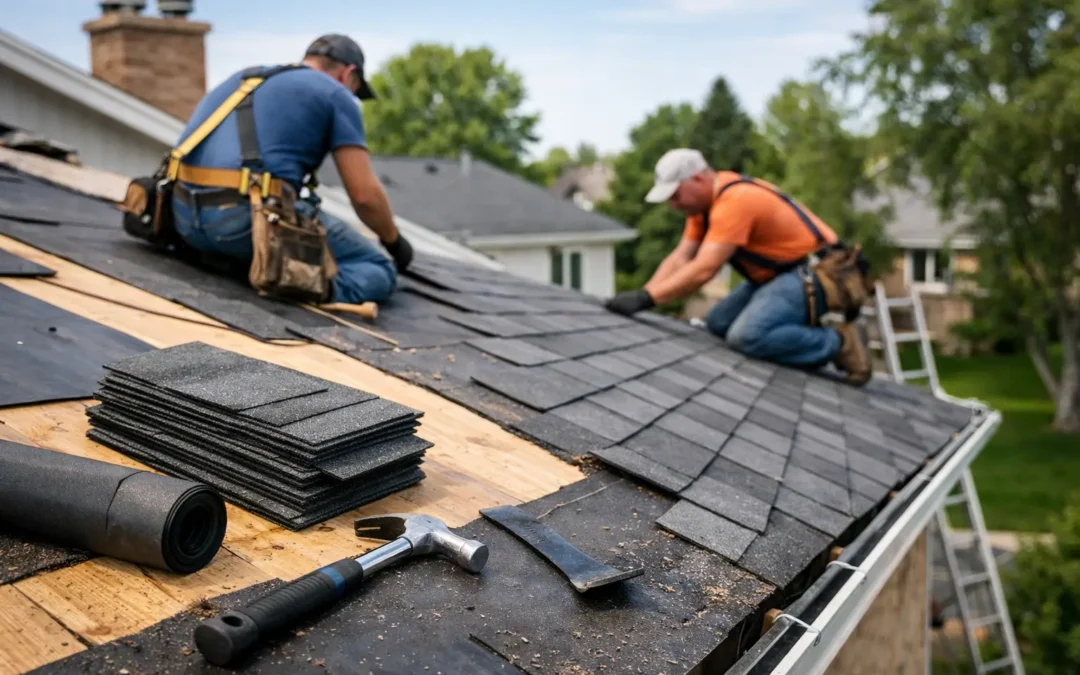
A professional roof replacement should feel organized, not chaotic. The process usually starts with an inspection and estimate, followed by product selection, scheduling, material delivery, tear-off, deck inspection, installation, cleanup, and final walkthrough.
The tear-off stage is noisy and messy by nature, but the site should still be controlled. Landscaping, driveways, and entry areas should be protected. Debris should be managed throughout the day, not left scattered across the property. Magnetic cleanup for nails should be standard, not optional.
Weather can affect timing. Even a well-planned project may need to shift because of rain, high wind, or unsafe conditions. That does not always signal poor organization. Sometimes it signals good judgment.
For most homes, the installation itself can be completed quickly once work begins, assuming the weather cooperates and there are no major decking surprises. More complex roofs may take longer, and homeowners should expect clear communication if conditions change.
How to compare roofing estimates without getting fooled
The lowest bid is not always the cheapest roof. That sounds obvious, but it is where many homeowners get burned.
Look closely at what is included. Does the estimate specify tear-off, underlayment, flashing replacement, ventilation upgrades, disposal, wood replacement terms, warranty details, and cleanup? Does the contractor carry insurance? Are they certified by the manufacturer they are installing? Can they explain why they recommend one system over another?
A trustworthy contractor should be able to answer those questions directly. No vague language. No pressure to sign before you understand the scope. If someone cannot explain the job clearly before the contract, communication probably will not improve once the project starts.
Reviews and reputation matter too, especially for a service as invasive and expensive as roof replacement. Homeowners want a crew that shows up on time, protects the property, communicates well, and stands behind the work after the final payment. That is not extra. That is part of the job.
Timing your roof replacement
There is a difference between replacing a roof proactively and replacing it after a failure. Proactive replacement usually gives you better scheduling flexibility, more time to compare options, and less chance of interior water damage.
Emergency replacement is sometimes unavoidable after severe storms or sudden leaks, but urgency can narrow your choices. If your roof is showing age and multiple warning signs, it is smart to get it inspected before the next season puts more stress on the system.
In New York, winter weather can expose every weak point in an aging roof. Snow load, freeze-thaw cycles, and ice dams are hard on materials that are already at the end of their life. Waiting may feel easier in the moment, but the roof does not know you are trying to stretch one more year out of it.
Questions worth asking before you sign
Ask who will supervise the project, what happens if damaged decking is found, how cleanup is handled, what warranties apply to materials and workmanship, and whether the crew will protect siding, gutters, and landscaping during the job. Also ask how communication will work if weather or hidden conditions affect the schedule.
Those answers tell you a lot. A dependable contractor will not just talk about shingles. They will talk about protecting your property, setting expectations, and doing the work cleanly from start to finish.
If you are at the point where repairs are no longer giving you confidence, trust that instinct. A new roof is a major investment, but it is also one of the clearest ways to protect your home before small problems become expensive ones.