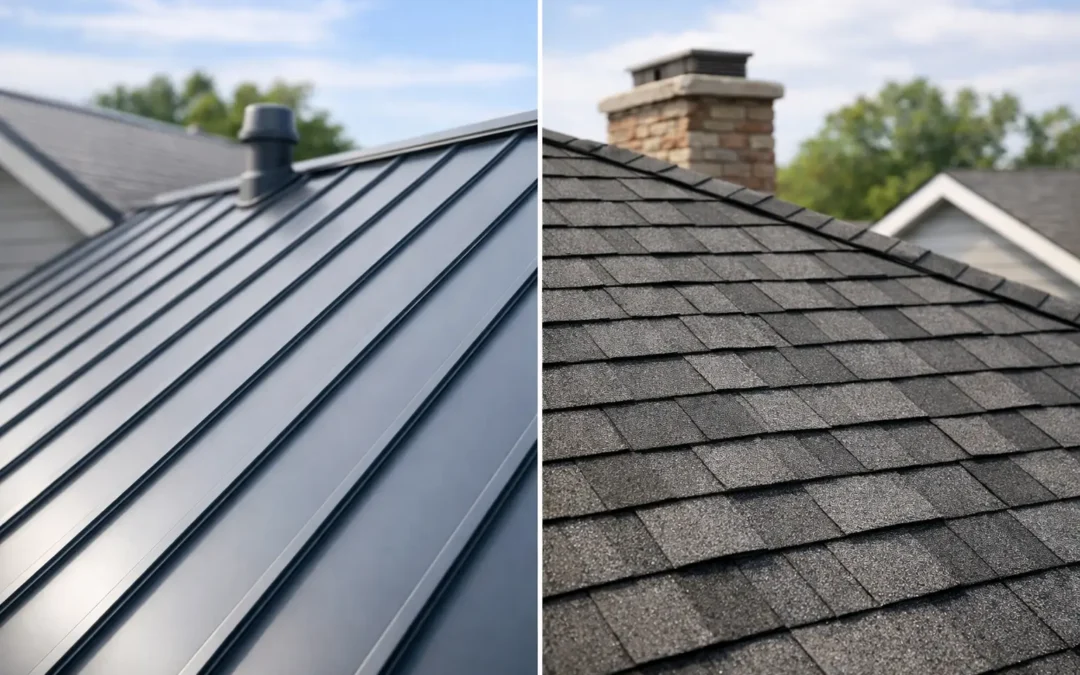
A roof usually becomes urgent the moment it starts leaking, curling, or shedding granules into the gutter. That is when the real question shows up fast: metal roof versus shingles – which one is actually the better choice for your home, your budget, and the kind of weather we get in New York?
The honest answer is not one-size-fits-all. Both roofing systems can protect a home well when they are installed correctly. The better option depends on how long you plan to stay, how much you want to spend now versus later, how your home is built, and what kind of maintenance you are willing to deal with over time.
Metal roof versus shingles: the biggest difference
The biggest difference is simple. Asphalt shingles usually cost less upfront and are familiar to most homeowners. Metal roofing usually costs more at the start, but it can last much longer and hold up well in harsh weather.
That sounds straightforward, but the decision gets more specific once you look at real-world performance. A roof is not just a material. It is a system that has to handle rain, snow, wind, attic ventilation, flashing details, ice, and years of temperature swings. If the installation is poor, even a premium roof can fail early.
Upfront cost versus long-term value
For many homeowners, price is the first filter. Shingle roofing is usually the more budget-friendly option for a full replacement. If your roof is aging, you need action quickly, and you want to control the initial investment, shingles are often the practical choice.
Metal roofing typically has a higher installation cost. The material itself can be more expensive, and the labor often requires more specialized skill. That higher upfront number can be worth it if you are planning to stay in the home for a long time. Over decades, a metal roof may reduce the chances of another full replacement.
This is where a lot of homeowners get stuck. A lower initial cost does not always mean lower lifetime cost. But a longer lifespan does not automatically make metal the better financial move either. If you expect to move in a few years, a quality shingle roof may be the smarter investment.
Lifespan and durability
Asphalt shingles generally offer a shorter service life than metal. The exact timeline depends on the product, attic ventilation, roof pitch, sun exposure, storm activity, and installation quality. A well-installed shingle roof can perform reliably for many years, but it will usually wear out sooner than metal.
Metal roofs are known for longevity. They resist many of the aging issues that affect shingles, such as cracking, curling, and heavy granule loss. That makes them attractive for homeowners who want a longer-term solution and fewer major roofing decisions down the road.
Durability matters even more in places where the roof sees snow loads, freeze-thaw cycles, heavy rain, and wind-driven storms. In the Hudson Valley, those conditions are not theoretical. They are part of normal roof wear. That is one reason installation details matter so much. The material is only half the story.
Weather performance in New York conditions
Shingles perform well in a wide range of climates, and modern asphalt products can provide solid protection against rain and moderate wind. They are a proven option and remain the most common roofing material for a reason.
Metal roofing has a strong reputation in severe weather. It sheds snow efficiently, resists moisture well, and can perform very well against wind when the system is installed properly. For homes that routinely deal with heavy winter weather, that can be a major advantage.
That said, no roof material is immune to problems. Ice dams, flashing failures, poor attic ventilation, and installation shortcuts can affect both systems. If a contractor focuses only on the product and ignores the full roofing system, you are not getting the full picture.
Appearance and curb appeal
Some homeowners love the crisp, clean look of metal roofing. Others prefer the classic look of shingles, especially on traditional homes and neighborhoods where asphalt roofing is the standard. Neither preference is wrong.
Shingles usually offer more familiar styling and can blend easily with many home exteriors. Metal can create a more distinctive look, whether you choose standing seam panels or metal shingles designed to mimic other materials.
Curb appeal should not be dismissed as cosmetic. If you care about resale, neighborhood fit, or the overall look of the property, appearance matters. The best roof is one that protects the home and looks right on it.
Noise, comfort, and daily living
A common concern with metal roofing is noise. Homeowners often assume rain on a metal roof will sound loud inside the home. In most residential applications, that concern is overstated. With proper roof decking, underlayment, insulation, and attic structure, a metal roof should not sound dramatically different from other systems in everyday conditions.
Still, some homes may transmit sound differently depending on construction. If noise is a top concern, ask about your specific roof assembly rather than relying on general assumptions.
Shingles tend to feel more familiar in this category simply because most homeowners have lived under them before. Familiarity can make the decision easier, even when the measurable performance difference is small.
Maintenance and repair considerations
Shingle roofs are widely installed and widely repaired. That can make repairs simpler in some cases, especially after isolated storm damage. Replacement shingles are often easier to source and blend, though color matching can still be a challenge on older roofs.
Metal roofs are low maintenance in many situations, but repairs can be more specialized depending on the system. Not every roofing contractor handles metal with the same level of experience. That matters if future service is needed.
This is one of the most overlooked parts of the metal roof versus shingles debate. Homeowners tend to focus on the day of installation, not the next 10 or 20 years. A roof should be chosen with future serviceability in mind, not just brochure claims.
Energy efficiency and performance
Metal roofs are often praised for energy efficiency, especially when reflective coatings help reduce heat absorption. That can be beneficial in warmer months. But energy performance is affected by more than the roof covering alone.
Insulation, ventilation, attic air sealing, roof color, and sun exposure all influence how your home performs. Shingles can also be part of an energy-smart roofing system when the full assembly is designed correctly.
If lower utility costs are one of your main goals, the right conversation is not just about material. It is about how the entire roofing system works together.
When shingles make more sense
Shingles are often the better fit when budget is a major factor, when the home style suits a traditional roof, or when the owner wants a dependable replacement without stretching the project too far financially. They are also a practical option for homeowners who may sell before the longer-term payoff of metal is realized.
A high-quality shingle roof installed by a professional contractor can deliver excellent protection, strong curb appeal, and good value. For many homes, that is exactly the right answer.
When metal makes more sense
Metal may be the better choice when long-term durability is the priority, when the homeowner expects to stay put for many years, or when the property sees tough weather and the owner wants a roof built for that kind of exposure. It can also be a smart fit for owners who are willing to invest more now to reduce the chance of another full replacement later.
On the right house, with the right budget and the right installer, metal can be an outstanding option.
The contractor matters as much as the material
This is the part many articles skip. A great material installed poorly can become an expensive problem. A more modest material installed correctly can outperform expectations for years.
What matters is proper tear-off, deck inspection, underlayment, flashing, ventilation, fastener placement, cleanup, and workmanship accountability. Certifications, insurance coverage, warranty support, and clear communication matter too. If a contractor cannot explain how your roof system will be built and protected, the material choice is not your biggest issue.
At CPG Roofing & Siding, that is the standard we believe in: clear guidance, organized service, and roofing work built to protect the property long after the crew leaves.
If you are weighing metal against shingles, do not start with hype. Start with your home, your timeline, your budget, and the weather your roof has to handle every year. The right roof is the one that gives you confidence when the next storm rolls in.