
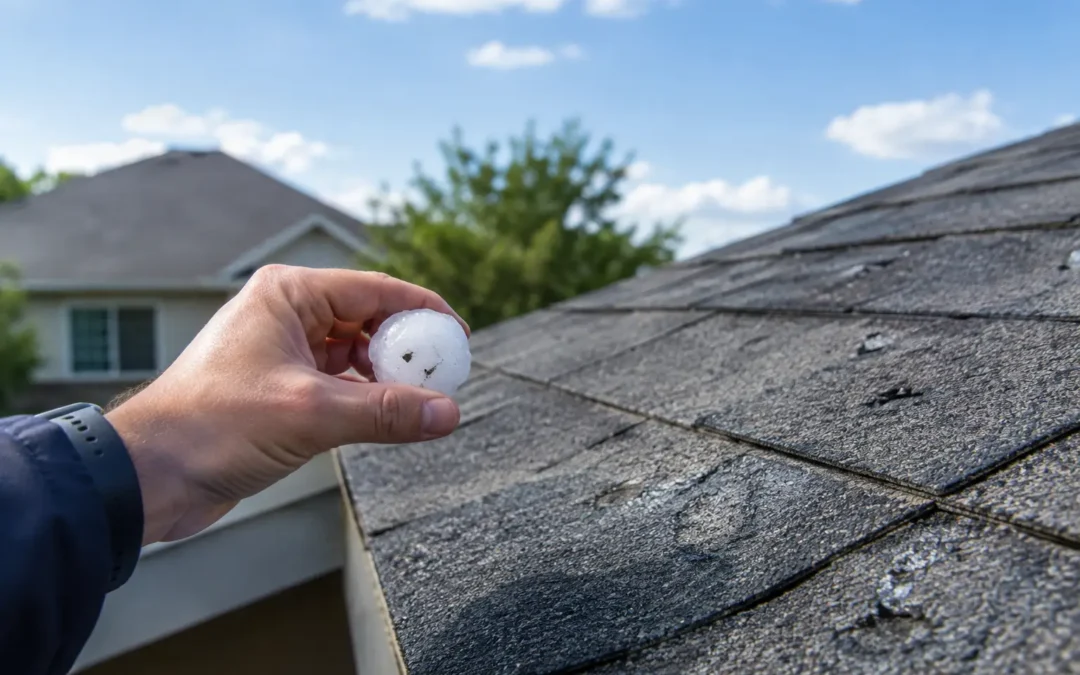
A hailstorm can leave your property looking mostly normal from the ground while causing damage that shortens the life of your roof. Knowing how to identify hail damage early gives you time to document the condition, prevent water intrusion, and make confident repair decisions before a small issue becomes an expensive one.
Hail damage is not always dramatic. In the Hudson Valley, a brief spring or summer storm may leave scattered impacts across shingles, metal vents, gutters, siding, and outdoor equipment. The size of the hail, wind direction, age of the roof, and roofing material all affect what damage looks like.
Start With Safety and a Ground-Level Inspection
Do not climb onto a wet, steep, or potentially damaged roof. After a storm, begin from the ground and walk slowly around the property. Look for obvious signs on areas you can inspect safely, including gutters, downspouts, window trim, siding, deck railings, air-conditioning units, and vehicles.
Hail often leaves small, round dents in soft metal. Check gutter screens, aluminum fascia, roof vents, flashing, and downspouts for fresh dings. A dented gutter does not automatically mean the roof needs replacement, but it is a useful signal that the storm had enough force to affect other exterior materials.
Also look for shingle granules in gutters, at downspout exits, or on the ground near the foundation. A few loose granules are common on an aging asphalt roof. A noticeable amount after a storm, especially when paired with visible impact marks, deserves a closer inspection.
How to Identify Hail Damage on Asphalt Shingles
Asphalt shingles are common throughout Orange, Dutchess, Sullivan, and Ulster counties, and hail damage can be easy to miss without training. From a safe vantage point, look for uneven, dark spots or areas that appear bruised compared with the surrounding shingles.
A hail impact can knock granules loose and expose the darker asphalt beneath. The spot may be circular, although it is not always perfectly round. It may also feel soft or slightly depressed when a qualified professional checks it by hand. These bruises can weaken the shingle’s protective surface and make it more vulnerable to cracking, moisture, and UV exposure over time.
Damage is often scattered rather than uniform. You may see several affected shingles on one roof slope while another slope has little or no visible damage. Wind-driven hail commonly strikes the side of the roof facing the storm, but every storm behaves differently.
What Hail Damage Is Not
Not every dark spot or missing granule is hail damage. Blistering, manufacturing defects, foot traffic, age-related wear, moss growth, and normal weathering can all create marks that resemble storm impacts.
For example, old shingles may lose granules across broad areas as they near the end of their service life. Hail damage usually appears as more defined, concentrated impact points. The difference matters because the right repair plan depends on the true cause of the issue.
Check Gutters, Siding, and Exterior Fixtures
Your roof is not the only part of the property that can be affected. Hail can damage several exterior components at once, and those supporting signs can help establish the severity of the storm.
Look closely at vinyl siding for cracks, chips, punctures, or small holes. On darker siding, impacts may be easier to see in angled sunlight. On metal siding, you may notice shallow dents or dimples. Wood trim can show chipped paint, fresh impact marks, or splintered edges.
Inspect gutters for dents, loose sections, separated seams, and areas where water now overflows. Even minor hail impacts can worsen an existing gutter issue by changing the slope of a section or loosening a fastener. If your gutters were already clogged or pulling away from the fascia, the storm may have exposed a problem that needs prompt attention.
Other useful clues include cracked skylights, damaged window screens, dented satellite dishes, marked mailbox posts, and pitted outdoor furniture. These signs do not prove roof damage by themselves, but they create a clearer picture of what your property experienced.
Look Inside for Changes After the Storm
A roof can sustain damage without leaking immediately. Still, a quick interior check is smart after a significant hail event, particularly if your roof is older or has had previous repairs.
Walk through the top floor, attic, and rooms beneath roof valleys, vents, skylights, and chimneys. Watch for fresh ceiling stains, peeling paint, damp insulation, musty odors, or moisture around light fixtures. In the attic, look for wet roof decking or daylight coming through a penetration.
Do not assume a lack of interior water means everything is fine. Hail bruises can compromise shingles gradually, and leaks may not appear until the next heavy rain, snowmelt, or freeze-thaw cycle.
Document What You Find Before Making Repairs
Take clear photos and short videos from the ground as soon as conditions are safe. Capture wide shots of each side of the property, then close-ups of dents, damaged siding, granules, or visible shingle marks. Include the date of the storm and save any weather alerts, photos from neighbors, or local reports that help establish when the event occurred.
Avoid throwing away damaged materials if something has fallen from the roof or siding. Store it in a safe place and photograph it first. If a temporary repair is needed to stop active water entry, document the damage before covering it whenever possible.
Fast action is helpful, but do not rush into signing paperwork based only on a quick doorstep inspection. A trustworthy contractor should explain what they found, show you the affected areas when possible, and provide a clear scope of work.
When to Schedule a Professional Roof Inspection
Schedule an inspection if hail was large enough to dent vehicles or metal fixtures, if you see missing granules or damaged shingles, or if you notice interior moisture. It is also wise to have a professional assess the roof when your neighbors report storm damage, even if your own roof looks fine from the ground.
A qualified inspector can safely examine shingles, flashing, vents, ridge caps, valleys, gutters, and other vulnerable details. They can also distinguish hail impacts from normal aging and explain whether monitoring, targeted repair, or replacement is the most practical option.
The answer is not always a full roof replacement. A newer roof with localized damage may be repairable, while an older roof with widespread bruising or brittle shingles may need a broader solution. Material availability, matching requirements, underlying roof condition, and the extent of damage all matter.
CPG Roofing & Siding provides thorough exterior inspections for homeowners and property owners who need clear answers after severe weather. The goal should be simple: identify the condition accurately, protect the property quickly, and recommend only the work the building truly needs.
Do Not Wait for a Leak to Take Storm Damage Seriously
Hail damage can shorten a roof’s useful life long before water reaches your ceiling. A careful ground-level review, good documentation, and a professional inspection when signs are present can protect both your property and your peace of mind. If a recent storm left dents, granules, cracks, or questions behind, getting a qualified opinion now is usually far easier than dealing with a preventable leak later.