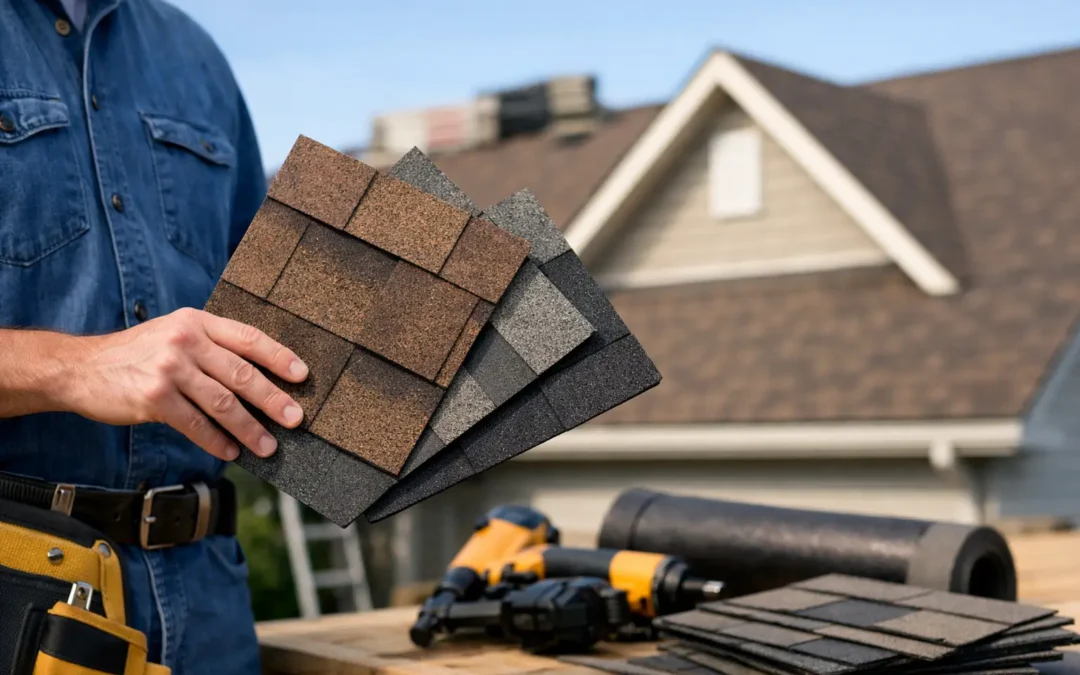
A shingle color card can make the decision feel easy. It is not. The right roof has to do more than look good from the driveway – it has to handle wind, rain, sun, attic heat, and years of Hudson Valley weather without becoming a constant repair issue. If you are wondering how to choose roof shingles, start with performance first and appearance second. That order usually leads to a better long-term result.
For most property owners, the best choice is not the most expensive shingle on the market. It is the one that fits the home, the roof slope, the ventilation setup, the budget, and the level of protection you actually need. A good roofing contractor should walk you through those trade-offs clearly, because there is no single shingle that is perfect for every house.
How to choose roof shingles for your home
The first question is simple: are you choosing for a new roof installation, a full replacement, or a repair that needs to blend with the existing roof? That matters because a full replacement gives you more flexibility with material, color, and warranty options. A repair usually narrows the field.
Age matters too. If your roof is near the end of its lifespan, choosing one matching bundle for a repair may only delay the real decision by a year or two. In that case, it is often smarter to think in terms of total roof value instead of short-term patching.
The next step is understanding what your roof needs to resist. In this region, that can mean heavy rain, snow loads, freeze-thaw cycles, wind, algae staining, and the kind of seasonal temperature swings that expose weak materials fast. A shingle that performs well in a mild climate may not be the best fit here.
Start with the shingle type
Most homeowners compare asphalt shingles first, and for good reason. They are widely available, cost-effective, and come in styles that fit everything from starter homes to high-end properties. Within asphalt, there are still important differences.
Three-tab shingles are the basic option. They are lighter, flatter, and typically less expensive. They can work on tighter budgets, but they usually have shorter lifespans and lower wind resistance than upgraded products.
Architectural shingles are the most common choice for full replacements today. They are thicker, more dimensional, and generally more durable. For many homes, they hit the right balance between appearance, protection, and value.
Luxury or designer shingles push farther on style and thickness. They can mimic slate or wood shake and may offer stronger visual impact, but the higher material cost does not always translate into the best value for every property. If the home is modest and resale value is a major concern, overbuilding the roof can be harder to justify.
Other roofing materials exist, including metal, slate, and synthetic products, but if you are specifically choosing shingles, asphalt remains the practical standard for most homeowners because it is proven, serviceable, and adaptable.
How to choose roof shingles based on lifespan and value
A lower upfront price can become expensive if the roof needs replacement much sooner. That is why lifespan should be part of the decision from the start.
Basic shingles may fit a short-term ownership plan. If you expect to sell soon, spending heavily on premium materials may not make sense. But if this is your long-term home, a stronger shingle system often pays off in fewer issues, better curb appeal, and a more predictable ownership cost over time.
Value is not just the shingle itself. It includes the underlayment, flashing, ventilation, ridge components, ice and water protection, and installation quality. Even a premium shingle can fail early if it is installed poorly or paired with weak accessories. Homeowners sometimes compare product samples and miss the bigger issue – the roof is a system, not a stack of individual parts.
Pay attention to wind and weather ratings
Not every shingle carries the same wind rating. That matters more than many people realize. Stronger wind resistance can reduce blow-offs during storms and lower the chance of costly emergency repairs.
Impact resistance can matter too, especially in areas that see frequent storm activity or falling branches. It is not a guarantee against damage, but it can improve the roof’s durability. If trees overhang the house, this deserves extra attention.
Algae resistance is another practical feature. Dark streaks on roofs are common in humid conditions, and some shingles are built to resist that staining better than others. If your roof gets partial shade for much of the day, algae-resistant options are worth considering.
Color matters, but not just for looks
Most people choose a roof color by standing outside and looking at sample boards. That is a start, not the whole process. Roof color changes in full sunlight, under cloud cover, and from the street versus up close.
The right shade should work with your siding, trim, stonework, and neighborhood character. A roof covers a huge amount of visual space, so if the color fights the rest of the home, it will be noticeable.
There is also a performance side. Lighter shingles can reflect more heat, while darker shingles tend to absorb more. In New York, this is usually less dramatic than in very hot climates, but attic ventilation and insulation still play a major role. You should not choose color based on energy claims alone.
A practical rule is to avoid trendy colors unless they genuinely fit the property. Neutral browns, charcoals, grays, and weathered tones tend to age better and appeal to more buyers if resale enters the picture later.
Think about the home’s style
Not every shingle profile belongs on every house. A dimensional architectural shingle often works well on colonials, ranch homes, capes, and many newer builds. A more dramatic designer shingle can look excellent on larger homes with stronger architectural lines, but it may feel out of scale on smaller structures.
This is where experienced guidance helps. The goal is not to make the roof the loudest feature on the property. The goal is to make the entire exterior look finished, balanced, and protected.
Warranties are useful, but read them carefully
Homeowners often hear the word warranty and assume they are fully covered for decades. The reality is more specific. Manufacturer warranties usually cover product defects under certain conditions. Workmanship warranties cover the installation, and those are just as important.
A long warranty sounds reassuring, but you should ask what is actually included, what can void it, and whether the full roofing system needs to be installed to qualify for upgraded coverage. Ventilation requirements matter here too. If an attic is poorly ventilated, heat and moisture can shorten roof life and create warranty problems.
A contractor should be able to explain this plainly. If the explanation feels vague, that is a red flag.
Your budget should guide the choice, not control it completely
Roofing is a major investment, and budget matters. But choosing solely by the lowest estimate often creates bigger costs later. If one bid is dramatically cheaper than the others, there is usually a reason. It may involve lower-grade materials, rushed labor, limited tear-off work, or missing components that should be included.
That does not mean the most expensive estimate is automatically the best. What you want is a clear scope, a dependable crew, solid product options, and confidence that the job will be done cleanly and correctly.
Financing can also change the decision. Some homeowners settle for a lower-grade shingle because they are focused on immediate cost, when a modest monthly payment could make a better-performing roof possible. If the home needs long-term protection, that can be a smart move.
The contractor matters as much as the shingles
You can choose a strong product and still get a weak result if the installation is sloppy. Roofing quality depends heavily on craftsmanship, attic ventilation assessment, flashing details, cleanup standards, and whether the crew treats your property with care.
Ask how the roof will be installed, not just what brand will be used. Ask who supervises the work, how cleanup is handled, and what happens if hidden deck damage is found after tear-off. Those answers tell you a lot about what kind of experience you are buying.
For homeowners in the Hudson Valley, choosing a contractor who understands local weather patterns and seasonal roof stress is a real advantage. Products do not perform in a vacuum. They perform on actual homes, under actual conditions, installed by actual crews.
If you are trying to decide how to choose roof shingles, the safest path is to narrow your options by durability, weather fit, and system quality first, then choose the style that makes your home look its best. A roof should give you confidence every time the forecast turns bad, not second thoughts every time you hear wind or dripping water.