
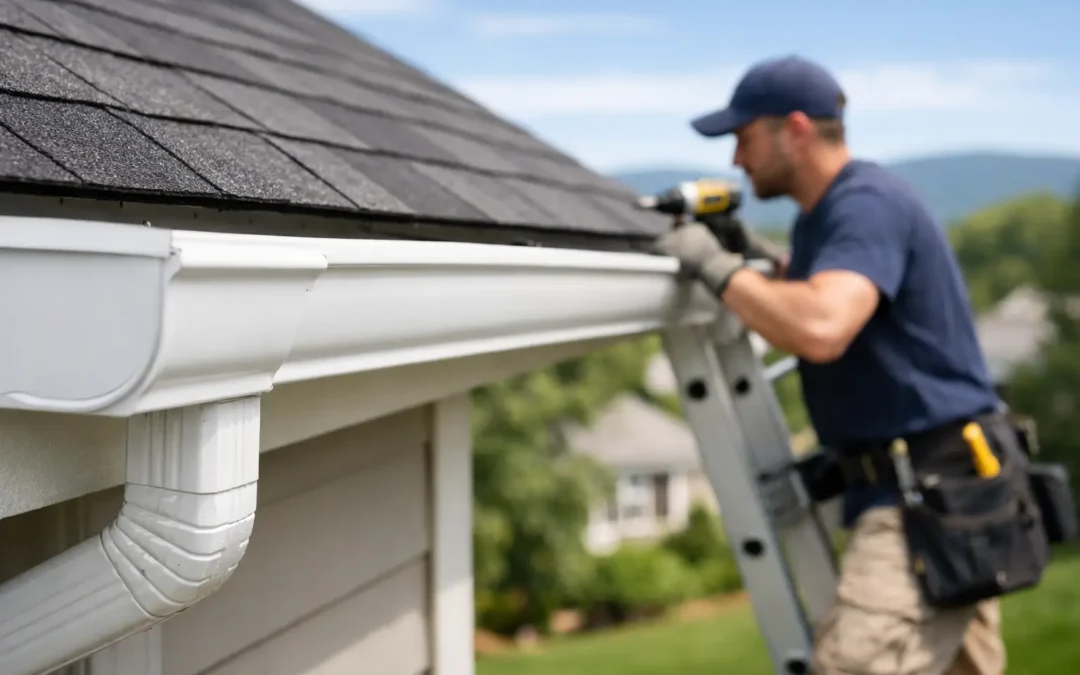
A gutter that overflows at the front entry or sends water behind the siding is not a small inconvenience. It is a warning that water is escaping the path designed for it. Proper Dutchess County gutter installation helps protect the roof edge, fascia, landscaping, foundation, and walkways from the hard rain, snowmelt, and freeze-thaw conditions Hudson Valley properties see every year.
The right system is not simply a length of metal attached below the roofline. It must be sized for the roof, pitched correctly, secured to solid material, and directed far enough away from the structure to do its job. When those details are handled well, gutters work quietly in the background. When they are not, the repair bills can build quickly.
Why gutter installation deserves careful planning
A roof sheds an enormous amount of water during a heavy storm. Even a modest rainfall can send hundreds of gallons toward the gutter system, especially on a large or steep roof. If the gutters are too narrow, the downspouts are undersized, or the system has poor slope, water can spill over the front edge or back up against the house.
That overflow can stain siding, rot fascia boards, saturate mulch beds, wash away soil, and leave water close to the foundation. In winter, poor drainage also increases the chance of icy patches near entrances and driveways. Gutters are a practical part of exterior protection, not an afterthought.
Installation is especially important when a roof is being replaced. The contractor has a clear view of the roof edge, drip edge, fascia condition, and the best locations for downspouts. Addressing these components together can prevent a new roof from draining into an old, failing gutter system.
What quality Dutchess County gutter installation includes
A dependable installation starts with an on-site evaluation. Roof area, roof pitch, valleys, existing drainage patterns, landscaping, and the condition of the fascia all affect the recommended design. A one-size-fits-all approach may cost less on day one, but it can leave the property vulnerable during the next major storm.
Proper gutter size and placement
Five-inch gutters are common on many homes, but they are not always enough. A roof with long runs, steep slopes, or several valleys may benefit from six-inch gutters to handle higher water volume. Commercial buildings and larger residences may require additional capacity or a more customized layout.
The gutter should sit at the correct height beneath the roof edge so runoff enters the channel instead of overshooting it. It also needs a subtle, consistent pitch toward each downspout. Too little pitch leaves standing water and debris behind. Too much can look uneven and may allow water to rush past the outlet.
Strong fastening and sound fascia
Gutters are only as secure as the material holding them in place. Hidden hangers and properly spaced fasteners help support the system through rain, snow, and seasonal movement. If fascia boards are soft, split, or rotted, installing new gutters over the damage only hides a larger problem.
A professional crew should identify compromised wood before installation and explain the repair options clearly. This protects the new system and gives the property a cleaner finished appearance.
Downspouts that move water away
Downspouts are where gutter performance becomes real. They need to be placed where they can collect water efficiently without creating drainage problems below. A downspout that empties beside the foundation may be technically connected, but it is not protecting the building.
Extensions, underground drainage connections, splash blocks, or carefully planned discharge areas can carry water farther from the home or business. The best choice depends on the grade of the property, nearby walkways, planting beds, and local drainage conditions. Water should be guided away without being redirected toward a neighbor’s property or a place where it can freeze.
Seamless gutters versus sectional gutters
For most residential properties, seamless aluminum gutters are a practical, durable choice. They are formed to the exact length needed for each run, which reduces the number of joints where leaks often begin. Aluminum resists rust, comes in a range of colors, and is generally a good fit for the changing weather in Dutchess County.
Sectional gutters can be appropriate for certain repairs, smaller projects, or budget-sensitive situations. However, each connection creates another potential location for sealant failure over time. Seamless systems typically provide a cleaner appearance and require fewer long-run joints, making them a strong option for homeowners who want lasting performance.
Copper offers a distinctive look and long service life, but it comes with a higher upfront cost. Steel can be strong but needs the right coating and maintenance to avoid corrosion. The best material depends on the property’s style, budget, and maintenance expectations. A trustworthy contractor should explain the trade-offs rather than push a single product for every building.
Do gutter guards make sense?
Gutter guards can reduce the amount of leaves, twigs, and roof grit entering the system, which is valuable on properties surrounded by mature trees. They can lower the frequency of cleaning, but they do not eliminate the need for inspection. Fine debris can still collect on top of some guard styles, and outlets still need to be checked for proper flow.
The right guard also depends on the roof and the type of debris present. Large leaves, pine needles, seed pods, and shingle granules behave differently in a gutter system. Installing guards without correcting poor slope, loose hangers, or inadequate downspouts will not solve the core drainage problem.
Signs your property may need new gutters
Some gutter problems can be repaired, particularly a loose bracket, a small seam leak, or a disconnected extension. But recurring failures often mean the system has reached the point where replacement is the more reliable investment.
Watch for gutters pulling away from the fascia, visible sagging, recurring overflow during ordinary rain, peeling paint near the roofline, rust spots, persistent basement moisture, or soil erosion below downspouts. Water marks on siding and mildew around the foundation also deserve prompt attention. These issues can begin with a gutter problem but spread to more expensive areas of the property if ignored.
After a storm, look closely at the system from the ground. Bent sections, detached downspouts, and damaged outlets should be addressed quickly. Avoid climbing ladders or attempting roof-edge repairs if conditions are wet, icy, or unsafe. Exterior drainage work is not worth a fall.
The installation process should be organized
A professional gutter project should feel straightforward from the first estimate through final cleanup. The contractor should inspect the roofline, discuss water-management concerns, measure each run, and provide a clear scope of work. If fascia repairs, roof-edge work, or drainage extensions are needed, those items should be explained before work begins.
On installation day, crews should protect the work area, remove old materials when included in the scope, and fit the new system to the property rather than relying on generic lengths. Once installed, the team should check alignment, downspout connections, and discharge locations. Cleanup matters, too. Sharp metal offcuts, old fasteners, and debris do not belong in a driveway or flower bed.
For landlords and commercial property owners, planning can include tenant access, pedestrian safety, storefront visibility, and scheduling around business hours. The gutter design may also need to account for larger roof sections, flat-roof drainage transitions, and areas where water could affect parking lots or entrances.
Protect the property before the next heavy rain
Waiting until water is pouring over the entryway usually limits your options. A planned inspection gives you time to address worn gutters, damaged fascia, and poor drainage before they become an emergency. It also makes it easier to coordinate gutter work with roof replacement, siding repairs, or exterior painting.
CPG Roofing & Siding helps property owners evaluate the full drainage picture, not just replace visible metal. From clear communication and organized workmanship to dependable cleanup, the goal is to leave your property better protected for the weather ahead. If your gutters are overflowing, sagging, or sending water where it does not belong, schedule an evaluation before the next storm makes the decision for you.