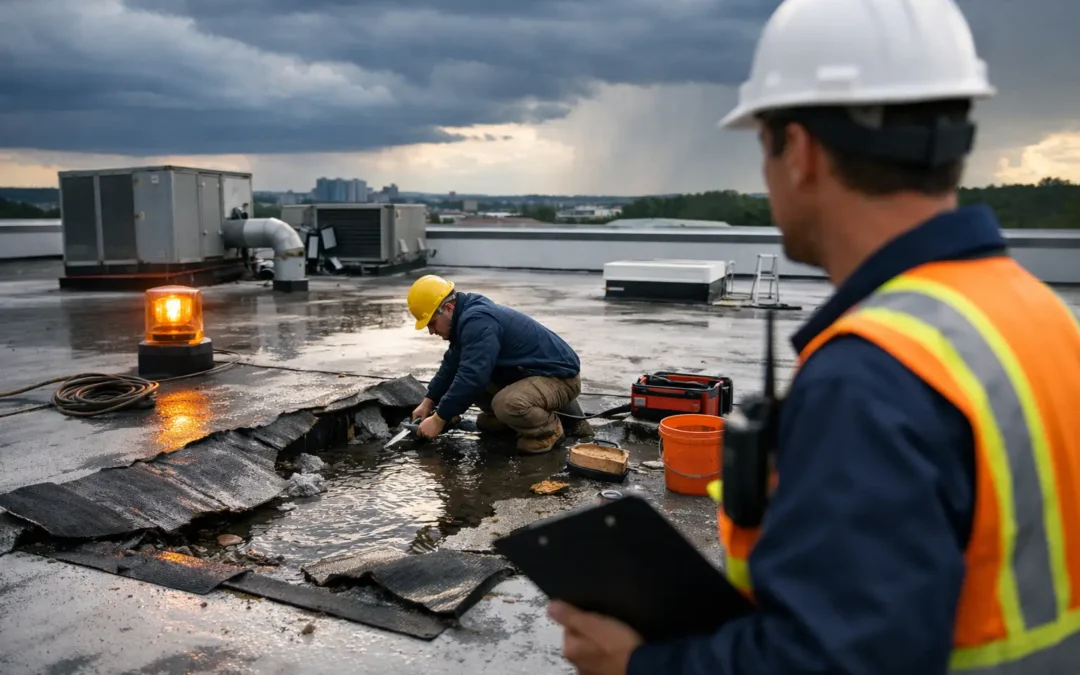
A ceiling stain spreading above a retail aisle, water dripping near electrical equipment, or a membrane lifted by high wind is not a problem to watch overnight. Commercial roof emergency response begins with one goal: protect people and prevent a manageable roof failure from becoming a major property loss.
For Hudson Valley property owners and facility managers, weather can turn quickly. Heavy rain, wind-driven storms, snow load, freeze-thaw cycles, and blocked drainage all put pressure on commercial roofing systems. The right response is not simply putting a tarp over the leak. It is securing the area, documenting conditions, stopping active water intrusion when it is safe to do so, and getting a qualified roofing professional on site as soon as possible.
What Counts as a Commercial Roof Emergency?
Not every roof issue requires an after-hours call, but delaying the wrong issue can increase repair costs and interrupt operations. An emergency exists when water is actively entering the building, roof materials have blown loose, a structural concern is visible, or occupants and equipment may be at risk.
A sudden leak during a storm deserves immediate attention, particularly when water is reaching electrical panels, inventory, computers, finished ceilings, or customer areas. The same is true when wind exposes insulation or decking, a tree limb punctures the roof, or snow and ice appear to be causing sagging, ponding, or interior cracking.
A small, dry stain with no current moisture may not require a middle-of-the-night repair. It still needs a prompt inspection. Roofing systems often hold moisture beneath the surface, and what looks minor inside can indicate a compromised seam, flashing detail, drain, or roof penetration above.
The First 30 Minutes Matter
The first actions taken after a roof failure should focus on safety and damage control, not diagnosis. Avoid climbing onto the roof during rain, high winds, lightning, icy conditions, or darkness. A temporary fix is never worth a fall or an injury.
Start inside the building. Move customers, employees, tenants, and visitors away from the affected space. Place containers under active drips if doing so does not create a slip hazard, and protect furniture, stock, and electronics by moving them out of the area or covering them with plastic sheeting. If water is near lights, outlets, electrical equipment, or a breaker panel, keep people clear and contact a licensed electrician or emergency service provider as appropriate.
If the ceiling is bulging with trapped water, treat it as a safety concern. A saturated ceiling can collapse without warning. Isolate the area below it and wait for trained professionals to assess the situation. Do not puncture a ceiling or attempt to drain it unless you have been instructed by a qualified restoration or building professional.
Next, document what you can safely see. Take time-stamped photos and video of interior water damage, affected inventory, visible roof damage from the ground, and the weather conditions. This record helps a roofing contractor identify the source and can support an insurance claim. It also creates a clear baseline for tracking additional damage.
What a Professional Emergency Roof Response Should Include
A reliable contractor should arrive prepared to assess the situation, make the property safer, and explain what happens next. Emergency service is not a promise that every roof can be permanently repaired during a storm. Weather, material availability, roof access, and the extent of damage all affect the immediate options.
The first visit commonly includes a safety inspection, identification of likely entry points, temporary water diversion or weatherproofing, and a review of damaged flashing, drains, seams, penetrations, curbs, edge metal, and membrane conditions. On a low-slope commercial roof, the source of an interior leak may be several feet away from where water appears inside. Water travels along insulation, deck flutes, framing, and other concealed paths.
Temporary measures may include professional tarping, reinforced patches, sealing an accessible opening, clearing a blocked drain, or securing loose materials. These actions are designed to limit further exposure. They are not a substitute for correcting the underlying issue once conditions allow.
After the roof is stabilized, a contractor should provide clear findings and recommendations. That may mean a targeted repair, replacement of damaged sections, drainage improvements, flashing work, or a broader roof restoration or replacement plan. The honest answer depends on the age of the roof, the roof system, the amount of trapped moisture, and whether the damage is isolated or repeated.
Information to Have Ready When You Call
A fast response becomes more effective when the property contact can share a few basic details. Explain where the leak is showing inside, whether water is near electrical systems, when it started, and whether there was a recent storm, impact, or maintenance activity on the roof. If known, share the building type, roof access details, and the type of roof system, such as EPDM, TPO, modified bitumen, metal, or built-up roofing.
It also helps to describe the size of the affected area without guessing at the cause. A contractor can investigate the cause. Your job is to communicate conditions clearly and keep people safe.
If the building is occupied by tenants, notify them about the affected area and any temporary restrictions. For retail, restaurants, offices, warehouses, and multifamily properties, quick communication protects more than the building. It protects customer trust, employee safety, and day-to-day operations.
Common Mistakes That Make Roof Damage Worse
The most expensive emergency calls often involve damage that grew after an understandable but risky attempt to handle it alone. Placing loose tarps on a windy roof, applying incompatible sealants, walking across wet membrane, or using screws through roofing materials can create new leaks and make later repairs more difficult.
Another mistake is assuming the leak stopped because the rain stopped. Water can remain trapped beneath the roof surface or inside insulation. Left in place, that moisture can reduce insulation performance, contribute to mold conditions, corrode components, and weaken interior finishes.
Waiting too long to arrange a follow-up inspection is also a problem. A temporary repair protects the building while permanent work is planned. It should not be treated as the final repair unless a qualified inspection confirms that it is sufficient.
From Emergency Repair to a Smarter Maintenance Plan
An emergency can reveal a weak point that has been developing for months or years. Once the immediate problem is controlled, schedule a full inspection to understand the roof’s condition. This is especially valuable after a major storm, repeated leaks, or a winter season with heavy snow and ice.
A practical maintenance plan addresses the details that commonly cause trouble: clogged drains and scuppers, failing sealant around penetrations, loose edge metal, damaged flashing, ponding water, and worn membrane seams. Regular inspections also help property owners budget before a small repair becomes an unplanned replacement.
For commercial buildings, maintenance decisions should be based on more than visible leaks. A roof may still look acceptable from the ground while drainage or concealed moisture is shortening its service life. The best plan balances immediate repair needs, remaining roof life, operational demands, and capital budget.
Commercial Roof Emergency Response When Conditions Turn Severe
Storm damage does not wait for business hours, and neither should your plan. Keep emergency roofing contacts available to managers and maintenance staff, know who has authority to approve temporary work, and make sure roof access information is easy to locate. A simple plan reduces confusion when water is entering a building and every minute feels urgent.
CPG Roofing & Siding provides responsive commercial roofing support built around clear communication, careful workmanship, and property protection. When an active leak or storm event threatens your building, acting quickly can preserve the roof, reduce interior damage, and help your business get back to normal with confidence.
The best time to prepare for a roof emergency is before the next storm reaches your property. A current inspection and a trusted response plan give you a clear next step when the pressure is on.