A roof coating can be a smart way to extend the life of a commercial roof, but it is not a shortcut for covering up active damage. This commercial roof coating guide helps Hudson Valley property owners understand when a coating makes sense, what it can do for their building, and when repair or replacement is the safer investment.
For a retail building, warehouse, office, apartment complex, or agricultural property, the roof has to handle more than rain. It faces summer heat, heavy snow, freeze-thaw cycles, ponding water, wind-driven storms, and the wear that comes with years of service. The right coating system can add protection and delay a full replacement. The wrong decision can leave leaks hidden beneath a fresh-looking surface.
Commercial Roof Coating Guide: Start With the Roof You Have
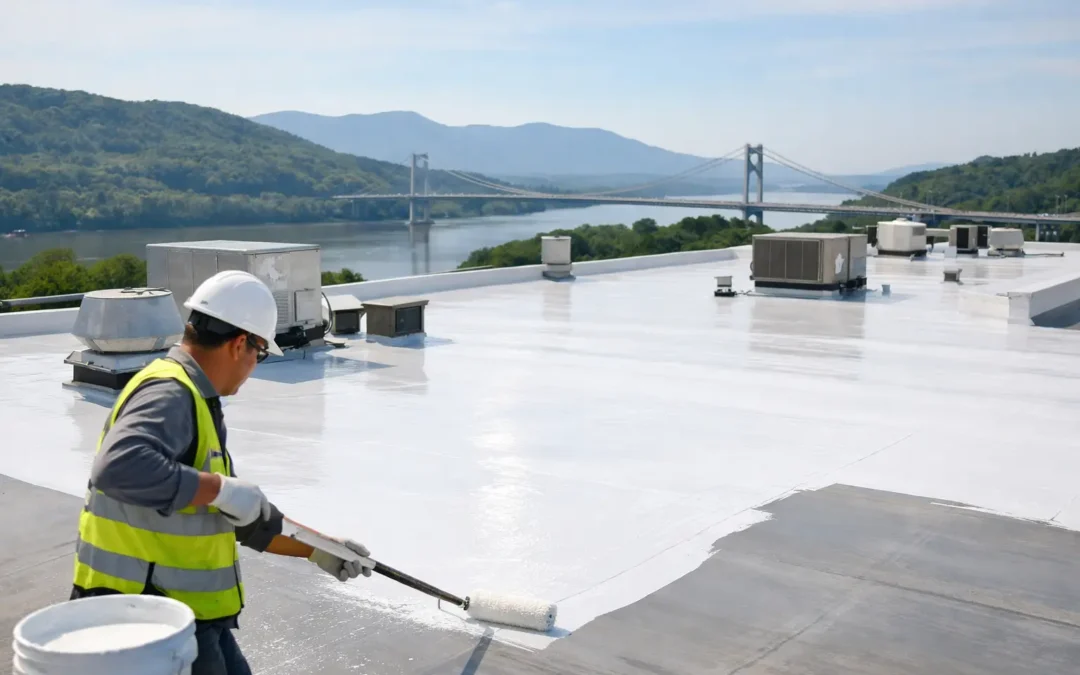
A commercial roof coating is a liquid-applied membrane that cures over an existing roof surface. It is designed to create a continuous protective layer, sealing minor surface defects and helping defend the roof from ultraviolet exposure, moisture, and temperature changes.
Coatings are commonly used on low-slope commercial roofing systems, including modified bitumen, built-up roofing, metal, and certain single-ply membranes. Because every roof material behaves differently, the existing system must be identified before selecting a coating. A product that bonds well to metal may not be appropriate for an aging membrane roof without the proper preparation and primer.
The most important question is not, “Can this roof be coated?” It is, “Is this roof still a good candidate for coating?” A professional inspection should look beyond the visible surface. Trapped moisture, deteriorated insulation, loose seams, saturated decking, damaged flashing, and recurring leaks all affect the answer.
A coating works best when the existing roof is structurally sound and nearing the point where added protection is needed. If the roof has widespread failure, extensive wet insulation, or serious deck damage, coating over the problem may only postpone a more expensive repair.
When a Coating Is a Smart Investment
Commercial roof coatings are often a strong option when the roof is weathered but still serviceable. You may see surface cracking, faded areas, minor seam wear, or small repairs from past leaks. These conditions do not automatically mean replacement is necessary.
A properly selected and installed coating can help extend the roof’s service life by creating a renewed weather barrier. Reflective coatings can also reduce heat absorption, which may improve indoor comfort and lower cooling demand during the warmer months. The actual energy benefit depends on the building’s insulation, HVAC system, roof color, and how much direct sun the roof receives.
Coating may also make practical sense when minimizing disruption matters. A full tear-off can create noise, debris, odor, and access concerns for tenants, customers, or business operations. A restoration project is typically less disruptive because the existing roof remains in place. That said, preparation is still serious work. The roof must be cleaned, repaired, dried, and detailed correctly before the coating is applied.
Timing matters as well. A coating project needs suitable weather conditions so materials can adhere and cure as intended. In the Hudson Valley, that often means planning around rain, humidity, overnight temperatures, and the shorter working window of late fall.
The Main Types of Commercial Roof Coatings
There is no single best coating for every commercial property. The right system depends on the roof substrate, slope, drainage, foot traffic, budget, and long-term maintenance plan.
Acrylic coatings
Acrylic roof coatings are water-based, reflective, and commonly used for roofs with positive drainage. They can provide strong UV resistance and are often an economical restoration choice. Their limitation is standing water. If sections of the roof regularly hold water after rainfall, an acrylic system may not be the best fit without first correcting drainage issues.
Silicone coatings
Silicone coatings are known for their resistance to ponding water and weather exposure. They are frequently considered for roofs where drainage is difficult to improve. They can be an effective option, but silicone surfaces can attract dirt over time and may require specialized preparation if recoating is needed in the future. The initial material cost can also be higher than acrylic.
Polyurethane coatings
Polyurethane systems are durable and offer good resistance to impact and foot traffic, making them useful around service paths, mechanical equipment, and high-use rooftop areas. They are often installed as part of a multi-coat system. Their performance depends heavily on surface preparation and proper application conditions.
Asphalt-based and aluminum coatings
These coatings are sometimes used on certain asphalt roofing systems and metal roofs. They can offer economical weather protection in the right application, but they are not interchangeable with modern reflective restoration systems. Material compatibility should always be confirmed before work begins.
Preparation Determines Performance
The coating itself is only part of the job. Most premature coating failures trace back to poor preparation, not necessarily a bad product.
Before coating begins, the roof should be inspected for leaks, open seams, loose flashing, damaged drains, punctures, and areas of ponding water. Repairs need to be completed first. The surface then must be thoroughly cleaned to remove dirt, oxidation, grease, loose granules, and biological growth that could interfere with adhesion.
Moisture is another major concern. Applying a coating over a damp roof can trap water in the system and lead to blisters, adhesion failure, or ongoing leaks. A qualified contractor will confirm that the roof is dry and that weather conditions support proper curing.
Details deserve special attention. Drains, penetrations, parapet walls, seams, curbs, scuppers, and flashing transitions are where commercial roofs most often develop problems. Reinforcing these areas with compatible fabric or sealant may be necessary before the field coating is applied.
A low bid that skips inspection, cleaning, repairs, or detail work is not a bargain. It is a risk to the building below.
Know What a Roof Coating Will Not Fix
A coating is not designed to correct structural problems. It will not repair rotten decking, replace wet insulation, fix a roof that slopes incorrectly, or solve leaks caused by failed rooftop equipment. It also cannot turn a roof at the end of its life into a like-new roofing system.
Property owners sometimes choose coating because it appears less expensive than replacement. That can be true when the roof is a legitimate restoration candidate. But when a roof has extensive moisture damage or multiple layers that have already failed, a coating can become money spent twice.
The better approach is to compare the condition of the roof with the goals for the property. If you plan to own the building for many years, a replacement may provide a clearer long-term solution. If the roof is in sound condition and needs renewed protection, coating may preserve a useful asset at a lower upfront cost.
Questions to Ask Before Approving a Coating Project
Ask the contractor how they will verify whether moisture is present beneath the roof surface. Ask what repairs are included before coating, which coating system is compatible with your existing roof, and how they will handle drains, seams, penetrations, and ponding water.
You should also ask about the specified dry-film thickness. Roof coatings are not simply rolled on like paint. The finished thickness affects performance, and the contractor should be able to explain how it will be measured. Request clear warranty information, including what is covered by the manufacturer and what is covered by the installer’s workmanship.
Finally, discuss maintenance. Even a well-installed coating system needs periodic inspection, especially after major storms and winter weather. Clearing drains, checking penetrations, and addressing small damage early can protect the investment.
Protect the Roof Before Small Problems Grow
A commercial roof coating can be an effective restoration tool when it is built on an honest assessment of the roof beneath it. The goal is not to make an aging roof look better for a season. It is to give your building a dependable layer of protection that performs through the weather Hudson Valley properties face year after year.
If you are seeing leaks, ponding water, cracked surfaces, or rising repair costs, do not wait for the next storm to make the decision for you. CPG Roofing & Siding can help evaluate whether a commercial coating, targeted repair, or full replacement is the best path for protecting your property.